
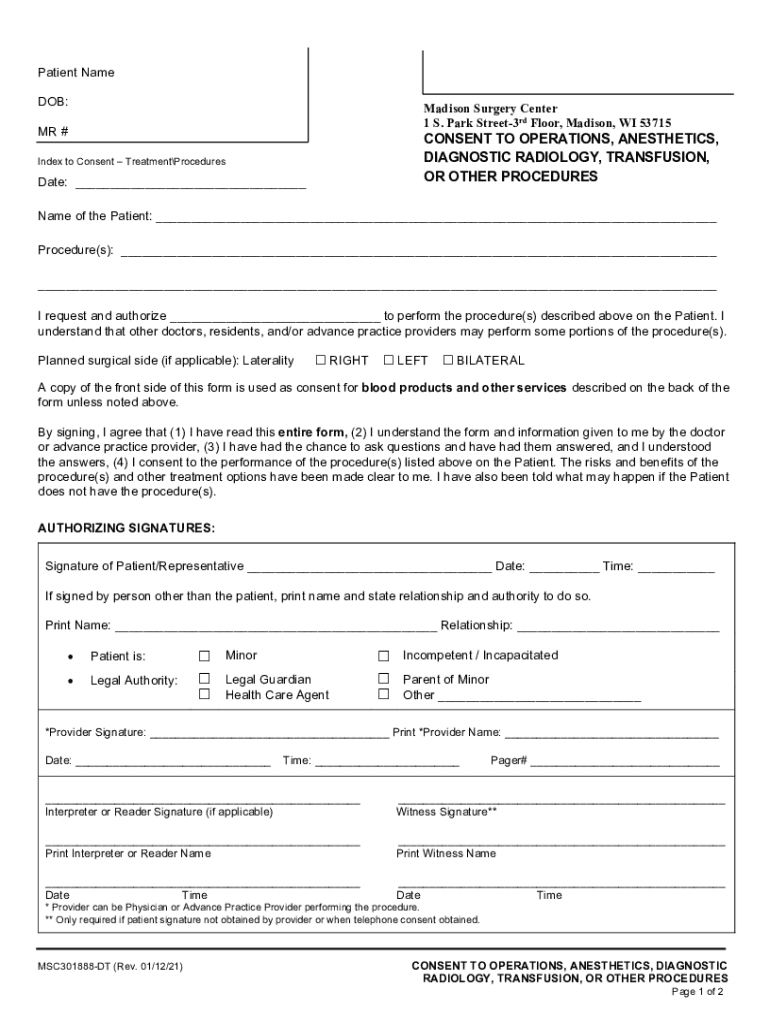







Definition & Importance of the Consent Form
The consent form from Madison Surgery Center serves as a critical legal document allowing patients to authorize medical procedures, including operations, anesthetics, and diagnostic measures. It ensures that patients have comprehensively understood and agreed to the recommended treatments, the potential risks involved, and any additional procedures that may become necessary during surgery. This form provides legal protection for both the medical institution and the patient by clearly outlining what to expect during the treatment process.
Purpose of the Consent Form
- Patient Consent: The primary goal is to record the patient's voluntary agreement to the proposed medical interventions.
- Informed Decision: It aims to provide the patient with all essential information to make an informed decision about their healthcare.
- Legal Assurance: Protects healthcare providers by documenting the patient's understanding of the risks and procedures involved.
Steps to Complete the Consent Form
Completing the Madison Surgery Center consent form is straightforward but requires attention to detail. The following steps outline the process to ensure all required information is accurately provided:
- Personal Information: Begin by filling in your full name, contact information, and medical record number.
- Procedure Details: Specify the type of operation, anesthetic plan, or diagnostic test you are consenting to.
- Acknowledgment of Risks: Review and acknowledge understanding of the outlined risks and potential complications.
- Anesthesia and Blood Transfusion: Indicate your consent or refusal for anesthesia and potential blood transfusion, considering the risks involved.
- Signature and Date: Sign the form to confirm your agreement, and record the date of signing.
Key Sections to Address
- Unforeseen Treatments: Be aware that additional procedures may be necessary; agree to such terms if needed.
- DNR Orders: Note any temporary suspension of "Do Not Resuscitate" (DNR) orders if applicable.
- Sharing Medical Information: Understand and consent to the sharing of medical information with relevant parties for treatment purposes.
Legal Use and Conditions
Authorization and Compliance
The legality of the consent form hinges on clear communication of the medical services to be rendered and the voluntary agreement of the patient. To ensure the form holds up legally:
- The patient must be competent to provide consent.
- The information must be conveyed in a language and manner the patient fully understands.
- Specific conditions such as age, mental state, and comprehension must be considered.
Compliance with Legal Framework
The form complies with U.S. healthcare laws requiring that patients grant informed consent before receiving non-emergency medical procedures. This compliance is crucial to avoid legal disputes and ensure ethical medical practices.
Key Elements of the Consent Form
Identifying critical elements in the consent form can help patients understand its significance and ensure their protection:
- Clarity of Procedure: Explicit explanation of the procedure, its necessity, and objectives.
- Possible Risks and Complications: Comprehensive listing of potential side effects and adverse outcomes.
- Voluntary Participation: Affirmation that the patient’s decision is voluntary and free from coercion.
- Right to Refuse or Withdraw: The document must state the patient's right to refuse or withdraw consent at any time.
Who Typically Utilizes This Consent Form
The primary users of the Madison Surgery Center consent form include:
Patients Undergoing Surgery
Any patient scheduled for surgery at the center will need to complete this form. It is crucial for both minor and major procedures and helps in communicating the necessary understanding of what the patient is undergoing.
Healthcare Professionals
Doctors, surgeons, and anesthesiologists rely on this document to ensure they have permission to proceed with the necessary medical care. It guides them to respect the patient's choices and outline alternative treatments.
Important Terms and Conditions
Several terms and clauses within the consent form are critical for both patients and medical staff to comprehend:
- Anesthesia Risks: Discusses potential reactions or complications arising from anesthesia usage.
- Blood Transfusion Needs: Details conditions in which a transfusion may be necessary.
- Emergency Procedures: Covers infections, bleeding, or life-threatening situations where immediate action is required.
Medical Information Sharing
The sharing of medical information must adhere to privacy laws, such as HIPAA, ensuring the confidentiality of sensitive patient data while allowing necessary disclosures for treatment and billing.
State-Specific Rules Affecting Consent
Variations Across States
While the consent form’s primary structures are consistent across the U.S., particular states may have additional requirements:
- Age of Consent: Varies by state; legal age for medical consent is typically 18, but exceptions exist.
- Language and Translation Services: States may require consent forms to be available in languages other than English.
- Specific Procedural Consents: Some states have additional consent requirements for specific procedures like late-term abortions.
Understanding these regional differences can help ensure compliance with local laws and enhance the patient's comprehension of their medical journey.




