
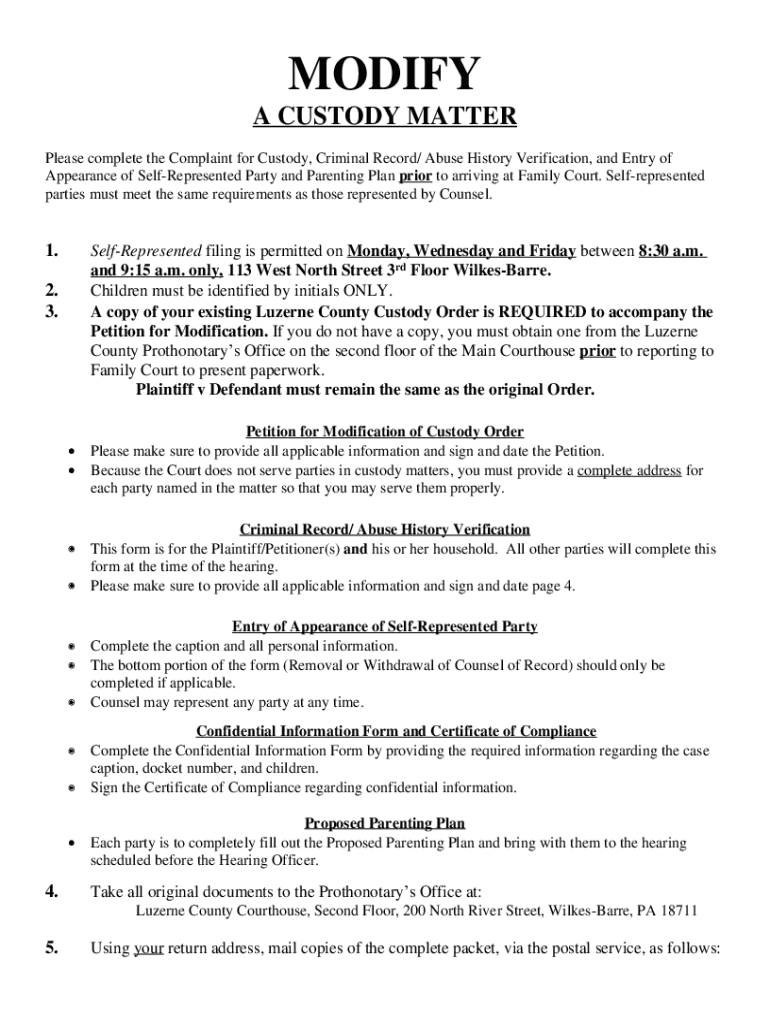







Definition and Meaning of Pa Child Custody Forms
Pa child custody forms are legal documents used in the state of Pennsylvania to establish or modify custody arrangements for minor children. These forms are critical in family court proceedings as they outline the specifics of custody, visitation schedules, and the responsibilities of each parent. Understanding their purpose and function is essential for navigating the custody process effectively. The forms are designed to facilitate a legal process that ensures the child's best interests are prioritized, encompassing various aspects such as legal custody, physical custody, and shared parenting responsibilities.
Types of Custody
- Legal Custody: Refers to the right to make significant decisions about the child's welfare, including education, healthcare, and religious upbringing.
- Physical Custody: Determines with whom the child will live and the specifics of the child's day-to-day care.
- Shared Custody Arrangements: Possible arrangements allowing both parents to be actively involved in their child's life, which may involve joint legal custody or shared physical custody.
How to Use the Pa Child Custody Forms
To use the Pa child custody forms correctly, begin by identifying the appropriate form required for your specific situation. The Pennsylvania court system provides different forms depending on whether you are applying for the first time or modifying an existing custody order. It is crucial to ensure that all sections of the form are completed accurately to avoid delays or complications in the legal process.
Completing the Forms
- Gather Personal Information: Include complete details about both parents and the children involved.
- Specify Custody Preferences: Clearly outline your custody and visitation arrangement preferences.
- Provide Supporting Information: Attach necessary documents that reinforce your case, such as work schedules or witness statements.
- Review for Accuracy: Double-check all entries to prevent errors that could impact your case.
How to Obtain the Pa Child Custody Forms
Acquiring Pa child custody forms can be done through several methods. They are accessible at local family court offices or can be downloaded from Pennsylvania's Unified Judicial System's official website. It is vital to use the most recent version of the form to ensure compliance with the latest legal standards.
Methods of Acquisition
- Online Download: Access the official Pennsylvania courts website to download the forms.
- In-Person Collection: Visit the family court clerk’s office in your county to obtain physical copies.
Steps to Complete the Pa Child Custody Forms
Filling out the Pa child custody forms involves several key steps. Following these systematically will ensure that you provide comprehensive and accurate information. Here’s a typical breakdown of the process:
- Read Instructions Carefully: Understand the legal jargon and terms used within the forms.
- Fill Personal Details: Include your full name, address, and contact information alongside the child’s details.
- Outline Custody Details: Clearly express your desired custody arrangement and any shared parenting plans.
- Attach Supplemental Documentation: Submit any additional documents, such as proof of residence or character references.
- Review and Sign: After completing the form, review for any omissions or mistakes before signing.
Who Typically Uses the Pa Child Custody Forms
Pa child custody forms are primarily used by parents or guardians involved in custody disputes or arrangements in Pennsylvania. They can be utilized by:
- Divorcing or Separating Parents: To establish an initial custody agreement.
- Non-custodial Parents: Seeking to adjust visitation or obtain additional rights.
- Guardians or Relatives: Attempting to gain custody under specific circumstances.


Legal Use of the Pa Child Custody Forms
The legal use of the Pa child custody forms is to formally request a custody hearing in a Pennsylvania family court. These documents establish legally binding agreements regarding child custody and visitation schedules. It is important to note that any information provided in these forms is subject to verification, and false statements can have legal consequences.
Compliance with Court Requirements
- Verification of Information: Courts require factual and honest entries on all forms.
- Follow-Up Actions: May involve court appearances or mediation sessions as part of adjudicating custody matters.
Key Elements of the Pa Child Custody Forms
The Pa child custody forms consist of several crucial components that collectively create a comprehensive overview of the custody arrangement. These include detailed sections for:
- Personal Details of Parents and Children: Basic identification and relationship information.
- Custody Arrangement Preferences: Detailed preferences relating to both physical and legal custody.
- Visitation Schedules: Clearly defined timelines for parental access.
- Consent and Acknowledgments: Legal statements requiring acknowledgment by both parties.
Thorough Completion Required
Ensuring all components are thoroughly completed and supported with additional documentation will facilitate a smooth legal process.
State-Specific Rules for the Pa Child Custody Forms
Pennsylvania has unique rules guiding the completion and submission of custody forms. Understanding these ensures compliance and aids in successful processing:
- Residency Requirements: Either parent or the child must have lived in Pennsylvania for at least six months prior to filing.
- Jurisdiction Matters: The local family court where the child resides typically handles custody cases.
- Regulatory Compliance: Adhering to Pennsylvania's family law statutes regarding custody and visitation rights is mandatory.
Examples of Using the Pa Child Custody Forms
Examples of how the Pa child custody forms might be used include cases where parents are:
- Modifying Existing Orders: When changes in circumstances necessitate adjustments in custody arrangements.
- Establishing Visitation Rights: Setting official schedules for non-custodial parental access.
- Formalizing Shared Custody: To put shared parental responsibilities and living arrangements into writing.
Practical Scenarios
These forms guide the legal proceedings and ensure that all arrangements reflect the child's best interest while conforming to Pennsylvania law standards.




