
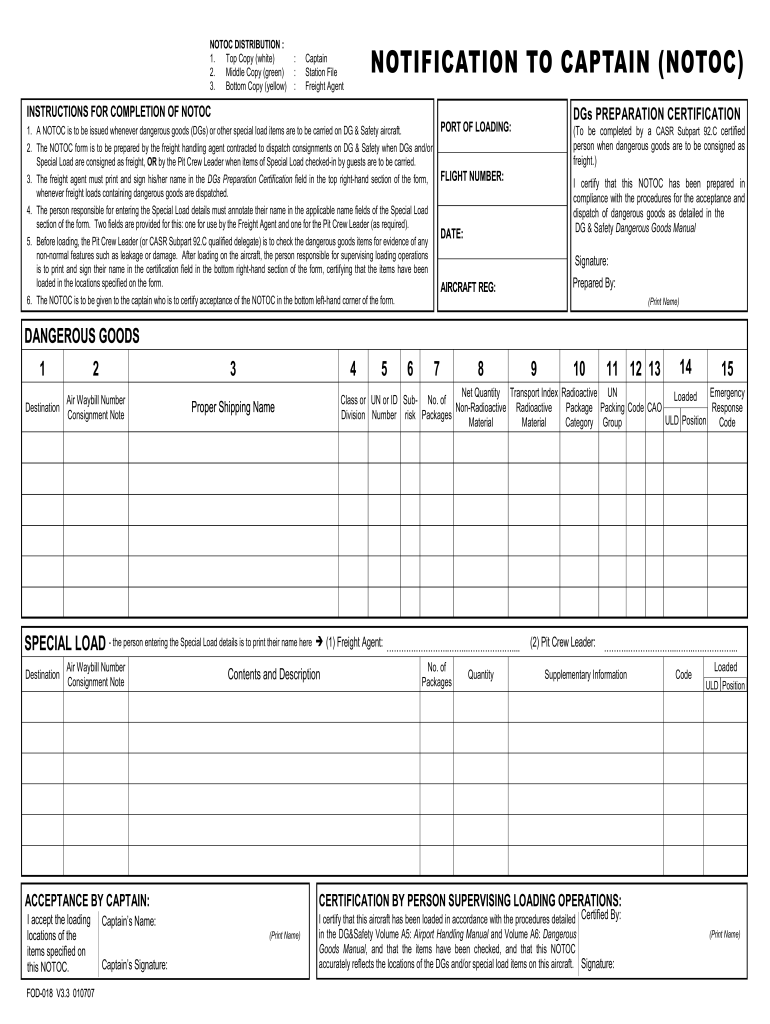







Definition and Meaning of the NOTOC Form
The NOTOC (Notification to Captain) form is a crucial document in the aviation sector, specifically designed to communicate important information regarding dangerous goods and special load items being transported on aircraft. This form plays an essential role in safety and compliance with regulations governing air transportation of hazardous materials. The primary purpose of the NOTOC is to ensure that the aircraft captain is informed of any cargo onboard that may pose risks during flight operations.
Key elements included in the NOTOC must detail:
- Type of Dangerous Goods: Identification of the specific nature of the goods being transported, such as flammable materials, corrosives, explosives, etc.
- Quantity and Packing Method: The amount of each type of dangerous good and how they are packaged, which is vital for assessing potential hazards.
- Special Instructions for Handling: Directions on how to manage the cargo, including precautions needed for loading, unloading, and stowing.
- Sender and Recipient Information: Contact details of the parties involved, facilitating any necessary communication regarding the cargo in transit.
Key Elements of the NOTOC Form
The NOTOC must include specific information to fulfill regulatory requirements and ensure aircraft safety. This encompasses not just the identification of dangerous goods, but also the procedural adherence necessary for transport safety.
Essential components include:
- Date and Time of Notification: Indicating when the NOTOC is issued ensures accuracy in communication.
- Flight Details: Information about the flight, including flight number and destination, provides context for the cargo.
- Signature of Responsible Personnel: Signatures validate that the necessary checks and responsibilities have been accounted for by authorized individuals.
Each element on the NOTOC must be legibly completed to prevent misunderstandings or mismanagement during airlift operations.
Steps to Complete the NOTOC Form
Completing the NOTOC form requires systematic and meticulous attention to detail to ensure compliance with regulatory standards. Each step must be followed to accurately convey necessary information.
- Identify Dangerous Goods: Gather comprehensive data about all dangerous goods in transit, including the UN class number and description.
- Determine Quantity and Packaging: Assess the total quantity of each dangerous substance alongside the packaging details to ensure accurate representation on the form.
- Input Flight Information: Fill in flight-related details such as flight number and destination, as well as both departure and arrival times.
- Specify Special Handling Instructions: Note precautionary measures necessary for handling the cargo, including emergency contact information.
- Sign and Submit: Ensure that the form is signed by authorized personnel before submission to the captain and retains copy for records.
By following these steps, individuals can ensure a complete and compliant NOTOC that meets both internal and regulatory standards.
Legal Use of the NOTOC Form
The NOTOC form is not merely a procedural document; it has legal implications that ensure the safe transport of dangerous goods in compliance with aviation regulations. Adhering to guidelines set forth by regulatory bodies, such as the International Air Transport Association (IATA) and national aviation authorities, is imperative.
Legal considerations include:
- Compliance with Regulations: Airlines and cargo companies must adhere to the legislative frameworks governing the transport of hazardous materials, avoiding penalties and ensuring the safety of passengers and crew.
- Recordkeeping Obligations: Maintaining copies of NOTOC forms helps demonstrate compliance during audits and inspections.
- Legal Liability: Failure to provide accurate information on the NOTOC could expose the company to legal liabilities in the event of an incident involving dangerous goods.
Understanding these legal frameworks is essential for any personnel involved in cargo operations to mitigate risks and uphold safety standards.
Examples of Using the NOTOC Form
Utilizing the NOTOC form is integral across various scenarios in aviation logistics, primarily in the transport of dangerous goods. Here are a few examples illustrating its application:
-
Transporting Chemicals: A shipment of flammable liquids destined for a laboratory must include a detailed NOTOC, specifying the quantities and required precautions in handling.
-
Special Load Situations: When a plane carries perishable medical supplies that also contain small quantities of narcotics, the NOTOC outlines both the handling precautions due to the medical requirements and the dangerous nature of the narcotics.
-
Military Operations: In military logistics, where arms and explosives are transported, the NOTOC includes additional security measures that must be adhered to during loading and unloading procedures.
These examples underscore the importance of the NOTOC in varying contexts and the need for meticulous attention to detail in its completion to ensure the safety and compliance of air transport.
What Must Be Included on a NOTOC
Completing a NOTOC requires specific information that is essential for ensuring safety during air transport of dangerous goods.
Mandatory inclusions are:
- Designation of Dangerous Goods: Accurate identification must be made, including phrases like "Flammable" or "Corrosive" followed by the UN number associated with the item.
- Controller’s Contact Information: Contact details facilitate rapid communication should there be any issues during transport.
- Flight Details and Special Instructions: The form should contain specifics about the flight and any special precautions that handlers need to take upon loading and unloading.
Fulfilling these requirements is crucial for compliance and safety assurance on any given transport operation involving hazardous cargo.




