






Definition and Purpose of Form SOC 426
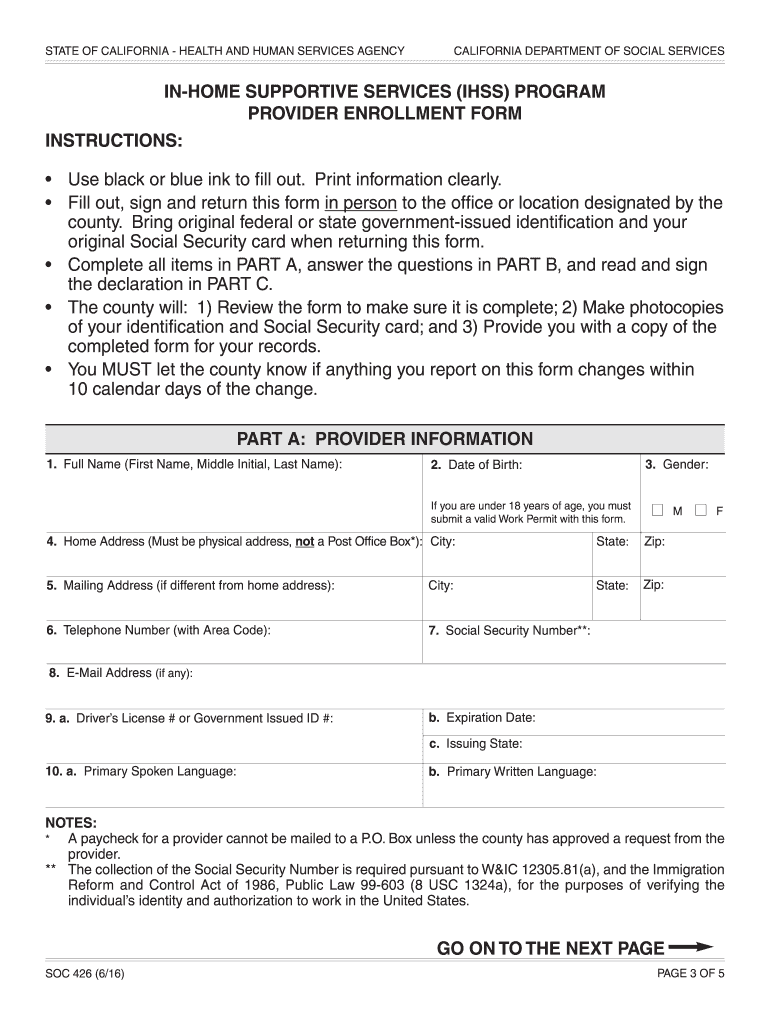
The SOC 426 is the In-Home Supportive Services (IHSS) Program Provider Enrollment Form used within California to apply for authorization as a care provider under the IHSS program. This form is integral for individuals who wish to provide supportive services to eligible recipients, primarily elderly or disabled individuals who require assistance with daily living activities.
The form collects essential information that helps ensure the eligibility of providers. It requires details about the applicant’s identity, background, and qualifications, facilitating a thorough evaluation process. This assessment is particularly crucial because it ensures that the service recipients receive care from qualified and trustworthy individuals.
Steps to Complete the SOC 426
Completing the SOC 426 requires careful attention to detail. Here are the general steps involved in the process:
-
Gather Required Information:
- Personal details such as full name, address, and contact information.
- Social Security number and date of birth for identification purposes.
- Information about prior employment and relevant qualifications in caregiving.
-
Complete the Form:
- Fill in the form accurately, ensuring all sections are addressed.
- Include any required documentation, such as proof of identity or qualifications.
- Check for accuracy before submitting to avoid delays in processing.
-
Submit the Form:
- The completed SOC 426 can be submitted online, via email, or in person at the designated county IHSS office.
- Make sure to keep a copy of the submitted form for your records.
-
Await Application Review:
- After submission, the county will review the application and may reach out for additional information if needed.
- Approval times can vary, so it is best to inquire about the estimated timeline during submission.
-
Complete the Orientation and Training:
- Once approved, providers typically must attend an orientation session and complete required training to remain compliant.
Eligibility Criteria for SOC 426
Eligibility for becoming a provider through the SOC 426 is fundamental to ensuring quality care for IHSS recipients. Key criteria typically include:
-
Age Requirement:
- Providers must be at least eighteen years old.
-
Criminal Background Check:
- Individuals must undergo a criminal history check. Certain convictions could disqualify prospective providers, particularly those categorized as Tier 1 or Tier 2 crimes.
-
Experience or Training:
- While previous caregiving experience is advantageous, it may not always be required. Some regions might have specific requirements regarding training for IHSS programs.
-
Authorization Agreement:
- Potential providers must agree to comply with all IHSS program regulations and complete their orientation.

Important Terms Related to SOC 426
Understanding the terminology associated with the SOC 426 is essential for clarity throughout the application process. Key terms include:
-
IHSS (In-Home Supportive Services):
- A California state program that provides assistance to elderly or disabled individuals, helping them live independently in their own homes.
-
Provider:
- The individual providing care services, who may need to be enrolled and approved through the SOC 426 form.
-
Recipient:
- The individual receiving care services under the IHSS program, who has met the eligibility requirements.
-
Criminal Background Check:
- A process where a potential provider’s criminal history is reviewed to ensure safety for recipients.
By understanding these terms, individuals can navigate the application process more efficiently and prepare the necessary documentation accurately.
Legal and Compliance Considerations for SOC 426
Legal considerations regarding the SOC 426 are critical for both providers and recipients of IHSS services. Ensuring compliance with state regulations is mandatory. Providers must adhere to the following legal aspects:
-
ESIGN Act Compliance:
- Signatures collected must comply with electronic signature regulations to ensure validity.
-
Information Security:
- Personal data and care recipient information collected via the SOC 426 must be secured to protect against data breaches and unauthorized access.
-
Non-Discrimination Practices:
- The application process must adhere to non-discriminatory policies, ensuring that all individuals have an equal opportunity to apply irrespective of race, gender, or disability.
Failure to comply with these legal requirements can lead to disqualification from becoming a provider or other legal repercussions.
Common Mistakes When Completing SOC 426
When filling out the SOC 426, several common errors may lead to delays or rejection:
-
Incomplete Information:
- Omitting required fields or failing to provide necessary documentation can hinder the application process.
-
Inaccurate Data:
- Errors in personal information such as name or Social Security number can cause processing issues.
-
Neglecting to Sign:
- Forgetting to sign the form can result in immediate rejection; always confirm the form is signed before submission.
-
Missing Deadlines:
- Each county might have specific deadlines for submission that must be adhered to strictly.
Being aware of these common pitfalls can facilitate a smoother application process and improve the chances of timely approval.