




Definition and Purpose of Form H1857
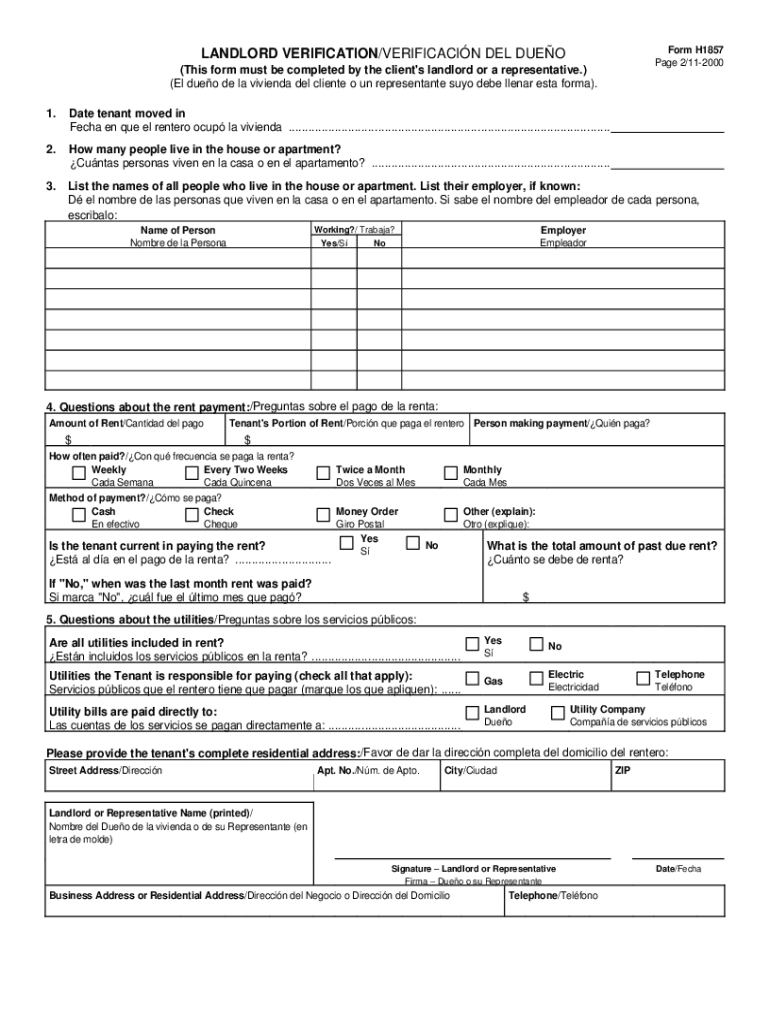
Form H1857, also known as the Landlord Verification Form, is utilized primarily for confirming rental details concerning tenants. This document plays a vital role in various processes such as housing assistance programs, welfare benefits, and the Supplemental Nutrition Assistance Program (SNAP) in Texas. The form captures essential information from landlords about the residency status of tenants, their payment history, and responsibilities related to utilities, ensuring that caseworkers have the necessary data to assess eligibility for support services.
Completing this form accurately is crucial for applicants relying on rental assistance. It not only verifies the tenant's living situation but also confirms the landlord's contact information and any other obligations that might influence an applicant’s benefits. The comprehensive nature of Form H1857 ensures that caseworkers can make informed decisions regarding eligibility based on reliable input from landlords.
Steps to Complete Form H1857
Completing Form H1857 requires careful attention to detail to ensure accuracy. The following steps outline how to fill out the form effectively:
-
Gather Necessary Information:
- Collect all relevant details, including the tenant’s full name, address, and rental history.
- Have the landlord’s contact information on hand, alongside details of the rental agreement.
-
Fill Out Tenant Verification Section:
- Provide the tenant's information precisely. This includes their current address and the duration of their tenancy.
-
Outline Rent Payment History:
- Document the payment history, including the total amount of rent paid regularly and any instances of late payments or evictions.
-
Specify Utility Responsibilities:
- Indicate who is responsible for utility payments, as this can affect the financial assessment of the tenant’s eligibility for assistance.
-
Review and Submit:
- Carefully review the completed form for any errors or missing information.
- Submit the form to the appropriate agency, ensuring that it is signed and dated by the landlord.
This step-by-step approach can help minimize errors and ensure thorough documentation for the review process. Using clear, concise language is important for maintaining clarity throughout the form.
Who Typically Uses Form H1857
Form H1857 is primarily utilized by a variety of stakeholders in the rental and housing assistance ecosystems, including:
-
Caseworkers:
- Employed by government assistance organizations, they use the form to validate tenants’ claims for housing benefits and other support programs.
-
Landlords:
- They complete this form to provide necessary information regarding tenants, particularly when they are involved in governmental assistance programs.
-
Tenants:
- Individuals applying for housing assistance use the form to ensure they can substantiate their claims with verified landlord information.
-
Housing Authorities:
- Local or state housing agencies may require this form during the application process for programs that assist low-income families with rental payments.
The collaborative nature of Form H1857 serves multiple parties by ensuring that all required information regarding a tenant's living situation is accurately captured, facilitating a smoother approval process for assistance applications.
Important Terms Related to Form H1857
Familiarity with key terms related to Form H1857 can enhance understanding and ensure effective communication among landlords, tenants, and caseworkers. Important terms include:
-
Landlord:
- The property owner who rents the dwelling to a tenant, providing necessary information on the form.
-
Tenant:
- The individual residing in the rental property and seeking assistance through programs requiring Form H1857.
-
Verification:
- The process of confirming the accuracy of information, often necessitating official forms like H1857 to support claims or applications.
-
SNAP (Supplemental Nutrition Assistance Program):
- A federal assistance program designed to provide food purchasing assistance for low-income individuals and families, which may require rental verification.
Understanding these terms can help streamline communication and facilitate a more organized approach to completing and submitting the form.
Legal Use of Form H1857
Form H1857 holds legal significance in the context of housing regulations and support programs. The following aspects clarify its legal use:
-
Compliance with Regulatory Standards:
- The form is designed to meet state and federal requirements for verifying housing situations, particularly for programs like SNAP and welfare assistance.
-
Legally Binding Information:
- The information provided in this form is legally binding, meaning that inaccuracies or false information can lead to penalties for landlords or tenants involved.
-
Records Facilitation:
- The completion of Form H1857 contributes to official records, assisting state agencies in maintaining up-to-date information about tenants within various assistance programs.
Legal adherence to the processes attached to Form H1857 is critical for protecting the rights of both tenants and landlords, as well as maintaining the integrity of public assistance programs that this form supports.
Submission Methods for Form H1857
Form H1857 can be submitted through several methods, depending on the requirements of the receiving agency. Common methods include:
-
Online Submission:
- Many agencies offer online portals where the form can be filled out and submitted electronically, reducing processing times and increasing efficiency.
-
Mail Submission:
- Form H1857 can be printed, completed, and mailed to the relevant department. Ensure the form is sent to the appropriate office to avoid delays.
-
In-Person Submission:
- In some cases, beneficiaries may be required to submit the form in person at local agencies or offices, making it possible to address any questions directly with caseworkers.
Being aware of these submission methods can help streamline the process, ensuring that the completed form is received promptly by agency staff, thereby facilitating timely access to rental assistance programs.