




01. Edit your 2024 cdl pre trip inspection checklist online
Type text, add images, blackout confidential details, add comments, highlights and more.

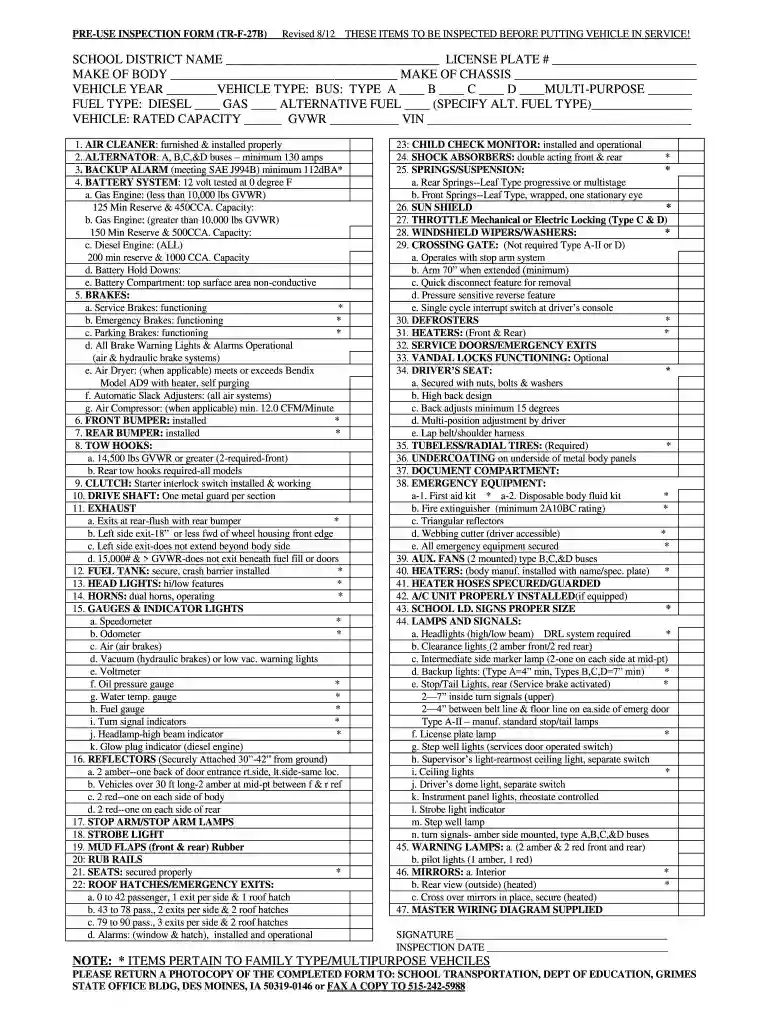
Type text, add images, blackout confidential details, add comments, highlights and more.

Draw your signature, type it, upload its image, or use your mobile device as a signature pad.

Send class b pre trip inspection checklist pdf via email, link, or fax. You can also download it, export it or print it out.
The CDL pre-trip inspection checklist form is a critical document used by commercial drivers to ensure that all necessary inspections are performed on their vehicles before operation. This form serves as a systematic guide that outlines essential vehicle components and safety features that must be checked to comply with both federal and state regulations. The primary purpose is to identify any potential safety hazards or mechanical issues before they lead to accidents on the road.
Key elements typically assessed within this form include:
By documenting these checks, the form not only aids in maintaining vehicle safety but also provides legal protection for drivers in the event of inspections by regulatory agencies.
Completing the CDL pre-trip inspection checklist form involves several systematic steps aimed at thorough vehicle examination.
Preparation: Gather necessary materials, including the checklist form, a pen, and any tools needed for inspections. It's also advisable to park on a flat surface for accuracy.
Initial Walk-Around Inspection: Begin with a comprehensive visual inspection of the vehicle. Look for signs of damage, leakage, or anything unusual that may require attention.
Check Engine Compartment: Open the hood and inspect fluid levels such as engine oil, coolant, brake fluid, and power steering fluid. Look for any signs of leaks or corrosion.
Inspect Exterior Components: Check the body of the vehicle for damage, inspect mirrors for clarity and adjustment, and ensure windshield wipers function properly.
Validate Interior Systems: Enter the cab and check gauges, controls, and safety equipment including seatbelts and fire extinguishers. Make sure the horn and emergency signals work.
Final Documentation: After completing the inspection, document findings directly on the checklist form. If any issues are found, note them for repair and ensure the vehicle is unfit for operation until fixed.
Having this systematic approach helps ensure that no components are overlooked, ultimately maintaining the safety and operational efficiency of commercial vehicles.
Understanding the core elements of the CDL pre-trip inspection checklist form is vital for effective vehicle evaluation.
Equipment Identification: Each section of the checklist identifies specific equipment or vehicle systems that must be inspected, such as lights, brakes, and steering functions.
Criteria for Assessment: Included within each section are specific criteria that help a driver determine if the equipment meets safety standards. This might involve operational tests or visual inspections.
Space for Remarks: The form should provide space for drivers to note specific issues or repairs needed, such as "right rear tire under-inflated."
Sign-off Section: After completing the inspections, the form should include a section for driver verification, including name and signature, to confirm that the inspection was conducted in accordance with regulations.
Date and Time: Recording the date and time of the inspection is essential for compliance and for tracking vehicle safety over time.
Awareness of these elements contributes to the thoroughness of the pre-trip inspections, promoting overall safety on the roads.
The CDL pre-trip inspection checklist form serves several crucial functions, emphasizing its significance within the context of commercial driving.
Safety Compliance: It ensures that statutory safety requirements are met, which is vital for public safety and adherence to Federal Motor Carrier Safety Administration (FMCSA) regulations.
Risk Mitigation: Identifying issues before departure minimizes the risk of accidents caused by vehicle malfunctions, safeguarding drivers, passengers, and the general public.
Documentation for Accountability: Maintaining a record of inspections establishes a formal log that can be referenced during inspections by law enforcement or DOT officials.
Enhancing Accountability: Drivers become more accountable for their vehicle's roadworthiness by regularly using the checklist, fostering proactive vehicular maintenance.
Operational Efficiency: Completing pre-trip inspections can lead to fewer mechanical failures on the road, resulting in less downtime and increased productivity for commercial operations.
By having a structured checklist, drivers can uphold high safety standards and promote responsible driving practices within the commercial transport industry.
Variations in regulations across states highlight the importance of understanding local rules when using the CDL pre-trip inspection checklist form.
State Compliance Differences: Each state may have unique requirements regarding specific items that must be inspected or the frequency of inspections, especially for interstate travel.
Additional State Mandates: Some states might require additional documentation, such as inspection receipts or verification of past maintenance, which should accompany the checklist.
State-Sponsored Training Programs: Individual states may offer training programs that guide drivers in effectively using the pre-trip inspection checklist, tailored to local requirements.
Digital Variations by State: States may also utilize different digital platforms for submitting inspection findings or sharing forms, so drivers should be aware of local tools for documentation.
Remaining updated on state-specific regulations ensures that all drivers maintain compliance and are prepared for inspections, enhancing overall safety on highways.
Practical examples illustrate the application of the CDL pre-trip inspection checklist form in daily operations.
Routine Inspections: A driver of a commercial transport vehicle uses the checklist to conduct a pre-trip inspection every morning before departing for long hauls, noting routine checks of fluids and tire pressure.
Incident Documentation: After experiencing minor brake issues during a route, a driver refers to the checklist to ensure all necessary components are inspected and subsequently documents the findings before turning in the vehicle for repairs.
Training New Drivers: A veteran driver uses the checklist to train new employees on the importance of safety and routine inspections, reinforcing habits that prioritize vehicle health and public safety.
DOT Audit Preparation: A trucking company maintains a complete set of CDL pre-trip inspection checklists for all its vehicles, ensuring readiness for any Department of Transportation audits by demonstrating compliance.
These examples highlight how this form operates in everyday scenarios and its critical role in promoting safe driving practices.
We've got more versions of the 2024 cdl pre trip inspection checklist form. Select the right 2024 cdl pre trip inspection checklist version from the list and start editing it straight away!
At DocHub, your data security is our priority. We follow HIPAA, SOC2, GDPR, and other standards, so you can work on your documents with confidence.
Drivers Vehicle Inspection Report. Check ANY Defective Item and Give Details under Remarks. DATE: TRuCk/TRACTOR NO.Read more
The following checklist is designed for drivers with little mechanical knowledge or background. Elements included enhance safety and prevent breakdown.Read more
2.1.4 CDL Pre-trip Vehicle Inspection Test. In order to obtain a CDL you will be required to pass a pre-trip vehicle inspection test. You will be tested toRead more


