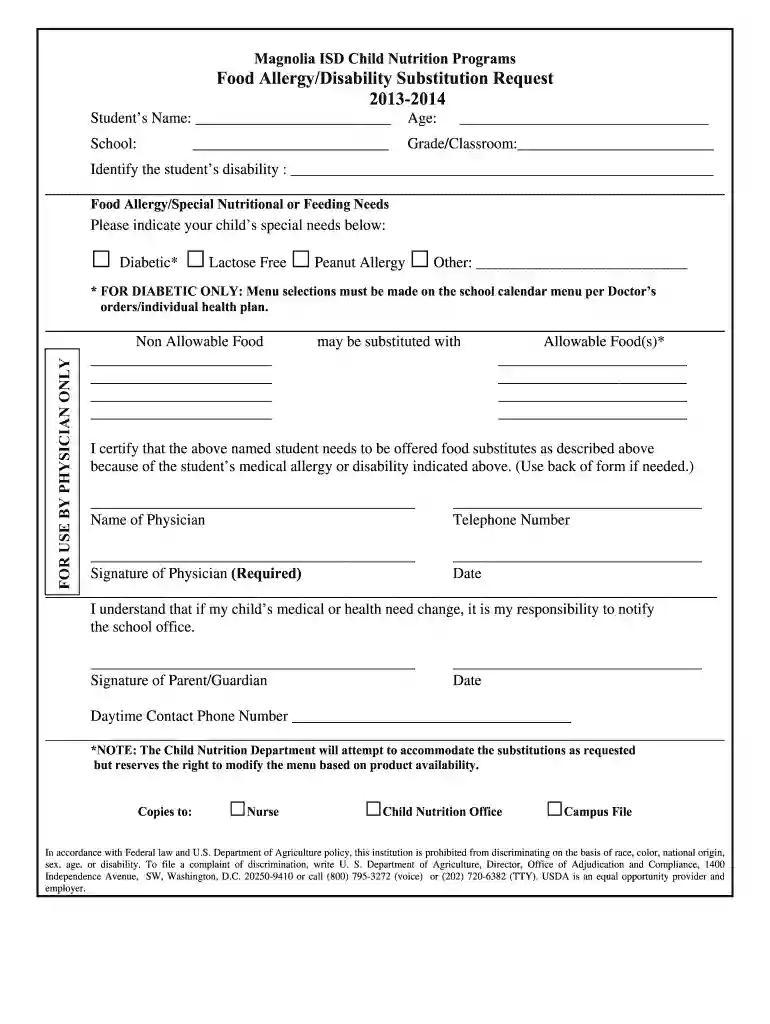
Definition and Importance of the Fare Allergy Form
A fare allergy form in Word document format is a structured template designed for individuals, typically parents or guardians, to formally document and communicate a child’s food allergies or dietary restrictions to schools or childcare facilities. This form is essential in educational and nutritional settings where food is served, ensuring that children with specific health needs are protected from allergic reactions due to the consumption of unsafe food.
The fare allergy form captures critical information such as the child’s details, specific allergies or intolerances, and any required dietary substitutions. It serves not only as a notification tool but also as a protective measure to avoid any unintended health issues that may arise in school or daycare settings. Proper documentation aids in adhering to federal regulations and aligns with non-discrimination policies regarding students with disabilities or special dietary needs.
How to Obtain the Fare Allergy Form in Word Document
Accessing a fare allergy form in Word document format can be achieved through various channels:
- School or District Websites: Many school districts provide downloadable forms directly on their websites. It is beneficial to check your local educational institution's resources.
- Healthcare Providers: Pediatricians or allergists may offer recommendations or direct access to standardized forms. Parents can request a template suitable for their needs.
- Document Management Platforms: Online tools such as DocHub allow users to create and customize this type of form. Users can either start with a blank document or modify existing templates to fit their specific requirements.
Steps to Complete the Fare Allergy Form in Word Document
Filling out a fare allergy form accurately is essential for ensuring it serves its intended purpose. Here are the steps typically involved:
- Download or Access the Form: Obtain the fare allergy form in Word document format from a reliable source, ensuring it meets your needs.
- Fill in Personal Information: Begin by entering the child’s full name, age, and any identification number if required by the institution.
- Detail Allergies or Dietary Restrictions: Clearly list all known food allergies or dietary restrictions the child has. Be specific about the allergens (e.g., peanuts, dairy) and include reactions to these substances.
- Physician Information and Certification: If required, include a section for a healthcare provider to certify the allergies. This may involve getting a signature and stamp from the doctor.
- Include Emergency Procedures: State any emergency treatments required in case of accidental exposure to allergens, such as the use of an epinephrine auto-injector.
- Review and Submit: Ensure all information is accurate and comprehensive before submitting the form to the school or childcare provider, either electronically or printed.
Key Elements of the Fare Allergy Form in Word Document
A well-structured fare allergy form incorporates several key elements that help facilitate proper communication:
- Child's Identification: Basic information about the child, such as name, date of birth, and any associated ID numbers.
- Allergy Details: A comprehensive list of specific allergies along with the nature of the allergy (e.g., anaphylactic, intolerance) helps the institution cater to the child's needs effectively.
- Medical Verification: A section for a physician's signature or stamp validates the allergies and dietary requirements, reinforcing the seriousness of the documented allergies.
- Emergency Contact Information: Parents should include emergency contact details in case of an allergic reaction, facilitating speedy communication.
- Instructions and Agreements: The form should outline instructions for the school regarding food preparation and handling, along with an acknowledgment section that parents and guardians must sign.
Who Typically Uses the Fare Allergy Form in Word Document
The fare allergy form is primarily utilized by:

- Parents and Guardians: Those responsible for a child’s care often fill out these forms to ensure the school is informed of their child's dietary needs.
- Educational Institutions: Schools, daycare centers, and after-school programs use this form to implement safe food-serving practices and comply with health regulations.
- Healthcare Providers: Pediatricians and allergists may provide this form to parents as part of a comprehensive approach to managing allergies in childcare or educational environments.
- Administrative Staff: School nutritionists and meal program coordinators use this document to plan appropriate meals and implement safety measures for children with food allergies.
Important Terms Related to the Fare Allergy Form
Familiarity with specific terms associated with the fare allergy form helps in understanding its context and implications:
- Anaphylaxis: A severe and potentially life-threatening allergic reaction that can occur within minutes of exposure to an allergen.
- Cross-contamination: The process by which allergens are inadvertently transferred from one food item to another, posing a risk to allergic individuals.
- Dietary Restrictions: Limitations on food consumption based on health needs or allergies, requiring special dietary provisions.
- Emergency Action Plan: A structured response plan outlining steps to take in the event of an allergic reaction, including contacts for emergency services.
Each of these terms plays a vital role in ensuring the effective use and understanding of the fare allergy form, promoting the safety and well-being of students with food allergies.