




01. Edit your washington state w9 form 2023 online
Type text, add images, blackout confidential details, add comments, highlights and more.

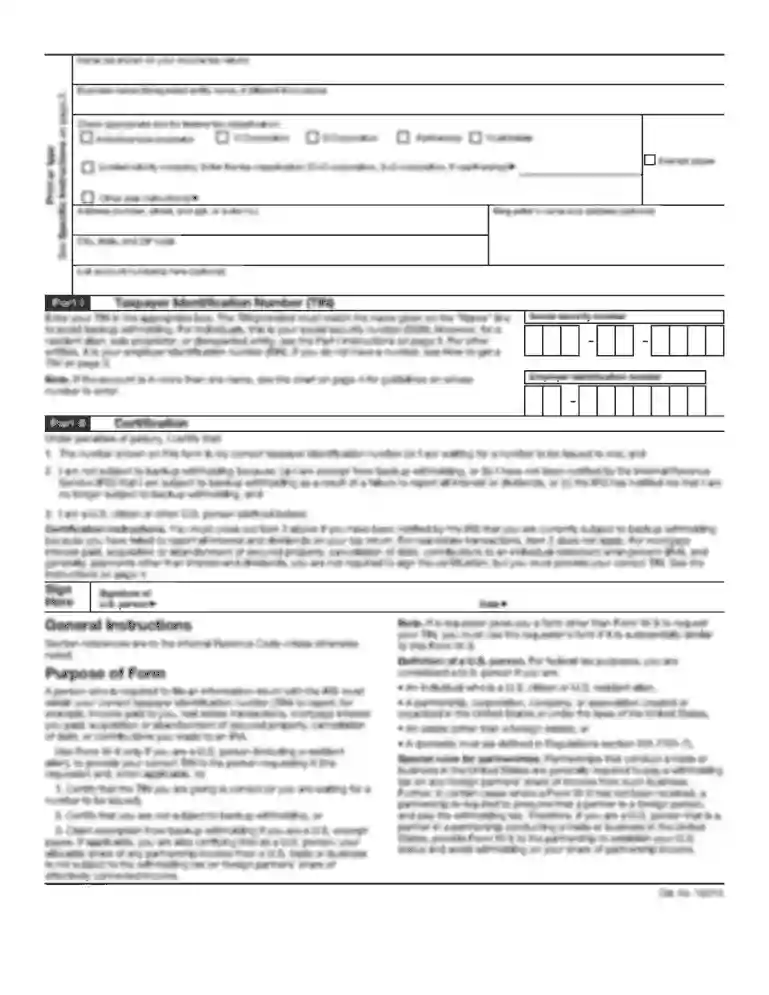
Type text, add images, blackout confidential details, add comments, highlights and more.

Draw your signature, type it, upload its image, or use your mobile device as a signature pad.

Send w9 form washington state via email, link, or fax. You can also download it, export it or print it out.
The Washington State W-9 form is a crucial document for individuals and businesses within the state that need to report certain financial information to the Internal Revenue Service (IRS). This form serves the primary purpose of collecting the Taxpayer Identification Number (TIN) from individuals, corporations, or partnerships to report income paid to the IRS. The W-9 is essential for entities involved in activities such as freelance work, independent contracting, and various forms of business, allowing them to provide accurate financial reporting. It ensures compliance with tax laws and assists with the documentation required for financial auditing.
Acquiring a W-9 form in Washington state can be done through several channels. Here is how you can obtain it:
Visit the IRS Website: The IRS provides a downloadable PDF version of the W-9 form on its website. This is the most direct and reliable source to access and download the form free of charge.
Tax Software Platforms: Many tax preparation websites and software, such as TurboTax and QuickBooks, also offer the option to download or fill out a W-9 form. These platforms may offer additional guidance and support for completion.
Request from Payers: Often, a company or individual who requires the form will provide one to you. When entering into a new financial relationship that mandates W-9 submission, the payer might send this form directly for completion.
Filling out the Washington State W-9 form requires attention to detail to ensure accuracy and compliance. Follow these steps:
Personal Information: Start by entering your name as shown on your tax return. If you are running a business, enter the business name or disregarded entity name if different from your own.
Business Entity Type: Check the appropriate box for federal tax classification (e.g., individual/sole proprietor, C corporation, S corporation, partnership, trust/estate).
Exemptions: If applicable, provide any exemptions for payee code or exemption from FATCA reporting code.
Address and TIN: Input your address, city, state, and ZIP code. Ensure your TIN—either your Social Security Number (SSN) or Employer Identification Number (EIN)—is correct to avoid processing delays or incorrect tax submissions.
Certification: Read the certification statement carefully and sign in the appropriate field to confirm that the information provided is accurate and truthful.
The W-9 form includes several critical components that ensure the correct gathering of information for tax purposes. The primary elements are:
While the W-9 form itself is a federal document, the way it is utilized can have state-specific implications. In Washington:
IRS guidelines mandate that the W-9 is used accurately to report the correct TIN and identify the taxation category of the payee. Specific IRS regulations include:
The W-9 form is used predominantly by:


Failure to accurately complete or submit a W-9 when requested can lead to several consequences:
You need to use only trustworthy software solutions with strong data protection compliance to approve your documents electronically. DocHub is just the type of service you need! It stores data on Amazon Web Servers and complies with all necessary security criteria and eSignature regulations, so it’s a trusted way to eSign your 2022 w9 form to print or other documents with this tool.
You can find the latest and most relevant version of the w 9 form 2023 washington state in our DocHub forms collection. Browse it by categories or use the search field to locate the exact template that fits your case. You can open this form for editing after you find it.
At DocHub, your data security is our priority. We follow HIPAA, SOC2, GDPR, and other standards, so you can work on your documents with confidence.
For federal tax purposes, you are considered a U.S. person if you are: An individual who is a U.S. citizen or U.S. resident alien;. A partnership,Read more
The Manual is divided into sections stating Medi-Cal program requirements and regulatory/contractual standards to support you in providing high quality andRead more


