Definition & Meaning of the Mechanic Application Form
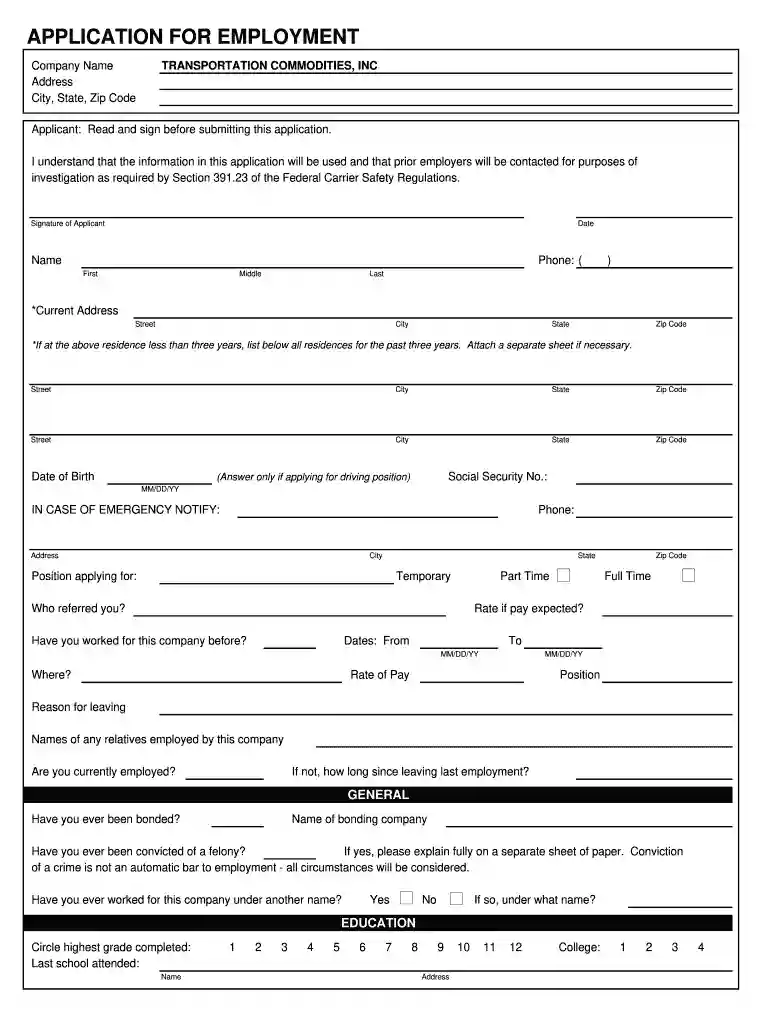
The mechanic application form is a specialized document used primarily for applicants seeking employment in the automotive repair and maintenance industry. It serves as a formal method through which employers collect essential information about candidates who are applying for mechanic positions. The primary purpose of this form is not only to gather personal details but also to assess the qualifications and experience of potential employees in the automotive sector.
Key Components of the Mechanic Application Form
- Personal Information: This section typically requests the applicant’s full name, address, contact information, and sometimes social security number.
- Employment History: Applicants provide details about previous jobs, including employer names, job titles, responsibilities, and duration of employment. This helps employers gauge relevant experience.
- Education and Qualifications: This area includes information about formal education, vocational training, and any specific certifications relevant to automotive repair, such as ASE (Automotive Service Excellence) certifications.
- Skills and Experience: Here, applicants might list their mechanical skills, specializations (such as diesel engines, electrical systems), and hands-on experiences, which are crucial for evaluating their fit for the role.
The crucial aspect is that the mechanic application form is designed to help employers make informed hiring decisions, emphasizing the relevance of experience and education in the automotive field.
Steps to Complete the Mechanic Application Form
Completing the mechanic application form accurately is vital for applicants to present themselves effectively to potential employers. Following a clear procedure ensures all necessary information is provided without omissions that might hinder the opportunity for employment.
Step-by-Step Guide
- Gather Necessary Information: Before starting the application, it is essential to have personal identification, employment history, and educational background readily available.
- Fill Out Personal Information: Clearly enter your name, address, phone number, and email. Ensure this information is up to date and accurate.
- Detail Employment History: List previous jobs, starting with the most recent. Include the name of the employer, positions held, duration of employment, and a brief description of duties performed.
- Include Education and Certifications: Provide details on schools attended, degrees earned, and any certifications relevant to automotive repair, ensuring to highlight those most pertinent to the mechanic role.
- Describe Skills and Experience: Use this section to list mechanical skills, specialized training, and hands-on experience that demonstrate technical knowledge and competencies in the field.
- Review and Submit: After filling out all sections, review the form for any errors or incomplete information before signing and submitting it to the prospective employer.
Following these steps can increase the likelihood of making a positive impression and obtaining an interview.
Important Terms Related to the Mechanic Application Form
Understanding pertinent terminology associated with the mechanic application form can significantly enhance both applicants’ and employers’ experiences. Knowing these terms fosters better communication and expectation management throughout the hiring process.
Key Terms Explained
- Filler: The individual who completes the application form, usually the job applicant.
- Employer: The company or individual seeking to hire a mechanic, responsible for reviewing applications and selecting candidates for interviews.
- Background Check: A process where an employer verifies the information provided by the applicant, often involving criminal history, credit checks, or previous employment verification.
- Certification: A documented recognition that an individual has demonstrated proficiency in a specific area of mechanics, such as automotive technology, which may be essential for certain job positions.
- References: Contacts provided by the applicant who can vouch for the applicant’s skills, experience, and character, often requested after an initial job interview.
Grasping these terms enables applicants to present their qualifications more effectively and helps employers understand the applicant's background better.
Application Process & Approval Time
The application process for the mechanic job often varies by employer, but typically involves several important steps that each applicant should be aware of in order to navigate the process efficiently.
Overview of the Application Process
- Submission: Applicants must submit their filled mechanic application form along with any required supplementary documents, such as resumes or cover letters.
- Initial Review: Employers or the hiring team will review the applications to shortlist candidates that meet the job requirements.
- Interviews: Shortlisted candidates are contacted for interviews, where they may be evaluated on technical knowledge, problem-solving abilities, and cultural fit within the company.
- Background Checks: Once a candidate is selected, the employer may conduct background checks to verify employment history and qualifications.
- Job Offer: Successful candidates receive a job offer, often contingent upon satisfactory completion of a background check or other prerequisites.
Expected Timelines
- Application Review: This can take anywhere from a few days to two weeks, depending on the volume of applications.
- Interview Scheduling: Once shortlisted, candidates may be interviewed within one to three weeks.
- Final Decision: Employers typically require an additional week or two for background checks before making a formal job offer.
Understanding this process prepares applicants for potential timelines and helps set expectations.
Examples of Using the Mechanic Application Form
Practical applications of the mechanic application form can illustrate how it functions in real-world scenarios. This understanding helps applicants prepare more effectively based on various contexts and requirements.
Situational Examples
- Independent Repair Shops: A local automotive repair shop utilizes a mechanic application form to assess various candidates. They emphasize specific sections on automotive certifications and previous job roles dealing with complex repairs, catering to their specialized services.
- Corporate Dealerships: A large car dealership requires a more comprehensive mechanic application form that includes fields for certifications from vehicle manufacturers. Here, applicants would benefit from emphasizing any specialized training in handling brand-specific vehicles.
- Fleet Maintenance Companies: Companies responsible for maintaining fleet vehicles look for experience in managing large-scale repairs. Their application forms often emphasize past experiences with heavy-duty vehicles and the ability to carry out repairs under time constraints.
These scenarios reflect how different employers may tailor their mechanic application forms to serve their specific needs, requiring applicants to adapt their responses accordingly.