
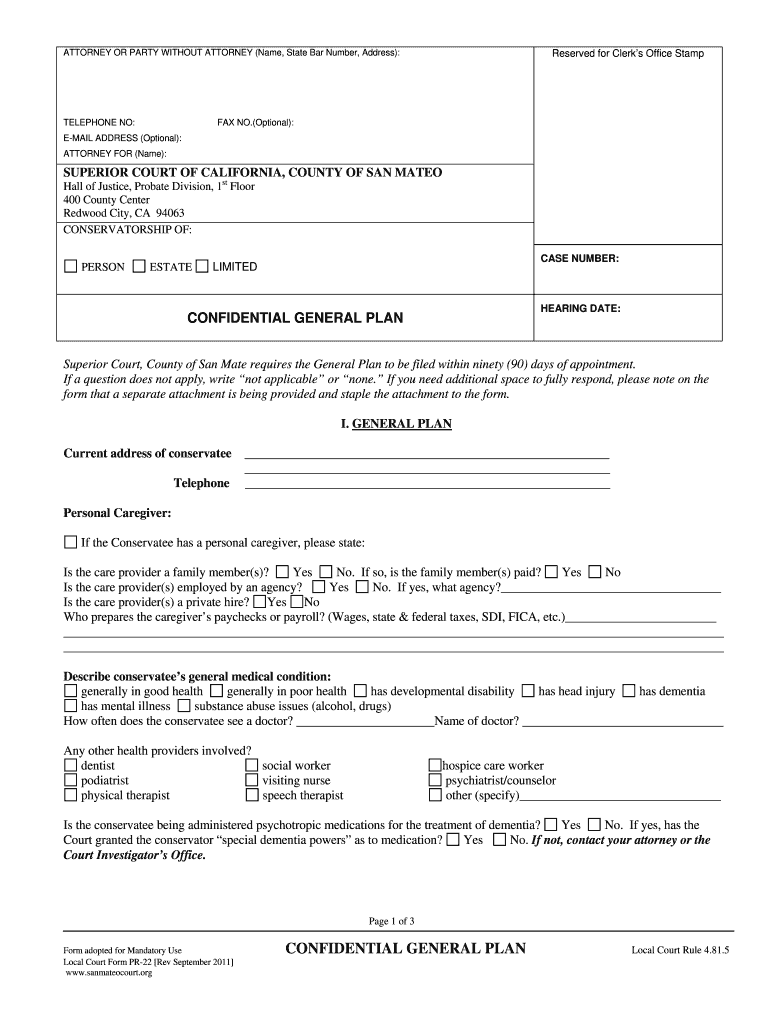







Definition and Meaning of California Form 22 Confidential General
California Form 22, also known as the Confidential General Plan form, is required by the Superior Court of California, specifically for conservatorship cases. This form serves to document crucial details related to the conservatee’s well-being and includes various aspects of personal care, medical condition, financial status, and management plans. The completion of this form is mandatory within ninety days following the appointment of a conservator, emphasizing its importance in the legal process of conservatorship.
The form itself is structured to gather specific information, ensuring that the conservator can effectively oversee the needs of the conservatee. Information required includes the conservatee's address, caregiver details, health provider contacts, financial entries (income and expenses), insurance coverage, and potential estate activities. This comprehensive approach facilitates a clearer understanding of the conservatee's situation, guiding the court and stakeholders in making informed decisions.
Steps to Complete the California Form 22 Confidential General
Completing the Form 22 is an essential step in the conservatorship process, and it involves several key steps to ensure accuracy and compliance with legal requirements.
-
Gather Necessary Information: Before starting to fill out the form, collect all relevant information regarding the conservatee, including health details, financial documents, and caregiver information.
-
Fill in the Conservatee's Details: Begin with the conservatee's full name, address, and date of birth. This section sets the foundation for the remaining information.
-
Document Caregiver Information: Include the name and contact details of the primary caregiver responsible for the conservatee’s daily needs. This is crucial for communication between parties involved.
-
Outline Health Providers: List any doctors, therapists, or specialists involved in the conservatee's care. This information aids in comprehensively understanding the medical support system in place.
-
Financial Overview: Provide a comprehensive account of the conservatee’s financial situation. This includes detailing sources of income, monthly expenses, and any outstanding debts, which is vital for managing the conservatee’s financial assets.
-
Insurance Details: Document any insurance coverage, including health, life, and property insurance. Understanding these elements ensures protection and access to necessary services.
-
Anticipated Estate Activities: Indicate any plans related to the conservatee's estate, including property management or anticipated changes.
-
Review for Accuracy: Once all sections are completed, carefully review the form for accuracy and completeness. Mistakes can result in delays or complications in the conservatorship process.
-
Submit to the Court: Finally, submit the completed form to the appropriate court jurisdiction to finalize the conservatorship process.
Who Typically Uses the California Form 22 Confidential General
The California Form 22 Confidential General is predominantly utilized by stakeholders involved in conservatorship situations. These typically include:
-
Conservators: Individuals or entities appointed by the court to care for the conservatee, responsible for their physical, medical, and financial needs.
-
Attorneys: Legal representatives assisting conservators through the legal process. They may help in gathering necessary information and ensuring compliance with legal standards.
-
Court Personnel: Judges and court staff reviewing the form as part of the conservatorship proceedings. They use the information to make informed decisions regarding the conservatee’s welfare.
-
Family Members: Relatives involved in the conservatorship may also have a vested interest in the comprehensive details documented in the form. They often collaborate with the conservator in planning and ensuring the best outcomes for the conservatee.
By understanding who typically uses the Form 22, stakeholders can effectively navigate the conservatorship process and fulfill their legal responsibilities.


Important Terms Related to California Form 22 Confidential General
Familiarizing oneself with the terminology associated with California Form 22 can significantly aid in the completion and understanding of the form. Key terms include:
-
Conservatorship: A legal process by which a court appoints a person or entity to manage the affairs of an individual deemed incapable of doing so.
-
Conservatee: The individual who is under the care of the conservator, typically due to incapacity due to age, illness, or disability.
-
Caregiver: A professional or family member providing care and support to the conservatee, responsible for managing day-to-day activities.
-
Financial Assets: The monetary resources and properties owned by the conservatee, which must be managed appropriately during a conservatorship.
-
Medical Providers: Healthcare professionals involved in the conservatee’s treatment and care, crucial in planning and documenting health-related needs.
Understanding these terms enhances the clarity and effectiveness of the form, ensuring all parties involved are on the same page regarding the details and requirements of the conservatorship process.
Legal Use of the California Form 22 Confidential General
The California Form 22 carries significant legal weight, serving as an official document within the judicial system. Its legal use entails several key aspects:
-
Official Documentation: The form serves as a record of the conservator's plans and responsibilities, ensuring that the court has a clear understanding of the conservatee's situation.
-
Accountability Measures: By requiring detailed information, the form facilitates ongoing oversight by the court. This accountability is crucial for protecting the conservatee's welfare.
-
Evidence in Disputes: Should disputes arise regarding the conservatorship or the management of the conservatee’s affairs, the completed Form 22 can serve as evidence in court proceedings, substantiating the conservator's actions and decisions.
-
Rights and Legal Obligations: Understanding the legal implications of the form ensures that conservators and stakeholders recognize their rights and obligations under California law, preventing potential legal repercussions.
The legal framework surrounding the use of the Form 22 underscores its importance in the conservatorship process, ensuring that all necessary legal standards are met for the protection of the conservatee.




