





Understanding the Firearms Qualification Score Sheet
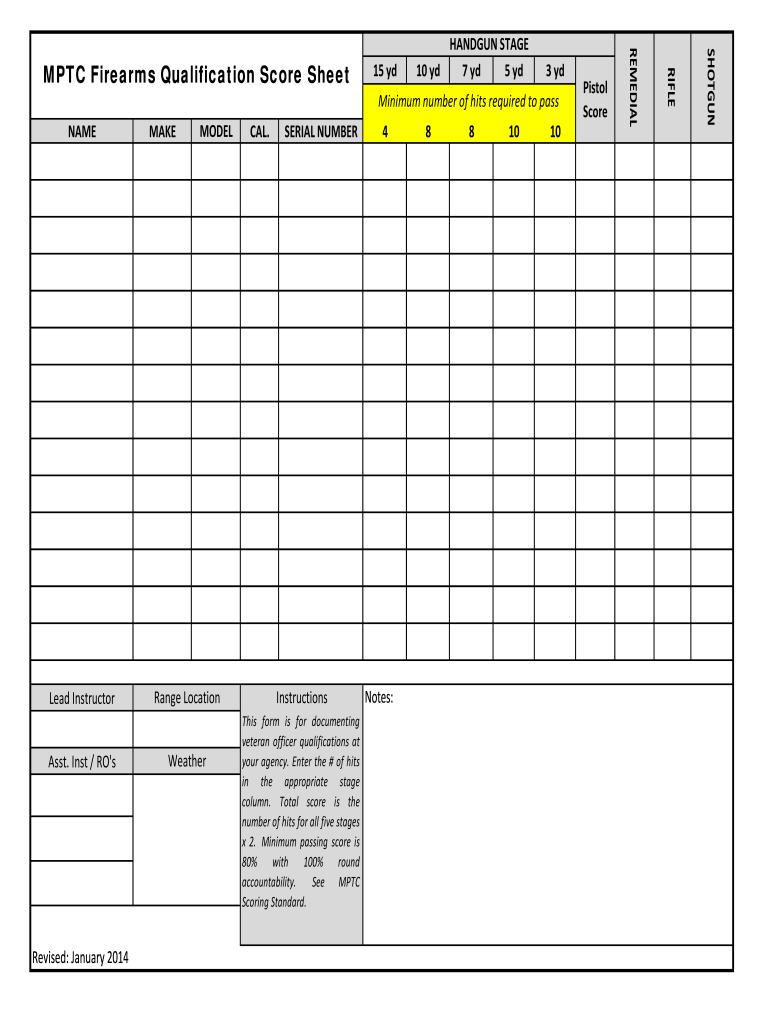
The firearms qualification score sheet serves as a crucial document for tracking and verifying the proficiency levels of individuals engaging in firearms training and qualification. It contains essential information required by law enforcement agencies, military units, and private security firms. This document provides a systematic way to measure a shooter's performance during qualification exercises.
Key Components of the Firearms Qualification Score Sheet
-
Basic Information: The score sheet typically includes spaces to fill in the participant's name, badge number, date, and type of firearm used. Ensuring accurate details is critical for record-keeping and liability.
-
Qualification Stages: The sheet outlines various qualification stages, detailing the specific drills or exercises that must be completed. This format helps in maintaining consistency across different shooting events.
-
Scoring Criteria: The document specifies how scores are calculated based on the number of hits, accuracy, and time taken for each qualification stage. For example, a shooter may need to achieve a minimum passing score—often set at eighty percent—to successfully qualify.
How to Use the Firearms Qualification Score Sheet
-
Preparation: Before beginning the qualification, ensure all participants understand the scoring criteria. This includes knowing what constitutes a hit, how to score various drills, and the minimum passing requirements.
-
Conducting the Qualification:
- Set up the necessary equipment and establish safety protocols.
- Begin the qualification stages as outlined on the score sheet, making sure to document each participant's performance accurately.
-
Filling Out the Score Sheet:
- As participants complete each stage, record their scores in the corresponding sections.
- Use clear, legible handwriting or type directly into a digital version of the form for clarity.
Legal and Compliance Considerations
Firearms qualification score sheets play a critical role in legal compliance and liability protection. Accurate documentation ensures that training requirements are met, which is essential for liability in the event of an incident. In the United States, many state and federal regulations stipulate that agencies must document firearms training thoroughly to maintain accountability.
-
Regulatory Standards: Different agencies may have specific standards regarding the use and maintenance of firearms qualification score sheets. Familiarizing your agency with these requirements is crucial for compliance.
-
Record Retention: Keeping these forms on file for a specified duration is vital. Check local laws for retention periods, as they may dictate how long records should be kept.
Best Practices for Maintaining Score Sheets
-
Digital Documentation: Utilize digital versions of the firearms qualification score sheet for better organization and accessibility. Tools like DocHub can streamline document creation and management, allowing for real-time updates and annotations.
-
Audit Trails: Maintaining an audit trail for the score sheet provides an added layer of security. Document all changes or revisions made to ensure transparency.
-
Training to Document: Conduct training sessions for personnel on how to properly fill out and submit the score sheet. Understanding the importance of accuracy can enhance compliance and efficiency.
Example Scenarios Involving the Score Sheet
-
Law Enforcement Training: In a police department, officers must demonstrate proficiency with their service pistol annually. Each officer’s score sheet reflects their performance over several shooting scenarios, including timed drills and accuracy tests.
-
Military Firearms Qualification: In a military context, soldiers may undergo rigorous assessments using a standardized qualification score sheet for various weapons systems, ensuring they meet operational readiness criteria.
-
Private Security Companies: Security personnel are often required to qualify with their firearms regularly. Proper documentation through a qualification score sheet enhances the professionalism and accountability of the organization.
Variants of the Score Sheet
Different types of firearms qualification score sheets exist, designed to meet the needs of various organizations. For instance:
- OPOTA Pistol Qualification Score Sheet: Tailored for Ohio peace officer training, aligning with state-specific requirements.
- Navy Pistol Qualification Score Sheet: Compliant with U.S. Navy standards for pistol training and certification.
- MPTC Firearms Qualification Score Sheet: Used by agencies in Massachusetts, this version includes detailed scoring guidelines and requirements.
By adhering to structured documentation practices and understanding the various aspects of the firearms qualification score sheet, organizations can ensure a high level of accountability and training compliance in firearms operations.




