





Definition and Meaning of Application for Accreditation as a Real Estate Salesperson
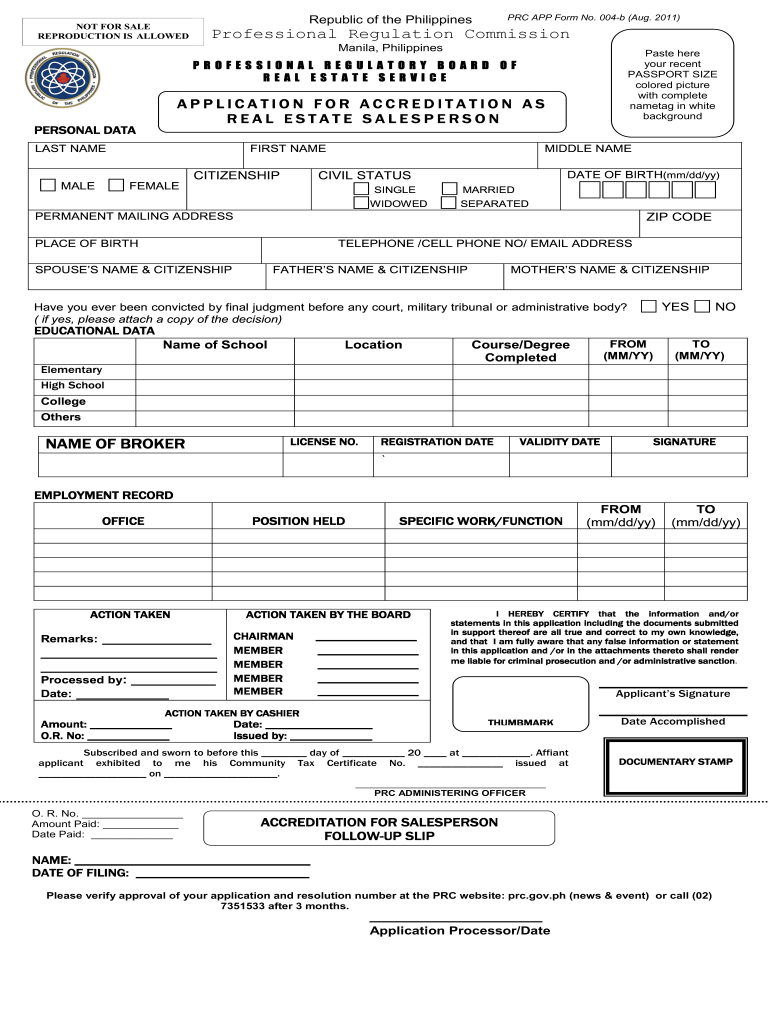
The application for accreditation as a real estate salesperson serves as a formal request submitted to regulatory bodies, often the Professional Regulation Commission (PRC), in order to obtain the necessary credentials to practice in the real estate industry. This application is crucial for individuals seeking to become certified real estate salespersons, demonstrating that they have met specific educational, ethical, and legal standards required in their state or region.
Purpose of the Application
- To allow candidates to prove their qualifications and readiness to operate within the real estate market.
- To maintain high industry standards by ensuring only qualified individuals are granted accreditation.
- To provide a streamlined process for evaluation and approval by regulatory authorities.
Key Components
- Personal Information: Applicants must provide personal details such as their name, address, and contact information.
- Educational Background: Required documentation typically includes transcripts or diplomas proving completion of relevant courses.
- Employment History: Applicants may need to outline their employment experience related to real estate or sales, showcasing their practical skills.
Requirements for Submission of the Accreditation Application
Submitting an application for accreditation as a real estate salesperson involves meeting certain eligibility criteria and furnishing necessary documents. Compliance with these requirements is critical to avoid delays or rejections.
Eligibility Criteria
- Age: Applicants generally must be at least eighteen years old.
- Education: Completion of specific real estate courses or training programs accredited by the PRC or equivalent agencies.
- Good Moral Character: Many jurisdictions require a background check to ensure applicants have not engaged in fraudulent activities.


Required Documents
- Completed Application Form: Including personal details and signature.
- Proof of Educational Achievements: Transcripts, diplomas, or certificates from accredited institutions.
- Identification: A government-issued ID, detailing the applicant's identity.
Steps to Complete the Application Process
The process of applying for accreditation as a real estate salesperson involves several clearly defined steps. Adhering to the outlined procedure can enhance the likelihood of a successful application.
- Gather Required Documents: Collect all necessary forms, transcripts, identification, and other proof of eligibility.
- Complete the Application Form: Fill out the application accurately, ensuring that all information is correct and up to date.
- Submit the Application: Depending on local regulations, this can typically be done online, by mail, or in person at designated offices.
- Pay Application Fees: Ensure that any required fees are paid, as applications may not be processed without the appropriate payment.
- Await Processing: After submission, applicants will need to wait for the review and approval process to be completed by the regulatory body.
Important Considerations
- Review Period: Processing times can vary; applicants should allow adequate time for reviews.
- Follow-Up: It may be helpful to follow up with the regulatory authority to check the status of the application.
Important Dates and Filing Deadlines
Awareness of crucial dates and deadlines related to the application for accreditation as a real estate salesperson is necessary for timely submission and approval.
Common Deadlines
- Application Submission Dates: Various states or regions have specific deadlines for submitting applications, often aligning with educational session cycles.
- Renewal Dates: Once accredited, salespersons must renew their accreditation periodically, which may include continuing education requirements.
Consequences of Missing Deadlines
- Application Rejections: Late applications may be denied outright.
- Ineligibility for Certain Programs: Missing deadlines can result in loss of eligibility for programs or certifications that may support a real estate career.
Key Elements of the Accreditation Application
Understanding the fundamental components of the application for accreditation as a real estate salesperson helps to streamline the process and ensure that all necessary information is submitted.
Core Sections of the Application
- Personal Data Section: Essential for the identification and contact of the applicant.
- Educational Qualifications: Details regarding academic credentials must be clearly outlined to establish the applicant's preparedness.
- Work Experience: Highlighting any relevant sales or real estate experience strengthens the application.
Additional Information Section
- Affidavit of Truthfulness: A declaration affirming the accuracy of the information provided.
- Consent for Background Checks: Many applications require consent to conduct checks related to criminal history.
Legal Considerations of the Accreditation Application
The legal framework governing the application for accreditation as a real estate salesperson varies by state, reflecting the need for compliance with local laws and regulations.
Compliance with Regulations
- Licensing Laws: Each state has its own set of rules governing how salespersons are accredited and what activities they may perform.
- Ethical Standards: Applicants must adhere to strict ethical guidelines to maintain their accreditation.
Implications of Non-Compliance
- Legal Penalties: There could be fines or criminal charges for failing to adhere to local regulations.
- Revocation of Accreditation: Non-compliance could lead to suspension or complete revocation of a salesperson’s accreditation.
Frequently Asked Questions about the Accreditation Process
Addressing common inquiries regarding the application for accreditation as a real estate salesperson can provide clarity for prospective candidates.
What happens if I miss a deadline?
For applicants who miss a submission deadline, it is advisable to reapply for the next accreditation cycle, as missed deadlines generally mean a loss of application status for that period.
Can I apply online?
Many states now offer online applications through their official regulatory bodies, allowing for a more efficient and less cumbersome application process.
What if my application is denied?
If an application is denied, applicants will often receive a reason for the denial, allowing them to address the specific issues before reapplying.
Is there support available during the application process?
Various regulatory agencies provide resources, including guides or customer support, to assist applicants in navigating the application process.


