
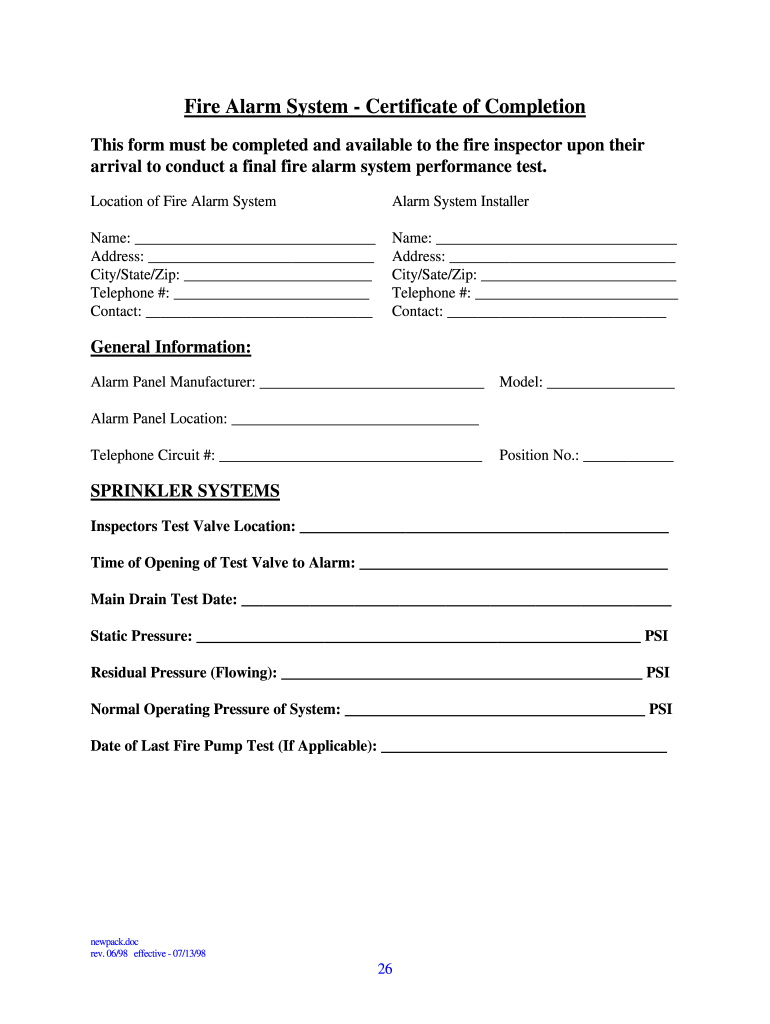







Definition and Meaning of the Fire Alarm Certificate of Completion
The fire alarm certificate of completion is an official document that certifies the successful installation and compliance of a fire alarm system with local codes and regulations. It is critical for obtaining final approvals from fire marshals or other regulatory bodies. This certificate serves as a testament to the installation's conformance with safety standards, including those outlined in the National Fire Protection Association (NFPA) codes such as NFPA 72.
This document often encompasses specifics such as the installation date, location, types of fire alarm devices used, and the installer’s credentials. The certification confirms that the system has been thoroughly tested and is operational. Proper completion of this document is essential for the legal operation of fire alarm systems in commercial and residential properties.
How to Obtain the Fire Alarm Certificate of Completion
To obtain a fire alarm certificate of completion, follow these essential steps:
-
Hire a Qualified Installer: Ensure your fire alarm system is installed by a certified professional who is familiar with local codes.
-
Complete Necessary Tests: The installer must conduct tests to confirm that the system works correctly. This may include visual inspections, functionality tests, and alarm signal verifications.
-
Documentation of Tests: Collect all test results and completion reports to compile your official records.
-
Submission to Authority Having Jurisdiction (AHJ): Submit the required documentation, along with any forms stipulated by local regulations, to the AHJ or fire marshal for review.
-
Receive Certification: After a successful inspection and review, you will receive the fire alarm certificate of completion, confirming that your system meets all necessary codes.
It is advisable to consult with local authorities for specific requirements that may apply to your location, as regulations can vary significantly between states and municipalities.
Key Elements of the Fire Alarm Certificate of Completion
The fire alarm certificate of completion includes several key components that must be accurately completed to ensure its validity:
-
Installer Information: The name, address, and qualifications of the installer, providing assurance of their credentialing.
-
System Information: Details about the fire alarm system, including the model, brand, and type of devices installed, such as smoke detectors and alarms.
-
Installation Date: The specific date when the fire alarm system was installed, crucial for compliance tracking.
-
Testing Information: Summarized results of the testing process, indicating that the system has been verified for functionality.
-
Signature and Certification: A section where the installer or responsible person signs to indicate that all information given is accurate and that the system meets the established regulations.
Having these elements correctly captured ensures that the document is not only complete but also stands up to scrutiny from inspectors or fire safety authorities.
Steps to Complete the Fire Alarm Certificate of Completion
Completing the fire alarm certificate of completion involves several detailed steps:
-
Gather Information:
- Collect all relevant details about the installation, including the date, type of system, and devices used.
- Ensure the installer has the required qualifications for certification.
-
Conduct Required Testing:
- Perform all required tests per local codes, ensuring that the fire alarm system operates correctly across all functions.
-
Fill Out the Certificate:
- Enter accurate information in each segment of the certificate, ensuring clarity and correctness.
-
Sign the Document:
- The installer must sign off on the certificate to validate it. This signature assures that the installation adheres to the necessary standards.
-
Submit for Approval:
- Provide the completed certificate along with any additional required documents to the local authority for final approval.
-
Maintain Copies:
- Keep copies of the completed certificate and related documentation for your records, as you may need to present this during inspections or for building audits.
Completing these steps accurately helps ensure compliance and can be crucial for any future inspections or compliance audits.
Legal Use of the Fire Alarm Certificate of Completion
The legal implications of the fire alarm certificate of completion are significant. This document legally affirms that the fire alarm system has been installed by a qualified individual and tested to meet regulatory standards. It is often necessary for:
-
Building Inspections: Local authorities require this certificate to approve occupancy permits and compliance with safety codes.
-
Insurance Requirements: Insurance companies may request proof of a compliant fire alarm system when processing claims or issuing policies.
-
Sale of Property: When selling a property, having this certificate can streamline the transfer process, assuring prospective buyers of the safety standards in place.
Failure to secure a fire alarm certificate of completion can lead to fines, liability issues, or increased insurance costs, highlighting the importance of adhering to fire safety regulations.
Important Terms Related to Fire Alarm Certificate of Completion
Understanding associated terminology is essential for the proper completion and knowledge of the fire alarm certificate. Key terms include:
-
NFPA 72: The National Fire Alarm and Signaling Code, providing detailed requirements for fire alarm systems and their installation.
-
Authority Having Jurisdiction (AHJ): The local authority that enforces the fire safety codes. This could be a fire department, building department, or an independent inspector.
-
Record of Completion: Often used interchangeably with the fire alarm certificate of completion, this document may emphasize the complete history of the fire alarm system's installation and testing.
-
Alarm Verification: The method of ensuring that triggers on the system are functioning correctly to produce the expected alarms in case of fire.
These terms are integral to discussions regarding fire alarm systems, providing clarity on the procedural and regulatory standards involved.




