






Definition and Meaning of the EU Health Certificate Example
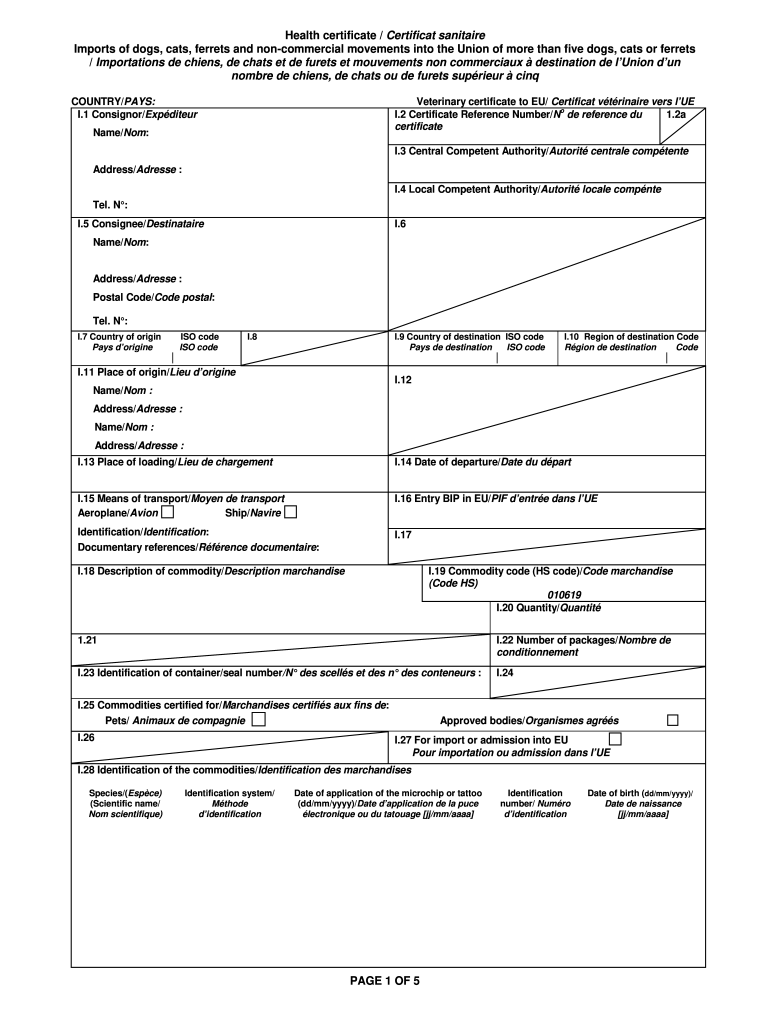
The EU health certificate example refers to a standardized document required for the importation of pets, particularly cats, dogs, and ferrets, into the European Union. This certificate ensures that animals meet specific health standards and vaccination requirements to prevent the transmission of zoonotic diseases.
- Purpose: The primary purpose of the EU health certificate is to certify that the animal is free from contagious diseases and has received the necessary vaccinations, particularly against rabies.
- Scope: It applies to non-commercial movements of more than five animals, ensuring that both individual pet owners and breeders adhere to regulations for importation.
- Regulatory Framework: The certificate is governed by EU regulations on animal health, which aims to protect public health and animal welfare.
Key Elements of an EU Health Certificate Example
The EU health certificate is composed of several critical sections that provide vital information about the animal and its health status:
- Consignor and Consignee Information: Details of the individual or organization sending the animal and the recipient’s contact information.
- Animal Identification: Information about the animal, including breed, age, microchip or tattoo identification, and health records.
- Vaccination Records: Documentation confirming the animal has been vaccinated against rabies and other relevant diseases, complete with dates and details of vaccinations.
- Veterinary Examination Results: A statement from an official veterinarian confirming the health status of the animal and any necessary treatments, such as for Echinococcus multilocularis.
- Validity Period: The certificate includes a duration for which it remains valid, usually aligned with vaccination periods and travel dates.
How to Obtain the EU Health Certificate Example
Obtaining an EU health certificate involves a series of steps to ensure compliance with regulations:
- Schedule a Veterinary Appointment: Arrange for a qualified veterinarian to conduct a health examination of the animal.
- Complete Required Vaccinations: Ensure the animal is vaccinated against rabies at least 21 days prior to travel if applicable.
- Request the Health Certificate: After the examination, request the specific EU health certificate from the veterinarian, ensuring all necessary details are included.
- Submission to Competent Authority: Some regions may require the certificate to be endorsed by a local competent authority, which adds an additional layer of verification.
- Document Retention: Keep a copy of the certificate for personal records and provide it during travel or at customs if required.
Steps to Complete the EU Health Certificate Example
Completing the EU health certificate involves several detailed steps necessary for accuracy and compliance:
- Collect Animal Information: Gather all relevant data about the pet, including breed, identification number, and owner details.
- Fill in Veterinary Details: The veterinarian must provide their information, including qualifications and details of the examination performed.
- Vet Health Examination: The veterinarian performs a thorough health check to determine the animal’s suitability for travel and verifies vaccination records.
- Certification Completion: Upon verification, the veterinarian completes the certificate with applicable signatures and seals, validating the document.
- Review and Verify: Ensure all details are accurately reflected on the certificate to avoid issues during travel.
Important Terms Related to the EU Health Certificate Example
Certain terms are essential to understand when dealing with the EU health certificate example:
- Consignor: The person or entity that sends the animal from one location to another.
- Consignee: The individual or entity receiving the animal.
- Official Veterinarian: A licensed veterinary professional authorized to conduct health examinations and certify animal health.
- Echinococcus multilocularis: A parasite that can affect dogs and humans, requiring treatment and certification for affected animals.
- Local Competent Authority: The designated governmental agency or office responsible for approving health certificates in a specific jurisdiction.
Legal Use of the EU Health Certificate Example
The legal use of the EU health certificate example is crucial for ensuring compliance with import regulations:
- Legitimacy: Only certificates issued by licensed veterinarians are deemed valid, and they must meet specific EU standards.
- Cross-Border Regulations: Compliance with both EU and national regulations is necessary for transport across borders, affecting the type of certification needed depending on the animal's origin and destination.
- Consequences of Non-Compliance: Inaccurate or incomplete certificates may result in fines, denial of entry for the animal, or quarantine procedures.
Examples of Using the EU Health Certificate Example
Practical scenarios illustrate the use of the EU health certificate example in various contexts:
- Relocating Pets: A family moving from the U.S. to Germany must obtain a health certificate for their dog, ensuring vaccinations and health checks are done prior to travel.
- Adopting a Pet Internationally: An individual adopting a cat from a rescue abroad will need to have an EU health certificate completed and verified before bringing the animal into the EU.
- Travel with Multiple Animals: A breeder transporting several dogs to a European dog show must have an EU health certificate reflecting the health status of each animal, ensuring compliance with the relevant regulations.




