







Definition and Meaning of Burial Transit Permit
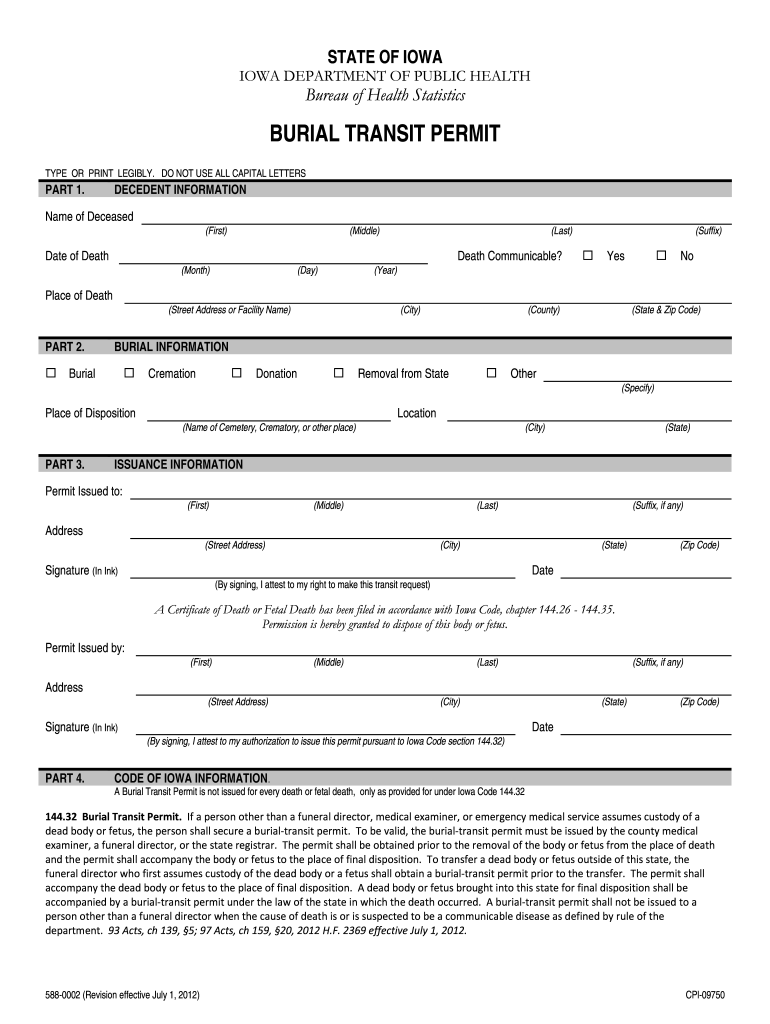
A burial transit permit is an official document required in the United States for the lawful transportation of a deceased individual. This permit serves as clear authorization for funeral homes, transport services, or individuals to move a body from one location to another, usually from a place of death to a burial site or crematory. It outlines pertinent information about the deceased, including identification details and the intended method of disposition—whether through burial, cremation, or other means—as mandated by state laws and regulations.
Typically, the burial transit permit includes:
- Decedent Information: Name, date of birth, date of death, and identification number.
- Transportation Details: Information about the burial or cremation site, transportation methods, and the responsible party coordinating the transit.
- Legal Compliance: The document signifies compliance with local and state regulations governing the transportation of deceased bodies, ensuring proper handling throughout the process.
Understanding the meaning and requirements of a burial transit permit is crucial for anyone involved in funeral planning or transporting a deceased loved one.
How to Obtain a Burial Transit Permit
Obtaining a burial transit permit involves a systematic process that typically requires collaboration between funeral service providers and state authorities. The specific steps can vary by state, but generally include:
-
Engage a Funeral Director: Most individuals choose to work with a licensed funeral director who is familiar with local laws and procedures. The funeral director will guide you through the process and often handle much of the paperwork.
-
Complete Required Documentation: Information pertaining to the deceased, including identification and the cause of death, must be filled in on the application form. The funeral director will assist in obtaining the necessary documents, such as a death certificate or cremation authorization if applicable.
-
Submit the Application: Once the form is completed, it must be submitted to the appropriate local or state registrar. Depending on the jurisdiction, this can often be done electronically, by mail, or in person.
-
Receive the Permit: After review and approval, the burial transit permit will be issued. This document is crucial as it legally validates the transportation of the deceased.
-
Transport the Deceased: The issued permit must accompany the deceased during transportation to ensure compliance with legal requirements.
It is advisable to begin this process promptly after death, as the arrangement details surrounding transportation can vary widely based on location and specific circumstances.
Key Elements of the Burial Transit Permit
Understanding the key elements of a burial transit permit can provide clarity and ensure compliance with legal requirements. The main components generally include:
- Decedent Information: The full name, date of birth, and date of death of the individual.
- Disposition Method: Whether the remains will be buried, cremated, or otherwise handled, specified explicitly in the permit.
- Transmitting Information: Details about the transportation, including the vehicle used and driver details when relevant.
- Signer Information: The permit must include the signature of the funeral director or authorized representative certifying that the required documentation is complete and accurate.
These elements ensure that all parties involved in the transportation process have access to the necessary and legally required information, helping facilitate a respectful and lawful transit of the deceased.
Important Terms Related to Burial Transit Permit
Familiarity with the terminology associated with a burial transit permit can enhance understanding and facilitate better communication between involved parties. Some critical terms include:
- Disinterment: The process of exhuming or removing a body from its burial place, which usually requires additional permits.
- Interment: The act of placing a deceased person’s remains into the ground or burial site.
- Mortuary: The place where bodies are stored before burial or cremation, often where funeral services are arranged.
- Transit: Refers to the act of transporting the deceased from one location to another.
Being well-versed in these terms helps individuals navigate the regulatory landscape surrounding the transportation and disposition of deceased individuals with ease.
State-Specific Rules for the Burial Transit Permit
Each state has specific regulations governing burial transit permits, influenced by local laws and enforcement practices. Understanding these rules is crucial for compliance:
- Permit Issuance: In some states, permits are obtained through health departments, while others utilize county clerks or specific funeral boards. Research the correct authority in your state to avoid delays.
- Timeframe for Issuance: Some states impose strict timelines for issuing permits after death has been registered, typically requiring applications to be submitted within a set number of days.
- Associated Fees: Certain jurisdictions may charge fees for issuing burial transit permits, which can vary significantly across states.
For example, Texas and North Carolina have established specific guidelines that must be adhered to, with varying requirements compared to states like Illinois or Florida. It is advisable to consult with a local funeral director or relevant authority to ensure compliance with specific state rules.
How to Complete the Burial Transit Permit
Completing a burial transit permit requires attention to detail as all information must be accurate and truthful. The following steps outline how to effectively fill out the permit:
- Identify Personal Information: Enter accurate decedent details, including full name, Social Security number, and cause of death.
- Select Disposition Type: Mark the appropriate box for the method of disposition—burial or cremation.
- Provide Transportation Details: Include the transportation company’s name or personal details if the individual is being transported by a family member.
- Include Signatures: Ensure that all necessary parties, especially the funeral director and responsible family member, sign the document where required.
- Review and Submit: Double-check all entries for accuracy before submitting the application to the relevant authority.
Following these steps meticulously helps prevent errors that could lead to delays or legal complications during the transit process.




