
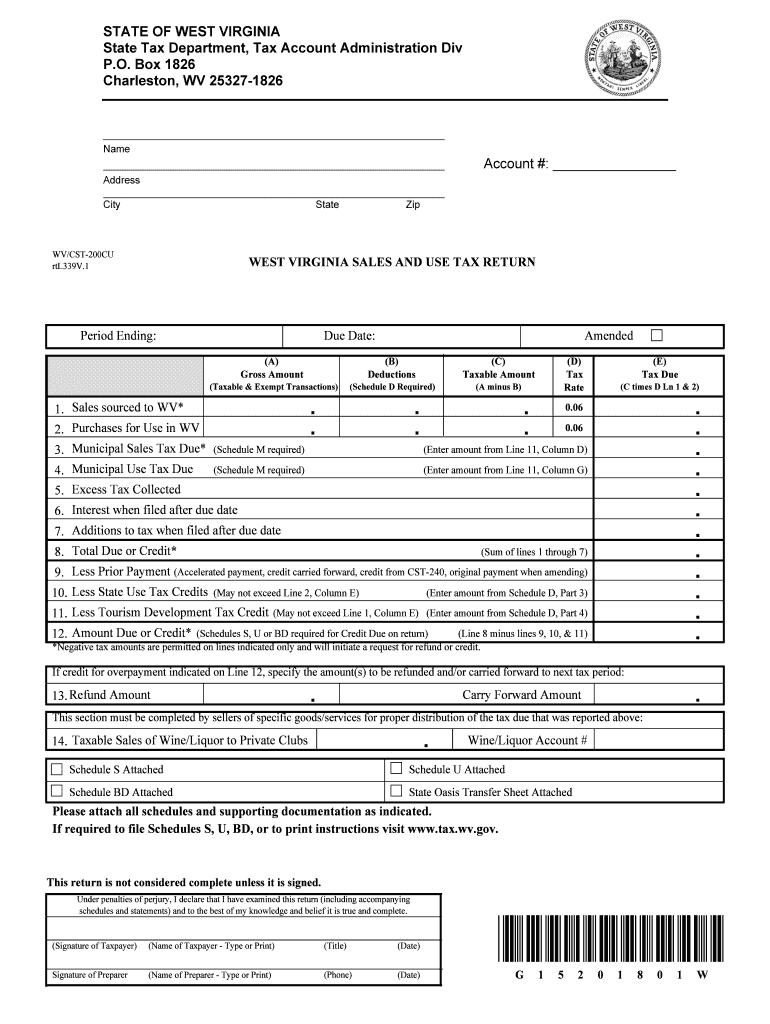







Definition and Meaning of the WV CST 200CU
The WV CST 200CU is the West Virginia Sales and Use Tax Return specifically designed for businesses that collect sales tax from customers. This form allows companies to report sales tax liabilities accurately and ensure compliance with state tax regulations. The CST 200CU is particularly relevant for businesses operating in sectors where sales and use tax applications apply, helping to facilitate proper revenue collection for the state.
Sales tax represents a percentage of the sale price charged to the consumer. The Northwest state enforces regulations requiring businesses to remit collected sales taxes regularly, ensuring essential funding for state services and infrastructure. Understanding the nuances of the CST 200CU is crucial for businesses to maintain compliance and avoid penalties.
Key Components of the WV CST 200CU
- Identification Information: Includes business name, address, and tax identification number.
- Sales Amounts: Details total sales that are subject to sales tax, as well as any exemptions claimed.
- Tax Computation: Calculation of the total sales tax due based on reported sales.
- Deductions: Includes sections for non-taxable sales, exempt sales, and any sales tax credits applied.
Steps to Complete the WV CST 200CU
Filling out the WV CST 200CU involves several detailed steps to ensure all necessary information is accurately reported.
- Gather Required Information: Collect business identification details, sales numbers, exemption certificates, and previous tax filings.
- Report Total Sales: Enter the gross sales amount in the designated field, breaking it down into taxable and non-taxable segments.
- Calculate Sales Tax Due: Apply the current sales tax rate to the taxable sales amount to compute the total tax owed.
- Include Deductions: Document any eligible deductions or credits, ensuring supporting documentation is attached if necessary.
- Review and Submit: Check for accuracy and completeness before submitting online or via mail to the appropriate department.
Important Terms Related to the WV CST 200CU
Understanding specific terminology is essential for effective completion of the WV CST 200CU. Below are key definitions relevant to the form:
- Sales Tax: A tax imposed on sales of goods and services, calculated as a percentage of the sale price.
- Use Tax: A complementary tax imposed on goods purchased out of state but used within West Virginia.
- Taxable Sales: Sales of products or services that are subject to sales tax.
- Exempt Sales: Sales that qualify for exemption from sales tax under state law, often requiring supporting documents.
Who Typically Uses the WV CST 200CU
The WV CST 200CU is primarily utilized by various business entities, including:
- Retail Businesses: Shops and stores selling goods directly to consumers.
- Service Providers: Companies offering taxable services that should collect sales tax.
- E-commerce Businesses: Online sellers that transact taxable sales within West Virginia.
- Wholesalers and Distributors: Entities distributing products that may resell to retailers or end-users.
Each of these entities must be diligent in remitting sales tax to remain compliant with state regulations.


Filing Deadlines and Important Dates
Timeliness is crucial when it comes to filing the WV CST 200CU. The following are key deadlines:
- Monthly Filers: Tax returns are due on the 20th day of the month following the reporting period (e.g., January sales tax is due February 20).
- Quarterly Filers: The returns are due on the 20th of the month following the end of the quarter (e.g., Q1 returns due April 20).
- Annual Filers: Annual returns must be submitted by January 30 of the following year.
Failure to meet these deadlines can result in penalties and interest charges on any taxes owed.
Required Documents for the WV CST 200CU
To ensure accurate reporting and compliance, specific documents may be required when completing the WV CST 200CU, such as:
- Sales Invoices: Proof of sales transactions that reflect total sales and tax collected.
- Exemption Certificates: Documentation of exempt sales that justify claims of non-taxable transactions.
- Previous Tax Forms: Copies of prior CST forms for reference and reconciliation of reported figures.
Maintaining complete and organized records assists in a smoother filing process.
Key Elements of the WV CST 200CU
Key elements of the WV CST 200CU include:
- Taxpayer Information: Essential identification details of the business.
- Sales Reporting: Breakdown of taxable and non-taxable sales reported.
- Tax Calculation: Steps outlined for calculating the total tax liability.
- Deductions and Exemptions: Areas provided for claiming eligible deductions or exemptions.
Each component must be filled out with care to avoid discrepancies in the tax audit process.
Examples of Using the WV CST 200CU
For practical application, consider these examples:
- Retail Store Example: A restaurant may need to report total food and beverage sales, applying sales tax accordingly. Any sales of gift cards may be reported differently if exempt from the sales tax.
- E-commerce Seller: A business conducting sales online may need to factor in shipping and handling charges into the sales tax computation, ensuring accurate reporting.
- Service Provider: A contractor offering taxable services must accurately assess sales tax on labor and materials, necessitating a comprehensive understanding of service taxation.
These examples underline the diversity of businesses required to utilize the CST 200CU and highlight the significance of accurate reporting in maintaining compliance and avoiding penalties.




