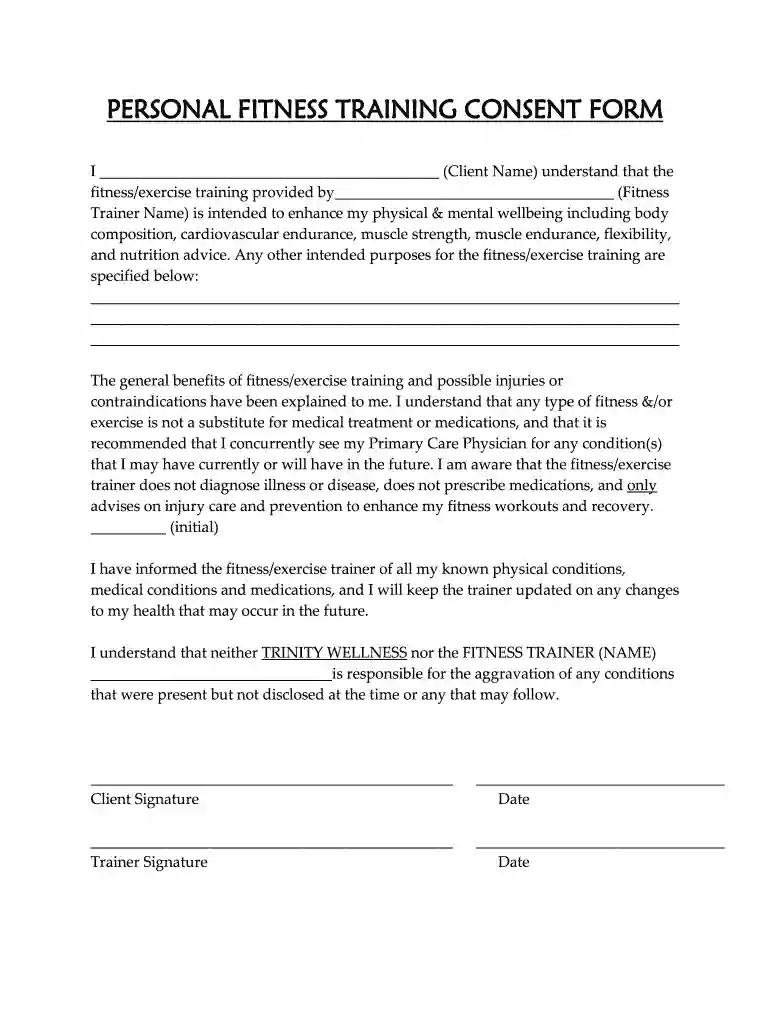
Personal training consent form 2026

Get Form
personal training consent form Preview on Page 1

Here's how it works

01. Edit your personal training consent form online
Type text, add images, blackout confidential details, add comments, highlights and more.

02. Sign it in a few clicks
Draw your signature, type it, upload its image, or use your mobile device as a signature pad.

03. Share your form with others
Send exercise consent form template via email, link, or fax. You can also download it, export it or print it out.

Definition and Purpose of the Personal Training Consent Form

The personal training consent form is a legal document designed to ensure that clients fully understand the nature of personal training services, including the potential benefits and risks associated with exercise programs. This form serves as an acknowledgment that the client has been informed about the training process and any associated health risks. It is a crucial step for both trainers and clients to maintain transparency and sets the foundation for a professional relationship.

  • Key Components:
    • Client Acknowledgment: Clients confirm they have been advised of the inherent risks involved in physical training and exercise, which can include injury or other health-related issues.
    • Medical Disclosure: Clients agree to disclose any pre-existing medical conditions that might affect their ability to participate in training sessions. This includes any injuries, medications, or health conditions.
    • Trainer Responsibilities: While trainers share the benefits and potential risks, they clarify that they are not responsible for diagnosing medical conditions or providing medical advice.

Understanding the purpose of the personal training consent form also ensures that both parties are aware of their responsibilities and the legal implications of the training relationship.

Key Elements of the Personal Training Consent Form

The personal training consent form must include several essential elements to be effective, compliant, and comprehensive. These elements help protect both the trainer and client.

  • Client Information: Full name, contact information, and emergency contact details.
  • Health History: A section for clients to detail any pre-existing health conditions, past injuries, or ongoing treatments, ensuring trainers can tailor programs safely.
  • Informed Consent Declaration: A clear statement allowing clients to acknowledge they understand the risks and benefits of the training.
  • Liability Waiver: A clause relieving the trainer of liability for any injuries sustained during training sessions, as long as they were not due to negligence on the trainer's part.
  • Signature Lines: Areas for both the client and trainer to sign, solidifying the agreement in the presence of each other.

Understanding these key components ensures that the consent form is legally binding and addresses the necessary areas of disclosure and acknowledgment.

Steps to Complete the Personal Training Consent Form

Completing the personal training consent form requires a structured approach to ensure all necessary information is included and accurate. Here’s how to effectively fill out the form:

  1. Read the Entire Document: Both the client and trainer should carefully read the entire form before signing. This minimizes misunderstandings regarding clauses and responsibilities.
  2. Fill in Personal Information: The client should provide full personal details, including name, address, phone number, and any preferred contact method.
  3. Detail Medical History: Clients are encouraged to be transparent about their medical history, including injuries or conditions, ensuring the trainer can create a safe exercise plan.
  4. Acknowledge Risks and Benefits: Clients must indicate their understanding of the potential risks and benefits associated with personal training and exercise.
  5. Sign and Date: Once the form is completed, both parties should sign and date the document, which finalizes the consent and acknowledges understanding of its contents.

By following these steps, both the trainer and client can proceed with confidence, ensuring they are protected legally while fostering a positive training relationship.

Legal Considerations for Using the Personal Training Consent Form

Using a personal training consent form comes with various legal considerations that ensure the document is enforceable and protects both parties involved in the training agreement. It is important to address these legal aspects thoroughly.

  • Informed Consent: For the consent to be valid, clients must be adequately informed about the risks associated with their training program. This protects trainers from liability if injuries occur.
  • Compliance with State Laws: Regulations concerning personal training may vary by state; therefore, ensuring the consent form complies with local laws is crucial. States may have specific requirements regarding the language used or additional disclaimers that need to be included.
  • Retention of Records: Trainers should keep signed consent forms as part of their records for potential legal protection and to verify that clients have acknowledged risks associated with training.
  • Updates and Amendments: If a client’s health status changes or if training programs evolve significantly, clients should sign a new consent form. This ensures that both parties understand any new risks or changes to training protocols.

Incorporating these legal considerations helps create a secure environment for both clients and trainers, minimizing conflicts and enhancing trust in the training relationship.

Common Scenarios Requiring the Personal Training Consent Form

The personal training consent form is commonly utilized in various scenarios within personal training contexts, highlighting its importance in establishing a safe and professional training environment.

  • Initial Training Sessions: Clients are required to complete the form before engaging in their first training session, ensuring all parties are aligned on expectations and responsibilities.
  • Group Training Programs: Consent forms are important for group training settings to ensure all clients acknowledge the risks of exercise and agree to the terms set by the trainer or gym.
  • Youth Training Programs: When working with minors, parental consent forms become vital, requiring guardians to sign on behalf of the child while ensuring that a responsible adult understands potential risks involved.
  • Returning Clients: If a client has not trained for an extended period, a new consent form is often necessary to account for changes in health or training circumstances.

Through these common scenarios, the personal training consent form serves as a foundational tool for clear communication, legally safeguarding the interests of both trainers and clients.

Variants of the Personal Training Consent Form

The personal training consent form can come in several variants or related versions depending on specific needs or circumstances. Understanding these variants ensures that trainers can utilize the most appropriate form for their context.

  • Informed Consent Forms: These forms are often more comprehensive and include detailed health questionnaires and acknowledgment of potential risks associated with various exercise programs.
  • Group Exercise Consent Forms: Designed for classes or multiple participants, these forms streamline the process for group activities while ensuring all attendees understand the risks involved.
  • Parental Consent Forms: For clients under the age of eighteen, these forms are necessary for obtaining permission from parents or guardians, addressing both legal and safety concerns.
  • Fitness Waivers: These forms may combine elements of the consent form with additional legal disclaimers that protect the trainer and studio from liability in a broader scope.

Being aware of these variants allows trainers to select the most relevant document type, ensuring compliance with legal standards while enhancing safety and clarity in their professional practice.

See more personal training consent form versions

We've got more versions of the personal training consent form form. Select the right personal training consent form version from the list and start editing it straight away!
Versions Form popularity Fillable & printable
2018 4.8 Satisfied (21 Votes)
2016 4.4 Satisfied (51 Votes)
be ready to get more

Complete this form in 5 minutes or less

Get form

Got questions?

We have answers to the most popular questions from our customers. If you can't find an answer to your question, please contact us.
Contact us
Informed consent is more than merely a signature on a document; it is a communication process between the clinician and the patient. This process ensures that the patient is fully informed about the nature of the procedure or intervention, the potential risks and benefits, and the alternative treatments available.
The act of giving consent means that a person intends to allow, approve, agree, or is willing to comply with something. A consent form is a document that is signed by a person (or on behalf of the person whom they are a guardian) to show that they are in agreement with the contents of the document.
It serves to protect both the client and the fitness professional from potential legal issues, fosters trust and transparency in the client-trainer relationship, and ensures ethical standards are upheld in fitness practices.
To create a consent form, you need to list the consenting parties and specify the activities or data covered by the consent. It should also state the parties rights and responsibilities and include dates, contact information, and other necessary details.
Informed consent in personal training is a process where the trainer ensures that the client understands the nature of the exercise program, potential risks, and their rights. The trainers responsibility is to provide clear, accurate information and answer any questions to ensure the clients understanding.

People also ask

Informed Consent Form This document outlines the potential risks of physical activity and ensures that the client understands and accepts them. Trainers should use such a form because it can offer legal protection in case of an injury.
But how much does it cost? On average, hiring a personal trainer costs between $300 and $600 per month. This typically breaks down to around $50$100 per session, depending on several factors.

training consent form