
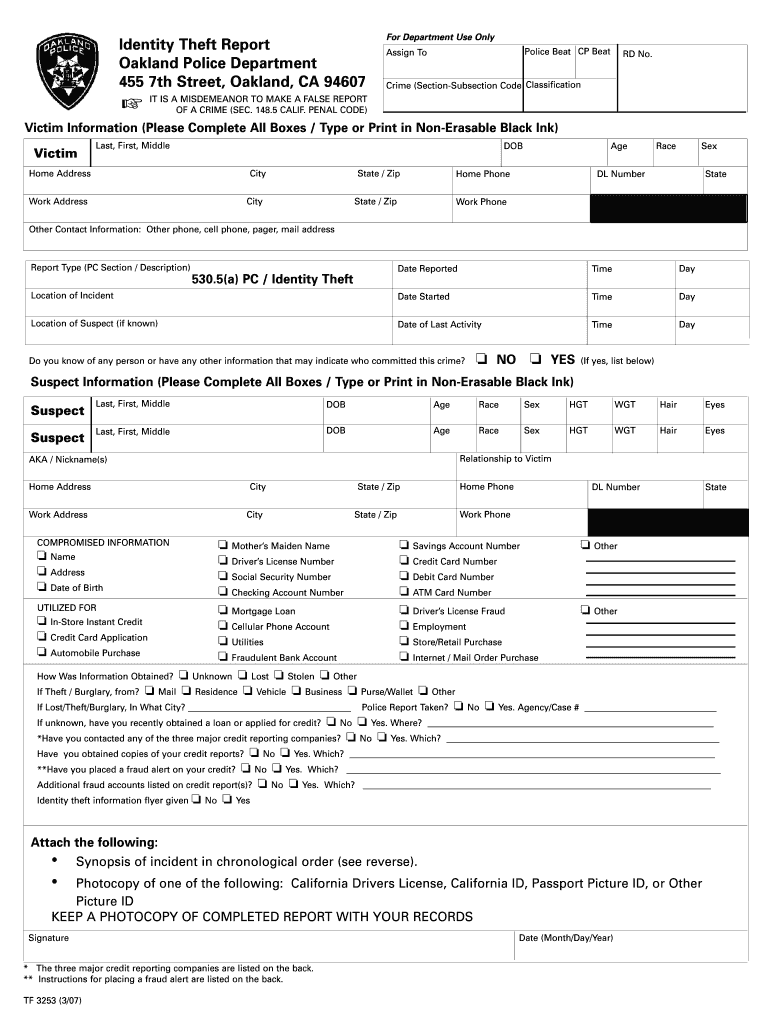







Definition and Meaning of a Police Report Example Theft
A police report example theft serves as a detailed document that records incidents of theft. It is typically completed by law enforcement officers to document the particulars of a crime, including victim and suspect information, details of the stolen property, and any witnesses or evidence available at the crime scene. The report forms a crucial part of the investigation and can ultimately aid in prosecuting offenders. It can also be used by victims to substantiate their loss for insurance claims or official records.
Key Elements Included
- Victim Information: Name, contact information, and a description of the situation.
- Suspect Details: If known, this section contains suspect identifiers such as name, description, and any known aliases.
- Incident Description: A comprehensive narrative detailing how the theft occurred.
- Stolen Items: A list of all stolen property, including descriptions, serial numbers, and estimated values.
- Witness Statements: Accounts from individuals who witnessed the theft or have pertinent information.
- Evidence Collected: Details of any physical evidence collected at the scene, such as fingerprints or CCTV footage.
How to Use the Police Report Example Theft
Using a police report example theft requires a clear understanding of its structure and the information it seeks. Law enforcement officers are trained to fill out these forms accurately, but individuals can also utilize them when reporting a theft to ensure all necessary information is covered.
Step-by-Step Usage
- Prepare Detailed Information: Gather all important documents and details about the incident, victim, and suspect.
- Visit Police Department: Either report the theft online if your local department offers this option, or visit in person to provide a verbal account.
- Provide Complete Information: Be thorough and precise to ensure law enforcement can follow up effectively.
- Review the Report: Once drafted by the officer, read through it to confirm accuracy before signing.
- Obtain a Copy: Keep a copy for your own records and any subsequent actions, such as insurance claims.
How to Obtain the Police Report Example Theft
Acquiring a police report example theft typically involves contacting the police department where the report was filed. Most departments have set procedures for requesting a report.
Methods to Request
- In-Person: Visit the records department of the police station.
- By Mail: Send a written request along with any fees required.
- Online: Use the police department's official website if the option is available.
Required Information
- Case Number: If applicable, provided at the time of reporting.
- Victim’s Information: Identification to verify your right to access the report.
- Date of Incident: To assist in locating the report within the department's records.
Steps to Complete the Police Report Example Theft
Completing a police report example theft involves multiple stages, typically handled by law enforcement officers. However, understanding these steps is beneficial for those involved in the process.
- Initial Report: Victim or witness reports the theft to law enforcement.
- Investigation: Officers gather data by interviewing victims, witnesses, and potential suspects.
- Documentation: Details are documented, evidence is logged, and statements are collected.
- Review and Submission: The completed report is reviewed for accuracy and filed in the department's system.
Why You Should File a Police Report for Theft
Filing a police report for theft is crucial for various reasons, serving both personal and legal functions.
- Legal Evidence: Provides an official record for court actions.
- Insurance Claims: Necessary for processing claims related to stolen property.
- Identity Protection: Protects against further misuse when identity theft is involved.
- Community Safety: Helps law enforcement track crime patterns and allocate resources effectively.
Legal Use of the Police Report Example Theft
Legal utilization of a police report example theft is widespread, ranging from prosecution to identity restoration.
Practical Applications
- Court Proceedings: Serves as evidence against the accused in theft trials.
- Insurance Processes: Essential for claims relating to property loss due to theft.
- Identity Theft Recovery: Assists victims in clearing their names and restoring credit.
State-Specific Rules for Police Report Example Theft
Different states may have distinct requirements regarding police reports for theft, reflecting variations in local laws and procedures.
Examples of Variations
- Time Limits: Some states require theft reports to be filed within a specific timeframe.
- Online Reporting Options: Availability and specifics may vary by state.
- Documentation Needs: Additional forms or evidence might be required in certain jurisdictions.
Understanding these nuances can ensure that the report is filed correctly and efficiently.




