



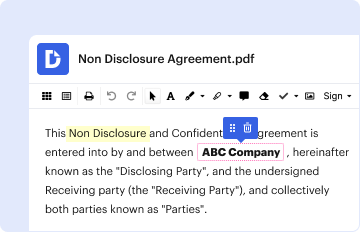
01. Edit your answer to debt collection lawsuit example texas pdf online
Type text, add images, blackout confidential details, add comments, highlights and more.

Type text, add images, blackout confidential details, add comments, highlights and more.
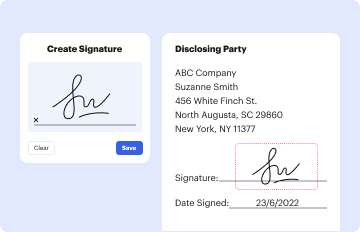
Draw your signature, type it, upload its image, or use your mobile device as a signature pad.

Send sample answer to summons for credit card debt pdf via email, link, or fax. You can also download it, export it or print it out.
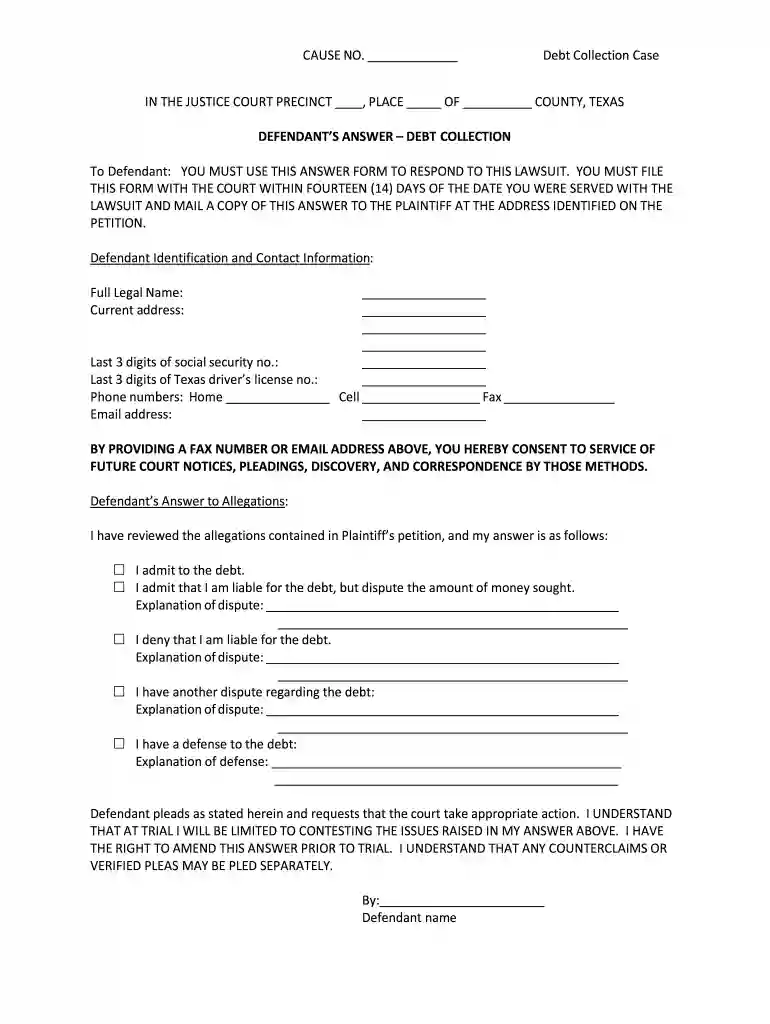
The Defendant's Answer in a debt collection case is a legal document that allows the defendant to formally respond to the allegations made against them by the plaintiff. Within the context of debt collection, this document serves multiple critical functions, including providing a formal acknowledgment of the lawsuit and outlining the defendant's position on the claims made by the creditor. The answer can include admissions — where the defendant agrees with part of the claim; denials — where the defendant refutes the claims entirely; or specific disputes about the debt's validity, amount, or other pertinent details.
The answer should be precisely crafted, as it will influence the legal proceedings significantly. A well-prepared Defendant's Answer can serve as a defense against the collection efforts being pursued by creditors, providing the defendant an opportunity to present their case and any affirmative defenses they believe are applicable. In many jurisdictions, failing to file an answer may result in a default judgment against the defendant, meaning the court may rule in favor of the creditor without further discussion or evidence.
To effectively use the Defendant's Answer in a debt collection case, follow a structured approach to ensure all necessary elements are included:
Understand the Context: Familiarize yourself with the debt collection summons and the specific allegations made by the plaintiff. This will inform how to respond effectively.
Drafting the Answer: Begin by addressing the court and identifying the parties involved. Clearly state your name, your address, and your relationship to the case. Next, respond to each allegation made in the complaint, indicating whether you admit, deny, or dispute each claim.
Include Affirmative Defenses: If applicable, include any defenses you may have to the claims. Common defenses include payments made, disputes over the debt amount, or errors in account handling.
Finalize and File: Ensure that your answer is signed and dated. File it with the appropriate court, adhering to local rules and ensuring it is submitted within the required deadline.
Serve the Plaintiff: After filing, a copy of your response must be served to the plaintiff or their attorney, following your jurisdiction's service rules.
When dealing with the Defendant's Answer in a debt collection case, it's essential to be familiar with several key legal terms that can impact your understanding and approach to the process:
Understanding these terms can enhance a defendant's ability to navigate the complexities of a debt collection lawsuit effectively.
Completing the Defendant's Answer involves several crucial steps that must be followed meticulously to ensure compliance with legal standards:
Review the Summons: Carefully read the summons and complaint to identify the allegations and required response timeframe.
Prepare Your Document: Utilize a template for the Defendant's Answer if available, or create a document that includes the following:
Respond to Allegations: Systematically address each point in the plaintiff's complaint. For each statement, denote whether you admit, deny, or lack the knowledge to respond.
List Defenses: Clearly outline any affirmative defenses you intend to assert, explaining each point briefly but with sufficient detail to warrant consideration.
File and Serve: Once drafted, the document should be signed, filed with the court, and served to the plaintiff according to local rules and timelines.
Follow Up: Keep a record of your filing and stay alert for any further communications from the court or the plaintiff's attorney.
Real-world scenarios can help illustrate how to utilize the Defendant's Answer effectively:
Example 1: A debtor receives a complaint for credit card debt. Upon reviewing the summons, they notice a discrepancy in the amount claimed versus what they believe they owe. In their answer, the defendant denotes a denial of the specific dollar amount, states that they have made payments that were not accredited, and includes a request for clarification of the debt.
Example 2: A defendant is sued by a debt collector for an unpaid personal loan. They acknowledge having taken the loan but argue that they were misled about the terms and include a counterclaim for misrepresentation in their Defendant’s Answer.
Example 3: When a consumer is taken to court by an aggressive debt collection agency, they file their answer by admitting to part of the debt but raising issues regarding the agency's failure to validate the debt as required by the Fair Debt Collection Practices Act.
These examples demonstrate how a Defendant's Answer can provide critical context and structure to a defendant’s response, potentially influencing the outcome of the case.
We've got more versions of the answer to debt collection lawsuit example texas pdf form. Select the right answer to debt collection lawsuit example texas pdf version from the list and start editing it straight away!
| Versions | Form popularity | Fillable & printable |
|---|---|---|
| 2012 | 4 Satisfied (59 Votes) |
At DocHub, your data security is our priority. We follow HIPAA, SOC2, GDPR, and other standards, so you can work on your documents with confidence.
The action is filed for the purpose of collecting a debt. c. The action is a claim of medical malpractice. d. The action is governed by the Florida SmallRead more
DEFENDANTS ANSWER - DEBT CLAIM CASE. I. General Denial: My name is The original creditor or Plaintiff acted unfairly when creating or collecting this debt.Read more


