




01. Edit your hospital positive pregnancy paperwork online
Type text, add images, blackout confidential details, add comments, highlights and more.

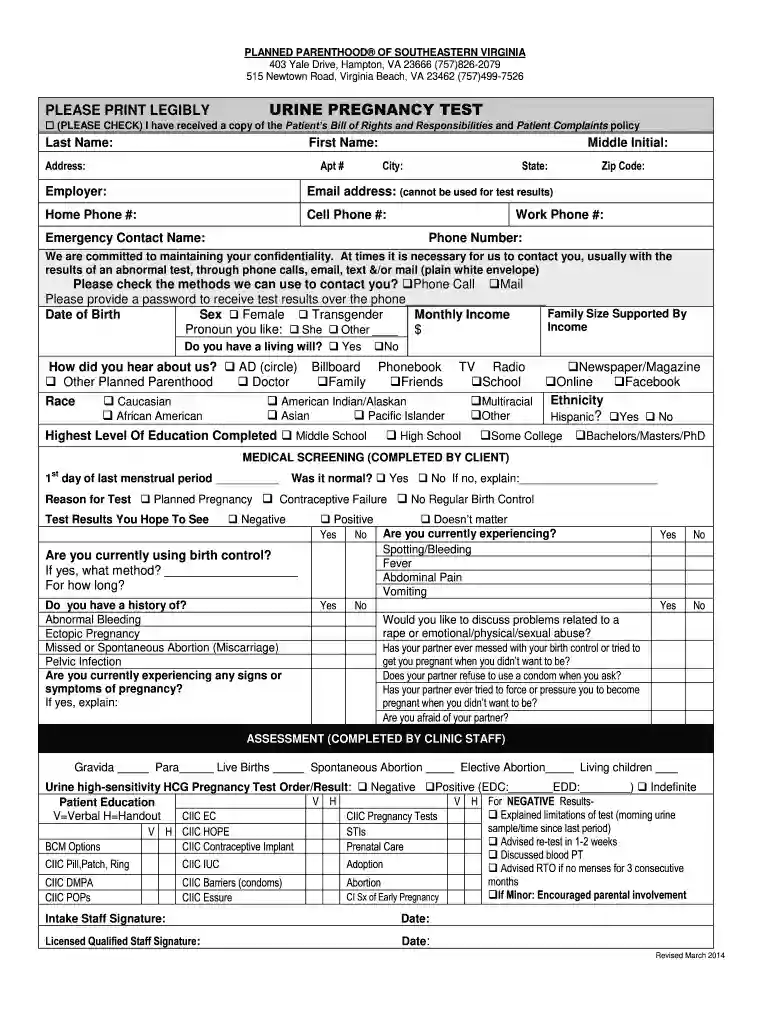
Type text, add images, blackout confidential details, add comments, highlights and more.

Draw your signature, type it, upload its image, or use your mobile device as a signature pad.

Send planned parenthood positive pregnancy test paperwork via email, link, or fax. You can also download it, export it or print it out.
Pregnancy paperwork encompasses a variety of documents related to the medical and administrative aspects of pregnancy. These documents may include medical intake forms, consent forms, health history questionnaires, and insurance paperwork. They are crucial for facilitating communication between patients and healthcare providers, ensuring all necessary care is delivered throughout the pregnancy journey. The paperwork often addresses patient confidentiality, consent for medical procedures, and health insurance details, highlighting the critical role it plays in managing a safe and informed pregnancy experience.
Gather Required Information: Before you start, ensure you have all necessary personal information, including identification, insurance details, and medical history. This will typically involve data such as your social security number, current medications, past pregnancies, and existing health conditions.
Fill Out Personal Information: Provide accurate contact details, emergency contact information, and insurance information. This section helps healthcare providers manage your care effectively.
Complete Health History: Detail any medical conditions, allergies, and previous procedures. This information guides clinicians in tailoring care to your specific needs, minimizing risks associated with pre-existing conditions or potential allergic reactions.
Review and Sign Consent Forms: Consent forms are crucial for authorizing medical interventions. Read these carefully to understand the scope of your consent and any potential risks involved with the pregnancy’s medical treatments.
Submit the Paperwork: Ensure all sections are filled out accurately and submit them as directed by your healthcare provider. This could be through an online portal, by mail, or in person at a clinic.
Patient Identification: Information such as name, date of birth, and contact details.
Medical History: Includes past pregnancies, chronic conditions, surgeries, and current medications.
Insurance Information: Details regarding health insurance to facilitate billing and coverage.
Consent Forms: Documents that discuss the legal consent for treatment, allowing healthcare providers to administer necessary medical procedures.
Confidentiality Notices: Compliance with privacy laws, such as HIPAA, ensures patient information is protected.
Pregnancy paperwork serves several legal functions. It ensures compliance with health laws and regulations, safeguarding patient rights and ensuring informed consent is obtained for all procedures. Healthcare providers use these documents to protect against legal liability by documenting patient consent and the provision of necessary information. Misrepresentation or incomplete paperwork can lead to legal issues both for the patient and the healthcare provider, making the accuracy of these documents crucial.
Different states may have varying regulations concerning pregnancy paperwork, particularly in the realms of reporting requirements and insurance coverage. For instance, some states mandate specific consent forms for certain procedures like ultrasounds or require reporting of certain medical conditions. Health insurance requirements can also differ, influencing what paperwork needs to be submitted and the documentation insurance companies need for coverage. Familiarize yourself with local laws to ensure all your paperwork is in compliance with state-specific requirements.
HIPAA (Health Insurance Portability and Accountability Act): Legislation providing data privacy and security provisions for safeguarding medical information.
ESIGN Act: Federal law that facilitates the use of electronic records and signatures in interstate commerce, including those used in healthcare settings.
Informed Consent: A process for getting permission before conducting a healthcare intervention on a person, with full awareness of potential risks and benefits.
Pregnancy paperwork is used by a diverse group, including expectant mothers, healthcare providers, and insurance companies. Expectant mothers complete the paperwork to receive appropriate prenatal care and insurance coverage. Healthcare providers use it to access and document patient medical histories, ensuring safe and effective treatment plans. Insurance companies require this documentation to authorize payments for medical services rendered during the pregnancy.


Consider the case of an expectant mother visiting Planned Parenthood for an initial prenatal appointment. She would fill out pregnancy paperwork, providing detailed health history and insurance information. The healthcare provider would then use this information to tailor a suitable prenatal care plan, addressing any identified health concerns. Another example involves the administrative use of such paperwork to evaluate insurance claims for covering pregnancy-related healthcare services, offering a lower cost to the patient by applying policy benefits.
Pregnancy paperwork can be completed in both paper and digital formats. The digital workflow offers conveniences, like easier access, quicker submission, and the ability to integrate with cloud-based services for storage and retrieval. Paper forms, while more traditional, serve those without access to digital platforms. They provide a tangible method and are preferred by those not comfortable with technology. Each format has its strengths, and the choice largely depends on personal preference and available resources.
We've got more versions of the hospital positive pregnancy paperwork form. Select the right hospital positive pregnancy paperwork version from the list and start editing it straight away!
| Versions | Form popularity | Fillable & printable |
|---|---|---|
| 2014 | 4.9 Satisfied (428 Votes) |
At DocHub, your data security is our priority. We follow HIPAA, SOC2, GDPR, and other standards, so you can work on your documents with confidence.


Notification of Pregnancy and Risk Screening Form - 2575-076. To utilize the full functionality of a fillable PDF file, you must download the form.Read more
SAMPLE FORM EMPLOYEE PREGNANCY. CERTIFICATION OF EMPLOYEES SERIOUS HEALTH CONDITION. FOR FAMILY AND MEDICAL LEAVE. This form must be completed by a HealthRead more
Pregnancy Declaration Form. Pregnancy Declaration Form. Boston University Environmental Health Safety 930 Commonwealth Avenue, 2nd Floor, Boston, MA 02215.Read more


