
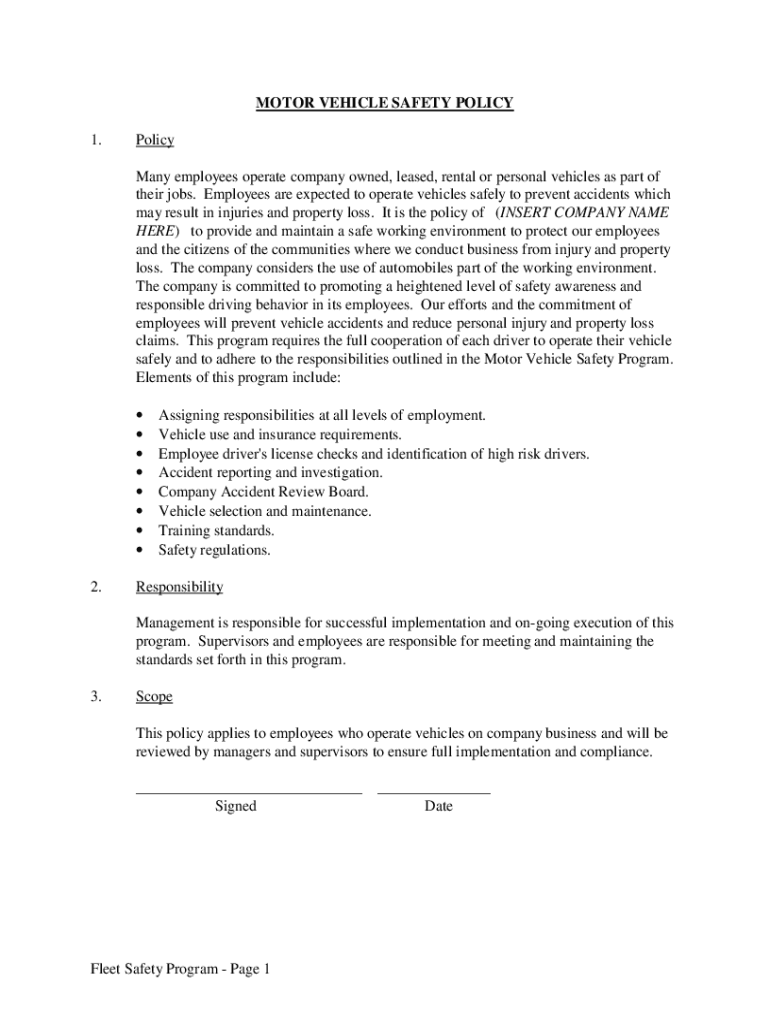







Overview of a Trucking Safety Program Template
A trucking safety program template serves as a vital framework for enhancing safety protocols within the trucking industry. It outlines essential procedures and policies designed to protect drivers, vehicles, and the general public. The implementation of such a program promotes accountability and ensures compliance with regulatory standards.
Key Components of a Trucking Safety Program
A comprehensive trucking safety program template typically includes the following components:
-
Safety Policies: Clearly defined guidelines that address safety expectations for all employees, including drivers. These policies regulate behaviors such as speeding, usage of seat belts, and distractions while driving.
-
Driver Selection Criteria: Establish criteria to assess driver qualifications and experience, such as background checks, driving history evaluations, and adherence to industry certifications.
-
Training Requirements: Outline necessary training programs for new drivers, which may include defensive driving courses, safety workshops, and regular training refreshers to keep skills updated.
-
Accident Reporting Procedures: Specify steps that drivers must follow in the event of an accident, including immediate reporting to supervisors and proper documentation protocols for insurance purposes.
-
Maintenance Protocols: Define regular vehicle maintenance schedules that include inspections, servicing, and documentation to ensure the fleet is in optimal working condition.
Enhancing Safety Communication in Your Organization
Effective communication is critical to the success of a trucking safety program template. Consider implementing the following strategies:
-
Regular Safety Meetings: Schedule frequent safety briefings that allow drivers and management to discuss safety issues, share experiences, and highlight best practices.
-
Safety Bulletins: Create and distribute safety bulletins regularly to keep drivers informed about new policies, regulatory changes, and industry-related safety concerns.
-
Feedback Mechanisms: Encourage drivers to provide feedback regarding safety practices, suggesting improvements based on their experiences on the road.
Monitoring and Continuous Improvement
An effective trucking safety program is not static; it must evolve based on feedback and performance metrics. Focus on these areas for continuous improvement:
-
Data Analysis: Regularly analyze safety data from accidents, near-misses, and incident reports to identify trends and areas needing improvement.
-
Performance Metrics: Establish key performance indicators (KPIs) to measure the effectiveness of safety protocols, such as accident rates and compliance with training.
-
Program Reviews: Conduct periodic reviews of the safety program to ensure alignment with changing regulatory standards and evolving best practices.
Implementing a Trucking Safety Plan Template
When implementing a trucking safety plan using a template, the following steps are crucial:
-
Customization: Tailor the template to fit the unique needs of your organization, considering the size of the fleet, geographical areas of operation, and specific industry risks.
-
Employee Involvement: Engage drivers and other staff members in the development process to promote buy-in and ensure that the program addresses real concerns.
-
Training and Rollout: Provide comprehensive training on the new safety program to all employees before its official rollout. This training should emphasize the importance of safety protocols and individual responsibilities.
Legal and Regulatory Compliance
Compliance with federal, state, and local safety regulations is essential for any trucking company’s safety program. Key considerations include:
-
FMCSA Regulations: Ensure that the program aligns with the Federal Motor Carrier Safety Administration (FMCSA) regulations pertaining to driver qualifications, vehicle standards, and safety management systems.
-
Record-Keeping Requirements: Maintain accurate records of training, vehicle maintenance, and accident reports to demonstrate compliance during audits or inspections.
Conclusion
A trucking safety program template is crucial for enhancing operational safety and reducing risks in the trucking industry. By implementing a comprehensive program that encompasses training, communication, and compliance with regulations, organizations can foster a culture of safety that protects drivers, vehicles, and the wider community. Regular reviews and adaptations of the program will further bolster safety measures, contributing to long-term success in the industry.




