
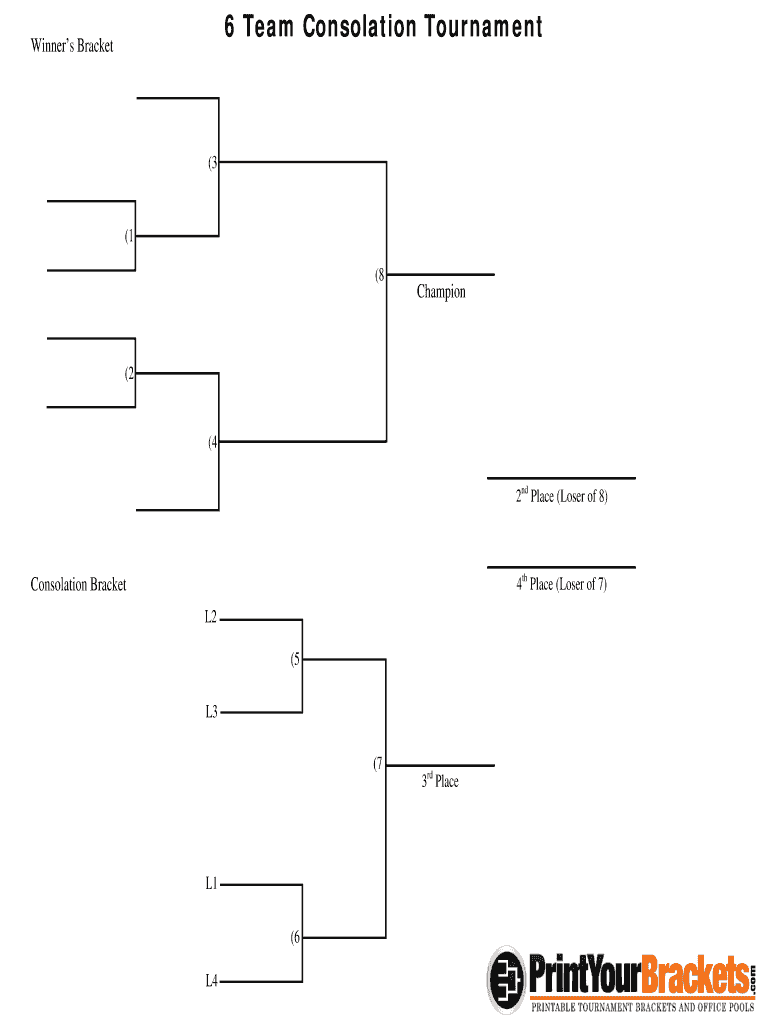







Understanding the 6-Team Bracket Structure
A six-team bracket is commonly used in tournaments and competitions to format matches in an organized manner. Depending on the style of competition, brackets can take on different forms, including single elimination, double elimination, and round-robin formats. This section will outline the different types of six-team brackets, how they function, and how they can be utilized effectively.
Types of 6-Team Brackets
-
Single Elimination Bracket
In a single elimination bracket, each match produces one winner who advances to the next round, while the loser is eliminated from the tournament.- The winning team progresses until a champion is determined.
- This format typically consists of three rounds: two semi-finals and one final.
- With six teams, two teams receive a bye in the first round, allowing them to advance automatically to the semi-finals.
-
Double Elimination Bracket
This format allows teams to lose once and still have a chance to compete for the championship.- The setup involves a winners bracket and a consolation bracket.
- If a team loses in the winners bracket, they are dropped into the consolation bracket, giving them a second chance.
- The final matchup usually takes place between the winners of the winners and consolation brackets.
-
Round Robin Bracket
In a round robin format, each team competes against every other team.- This format is ideal for determining the most consistent team, as it allows for multiple matchups.
- The overall standings are determined based on the win-loss records, and tie-breakers may be necessary to establish rankings.
Constructing a 6-Team Tournament Bracket
Creating a bracket can be straightforward with the right tools. Here’s how to set up a six-team bracket formatted for single elimination:
-
Choose the Type of Bracket
Determine whether your tournament will use a single elimination, double elimination, or round robin structure. -
Draw the Bracket
Use a template or online bracket generator to layout matches. The first round will consist of three matches—two teams will have a bye. -
Fill in Teams
Assign teams to each match. Random assignment is common, but seeding based on previous performance can enhance competition. -
Schedule Matches
Decide on match times and locations. Ensure that there is sufficient time between matches for teams to prepare. -
Track Progress
Update the bracket as matches are played to reflect winners and ongoing progress through the tournament stages.
Advantages of Different Bracket Formats
-
Single Elimination
This format is straightforward and keeps the tournament quick. It’s especially useful for large events where time is limited. -
Double Elimination
This format provides a safety net for teams, allowing for a more thrilling competition as a single loss doesn’t eliminate a team. -
Round Robin
Offers a comprehensive assessment of each team’s skills, making it fairer in determining the champion, as every team competes equally against all others.
Example Scenarios for Effective Use of a Six-Team Bracket
-
Sports Tournaments
A local basketball league might use a six-person bracket to efficiently determine a champion in a weekend tournament. -
Game Nights
For community board game nights, a round-robin format can determine which player consistently performs best across various games. -
Academic Competitions
Schools can utilize a six-team tournament bracket for spelling bees or science fairs, promoting equal opportunity among participants.
Tips for Managing a Six-Team Tournament
-
Keep Records
Maintain logs of scores and outcomes to address any disputes or review performances. -
Utilize Software Solutions
Use tournament management software for streamlined bracket generation and real-time updates, especially for larger groups. -
Communicate Clearly
Ensure all teams are aware of rules, schedules, and any changes in format or match times to foster a cooperative environment.
Conclusion
Understanding the various structures of a six-team bracket can greatly enhance the organization and enjoyment of tournaments. By implementing the appropriate format and following a systematic approach to bracket construction and management, organizers can create an engaging experience for participants and spectators alike.




