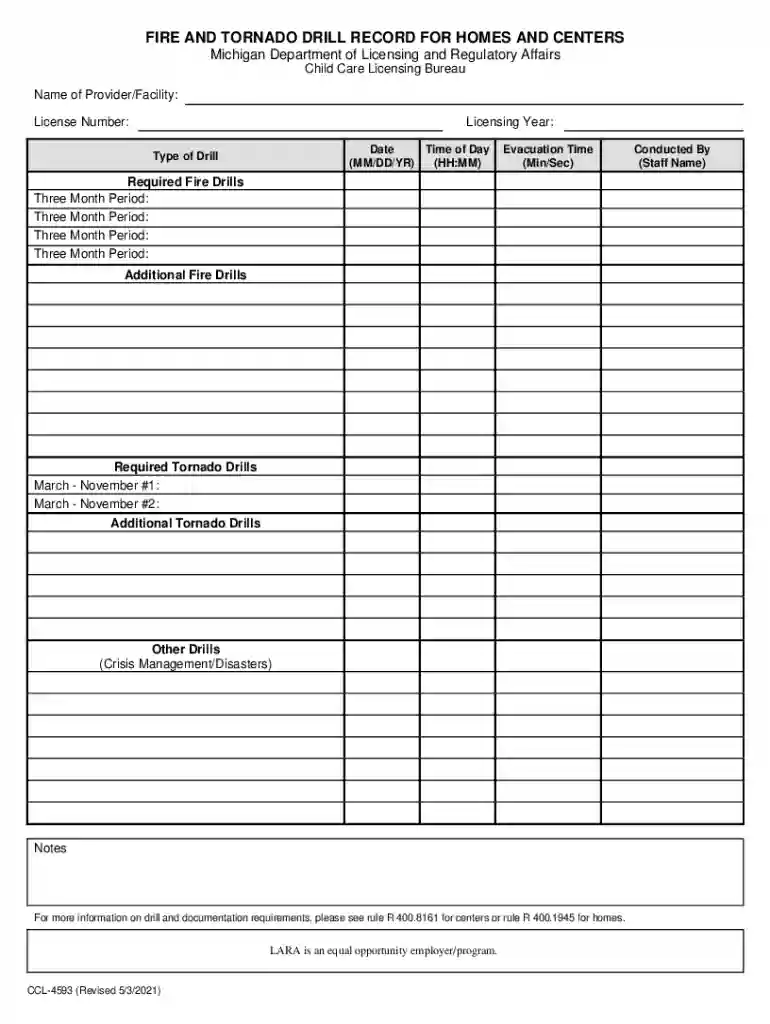
Definition and Importance of the Center Fire and Tornado Drill Record
The Center Fire and Tornado Drill Record is a vital document designed to help child care facilities and educational organizations maintain compliance with safety regulations regarding fire and tornado drills. This record serves as a formal log to document the execution of these drills, outlining essential details such as the type of drill conducted, the time taken for evacuation, and any observations or notes related to the drill. Its importance lies in ensuring that organizations are prepared for emergencies by regularly practicing appropriate responses to fire and tornado situations, which can mitigate potential hazards to children and staff.
Key Components of the Center Fire and Tornado Drill Record
- Drill Type: Specifies whether the drill was for a fire or a tornado situation, ensuring that all necessary safety protocols are practiced.
- Date and Time: Recorded to track compliance with mandatory drill frequency.
- Evacuation Time: Documents how long it took to evacuate the building, which aids in assessing response effectiveness and making improvements where necessary.
- Notes and Observations: A section for additional comments or recommendations for practice enhancements.
Cumulatively, these components provide a comprehensive overview of a facility's safety preparedness, necessary for both internal evaluations and external compliance checks.
How to Use the Center Fire and Tornado Drill Record Log
Utilizing the Center Fire and Tornado Drill Record requires familiarity with its structure and intended purpose. Here’s a step-by-step guide on how to effectively use this document:
- Preparation: Prior to conducting a drill, ensure that the log is readily available and all relevant parties are aware of the upcoming drill. This can help streamline the process of logging details after the event.
- Conduct the Drill: Execute the fire or tornado drill as designed, following established safety procedures. It’s essential that all participants understand what to do in an emergency to enhance the learning experience.
- Fill Out the Log Immediately Post-Drill: Record the following in the log:
- The type of drill conducted
- The exact date and time of the drill
- The overall duration of the drill, especially the evacuation time
- Comments on the drill performance, including areas for improvement
- Review with Staff: Discuss the recorded information with staff members to address any issues that arose during the drill and to brainstorm ways to improve future drills.
- File for Compliance: Retain the completed logs as part of your facility’s documentation. This filing is crucial for compliance audits and potential inspections by local licensing authorities.
Benefits of Using the Center Fire and Tornado Drill Record
- Compliance: Helps meet state and federal requirements for safety drills in child care facilities.
- Emergency Preparedness: Fosters a culture of safety awareness and readiness among staff and children.
- Continuous Improvement: Allows for tracking response times and identifying areas for improvement based on practical experiences during drills.
Obtaining the Center Fire and Tornado Drill Record
To acquire the Center Fire and Tornado Drill Record, follow these steps:
- Visit Official Websites: Go to appropriate state or local government websites that cater to child care regulations, as they often provide official templates and guidance.
- Check for Editable Formats: Many organizations may also offer printable fire and tornado drill logs in digital formats. Ensure to select a version that can be easily edited and printed.
- Download or Print: Save the document in your preferred format (PDF, DOC) or print directly to begin use within your facility.
- Standard Compliance Versions: Adhere to state-specific requirements by selecting the CCL 4593 form if applicable, as this may be mandated for specific local jurisdictions.
By following these steps, organizations can ensure they remain compliant with safety regulations while using the proper documentation.
Steps to Complete the Center Fire and Tornado Drill Record
Completing the Center Fire and Tornado Drill Record is straightforward, but accuracy is essential. Here’s a comprehensive breakdown of the steps to ensure everything is properly documented:
- Identify the Drill Type: Specify whether the log pertains to a fire or tornado drill at the top of the record.
- Input Date and Time: Clearly write the date the drill was conducted, along with the start time, for accurate record-keeping.
- Record Evacuation Time: Measure and log how long it took for all participants to fully evacuate the premises from the start of the drill until all individuals were accounted for outside.
- Add Detailed Observations:
- Document any issues encountered during the drill, such as slow evacuation times or areas in the building that presented difficulties.
- Include suggestions for improving future drills based on these observations.
- Sign off: If applicable, have a designated staff member review and sign the log for verification purposes.
Importance of Accurate Record-Keeping
Maintaining proper accuracy in these logs is crucial for compliance with state regulations, effective staff training, and ensuring children's safety during emergencies. Regular audits of these records can help assess the readiness and responsiveness of the facility during a crisis.
Key Elements and Features of the Center Fire and Tornado Drill Record
Understanding the key elements and features of the Center Fire and Tornado Drill Record is vital for effective use. The record should include the following components:
- Specific Drill Details: Information on whether it was a fire or tornado drill ensures that adequate preparation corresponds to the specific emergency scenario.
- Date and Time Stamps: Essential for tracking how often drills are conducted and adherence to regulatory requirements.
- Duration of Evacuation: Captured in seconds or minutes, this time metric helps evaluate the effectiveness of the response.
- Feedback Section: A space for personnel to provide feedback on the drill itself, allowing for a detailed review process to improve future performances.
- Signature Line: An area for team leaders or management to sign off on the record, which can enhance accountability and legitimacy.
These elements collectively contribute to a thorough record that reflects the facility's commitment to safety and compliance.
Legal Use and Compliance of the Center Fire and Tornado Drill Record
The Center Fire and Tornado Drill Record serves not only as an internal safety measure but also as a critical component for legal compliance within child care facilities across the United States. Its significance can be categorized into several areas:
- State Regulations: Different states may have specific requirements regarding the frequency and documentation of safety drills. Understanding state laws ensures that facilities comply with these regulations, avoiding potential penalties or fines.
- Documentation for Inspections: During inspections by licensing agencies, having a well-maintained log is crucial. It provides evidence that the facility is actively engaging in safety practices and is prepared for emergencies.
- Legal Protection: In the event of an incident, documented drill logs can demonstrate due diligence and proactive measures taken to ensure safety, providing a level of legal protection against liability claims.
Ensuring Compliance
To ensure ongoing compliance with legal requirements, facilities should regularly review local regulations and update their documentation practices accordingly. Scheduling routine training sessions for staff can also reinforce the importance of adhering to proper safety protocols.
Cultural and State-Specific Considerations for the Center Fire and Tornado Drill Record
Understanding the cultural and state-specific nuances surrounding the Center Fire and Tornado Drill Record can enhance its effectiveness and necessity. Here's a closer look:
- Regional Variations: Different states may have distinct guidelines regarding drill frequency, procedures, and documentation. Familiarity with these variations ensures compliance and safety practices that align with local expectations.
- Cultural Context: Certain communities may place a specific emphasis on preparedness due to historical events related to natural disasters or negligence, emphasizing the need to prioritize drills and their documentation.
- Tailored Drill Responses: The procedures for conducting drills and individual responses may need adjustments based on the demographic served by the child care facility, ensuring inclusivity and understanding among children and staff.
By addressing these factors, facilities can create a more robust emergency preparedness culture.
Practical Examples Utilizing the Center Fire and Tornado Drill Record
To illustrate its practical application, consider the following scenarios that highlight how the Center Fire and Tornado Drill Record can be effectively utilized:
Fire Drill Scenario:
- A child care center conducts a monthly fire drill. The record logs that the drill took place on the fifteenth of the month, starting at ten AM. The evacuation time was noted as three minutes with a few children needing guidance to exit. Notable observations included talking about the importance of fire safety after the drill.
Tornado Drill Scenario:
- A tornado drill occurs on the first Friday of every month. The logged details reflect that the drill began at ten-thirty AM. It unravels that children were familiarized with the safety protocols beforehand, contributing to an efficient evacuation time of four minutes. Post-drill, staff reviews the need for a clearer signal for when to transition into tornado safety positions.
These examples depict the Centers for Fire and Tornado Drill Record in action, demonstrating its relevance in practice and the continual improvement of safety efforts.