
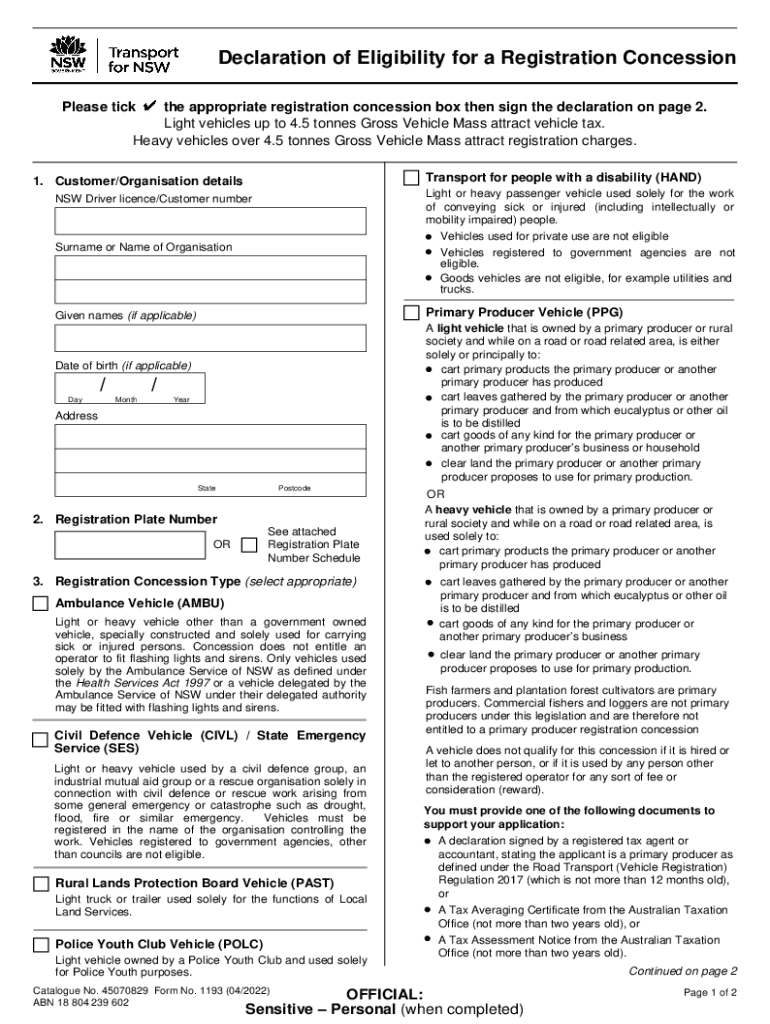







Definition and Meaning of NSW License
An NSW license refers to a legal authorization permitting individuals or entities to undertake certain regulated activities within New South Wales. This could range from driver’s licenses to professional certifications needed to practice certain trades or professions. The significance of an NSW license lies in its role in ensuring compliance with state laws and maintaining public safety and order. Each type of license has its criteria, and the provision of these licenses is typically regulated by specific agencies or departments within the state.
Types of Licenses
- Driver’s Licenses: Required for operating various motor vehicles.
- Professional Licenses: Necessary for practicing professions like medicine, law, or engineering.
- Business Licenses: Permits for operating a business within certain sectors, such as food services or real estate.
- Fishing and Hunting Licenses: Required for engaging in recreational or commercial fishing and hunting activities.
How to Use the NSW License
Using an NSW license appropriately involves adhering to the regulations and conditions set by the licensing authority. Each license comes with explicit usage directives that must be complied with to avoid penalties or revocation.
General Usage Guidelines
- Display When Required: For example, drivers must always have their licenses while operating a vehicle.
- Renew Timely: Licenses often require renewal before expiration; failing to do so can result in penalties.
- Abide by Specific Conditions: Some licenses have conditions, such as geographical restrictions or operational limits.
- Report Changes: Notify the relevant authority of any changes that might affect your eligibility (e.g., medical conditions for a driver’s license).
How to Obtain the NSW License
Obtaining an NSW license generally involves a clear procedure, varying slightly depending on the type of license being applied for. Here is a typical process:
- Determine Eligibility: Ensure you meet all the specified requirements for the license.
- Gather Required Documentation: This might include identity proofs, educational qualifications, or other relevant certifications.
- Submit an Application: Applications can often be submitted online, though certain licenses may require in-person submission.
- Pay Applicable Fees: There are usually processing fees associated with license applications.
- Complete Examinations: Some licenses require passing written, practical, or technical exams.
- Await Approval: Review processes vary in duration; applicants should follow up if they haven't received communication beyond expected timeframes.
Steps to Complete the NSW License Application
Completing the application process is critical to successfully obtaining your NSW license. Below is a detailed breakdown of the essential steps involved:
Online Application Process
- Visit the Official Website: Access the relevant department’s online portal.
- Select the Applicable License Type: Choose the exact license you aim to apply for.
- Fill Out Application Form: Accurately complete all necessary sections of the online form.
- Upload Necessary Documents: Digitally attach all required documentation.
- Pay the Fees: Use electronic payment methods to settle the application fees.
- Submit the Application: Review and submit your completed application.
In-Person Application Process
- Obtain the Application Form: Collect from a local office or download and print from the website.
- Complete the Form Manually: Provide all required information legibly.
- Gather Physical Documentation: Prepare original and copies of all needed documents.
- Visit the Designated Office: Submit your application at the relevant government office.
- Make Payment: Pay fees using accepted payment methods such as credit/debit cards or checks.
- Collect Receipt of Submission: Ensure you receive a confirmation of your application.
Why Obtain an NSW License
Licenses serve a crucial role in the regulated functioning of various sectors. The reasons behind obtaining an NSW license include:
- Legal Compliance: Avoid legal repercussions by adhering to statutory obligations.
- Professional Legitimacy: Licenses provide professional recognition in specific fields.
- Public Safety: Ensures that only qualified individuals perform certain tasks or services.
- Business Credentials: Enhances business credibility and trustworthiness within the market.
Who Typically Uses the NSW License
The typical users of NSW licenses vary widely based on the specific type of license. However, prominent groups include:
- Drivers: From personal car drivers to those operating heavy machinery or public transport.
- Professionals: Doctors, lawyers, and engineers usually require specific credentials.
- Business Owners: Entrepreneurs operating in regulated industries like food or real estate.
- Recreational Enthusiasts: Individuals engaging in regulated recreational activities.


Important Terms Related to NSW License
Understanding the terminology associated with the NSW license can be crucial for applicants and holders. Some terminologies include:
- Expiry Date: The date by which the license must be renewed to remain valid.
- Endorsement: Additional privileges attached to a general license (e.g., a motorcycle endorsement on a driver’s license).
- Restriction: Limitations placed on the use of the license.
- Suspension: Temporary invalidation due to breach of terms or conditions.
Legal Use of the NSW License
Licenses must be used in accordance with the law. Here's how to ensure legal use:
Compliance Requirements
- Adherence to Laws: Follow all relevant state laws governing the use of the license.
- Avoid Misrepresentation: Never use a false or altered license for any purpose.
- Non-transferability: A license is generally non-transferable; it can only be used by the individual to whom it was issued.
- Timely Renewal: Renew the license before expiration to avoid lapses in legal authorization.
Understanding these aspects ensures that individuals remain compliant with the legal obligations attached to their NSW license, minimizing any potential risks associated with misuse.




