



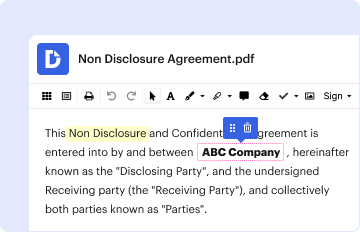
01. Edit your dd form 149 online
Type text, add images, blackout confidential details, add comments, highlights and more.

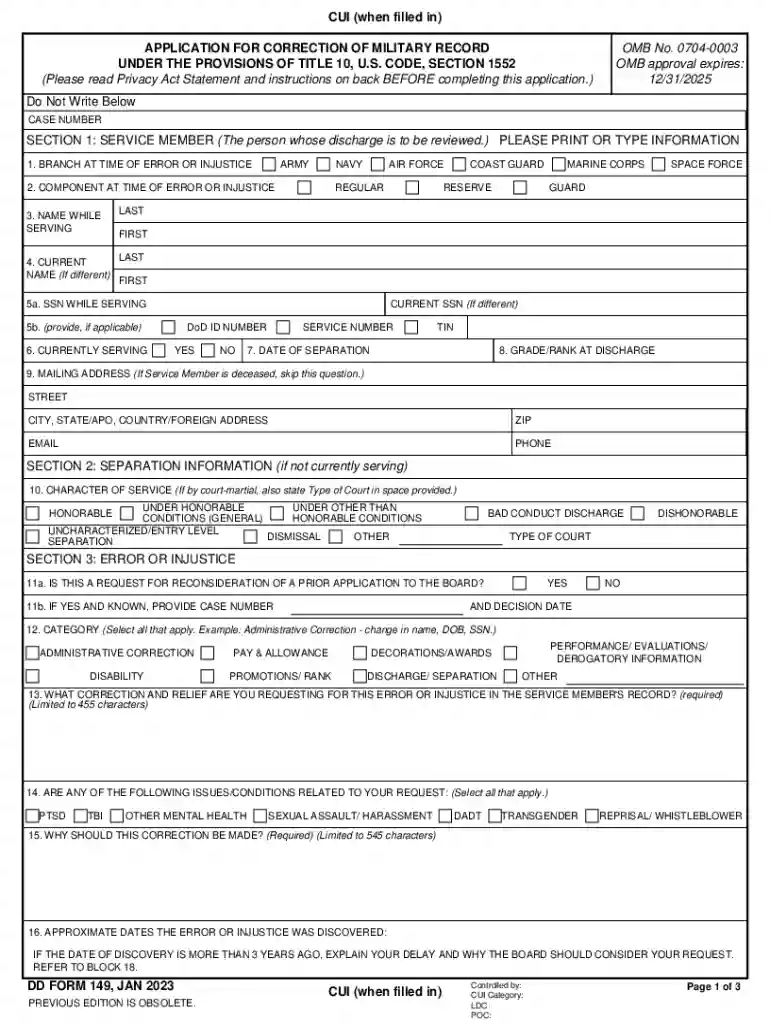
Type text, add images, blackout confidential details, add comments, highlights and more.
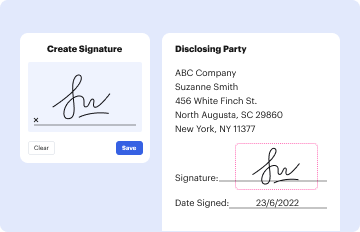
Draw your signature, type it, upload its image, or use your mobile device as a signature pad.
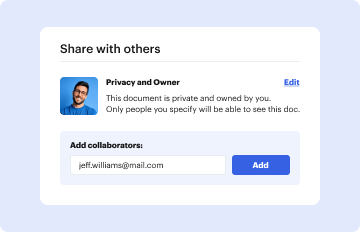
Send blank fillable dd 214 via email, link, or fax. You can also download it, export it or print it out.
Controlled Unclassified Information (CUI) refers to information that requires safeguarding or dissemination controls pursuant to law, regulations, or government-wide policies but is not classified under Executive Order 13526. In the context of the form indicated by "CUI (when filled in)," it signifies that once the specific fields are filled out, the document contains sensitive but unclassified information. Properly handling this data is critical to protect its confidentiality and compliance with federal guidelines.
CUI is used across various federal agencies, primarily to ensure that sensitive information is protected during processing and dissemination. The concept is central to maintaining integrity and confidentiality, without resorting to full classified status, which allows for greater flexibility in managing unclassified yet sensitive data.
Gather Required Information: Before starting the form, ensure you have all necessary personal or business data, such as identification numbers, contact details, and supporting documents related to the information you're disclosing.
Complete Each Section: Fill out the form meticulously, section by section. Pay particular attention to any fields labeled as mandatory to ensure the form is complete and valid upon submission.
Review and Verify Information: Double-check each entry to avoid errors or omissions. Ensuring accuracy at this stage can prevent delays in processing and potential non-compliance issues.
Apply Security Measures: Once filled, treat the document as CUI. Implement security measures like encryption if sending electronically or using secure storage if maintaining physical copies.
Submit the Form: Follow the prescribed submission method. This could involve uploading through a secure portal, mailing to a specific address with tracking, or delivering in person.
CUI forms are predominantly used by government agencies and contractors engaged in federal contracts where sensitive but unclassified information is involved. Additionally, businesses within industries regulated by federal compliance requirements, such as defense, healthcare, and finance, frequently deal with CUI. These entities must ensure proper handling, storage, and transmission to adhere to federal compliance standards.
Private individuals and entities engaged in correspondence with federal agencies may also encounter CUI forms, especially when dealing with personally identifiable information that does not meet the threshold for classification under national security but still requires protection.


Controlled Environment: A secured location where CUI is stored, ensuring that access is restricted to authorized personnel only.
Decontrol: The process of removing the CUI designation from a document when the information no longer requires safeguarding under federal guidelines.
Marking: The application of a CUI designation to a document, indicating the need for controlled handling.
Handling Instructions: Specific procedures outlined for the protection of CUI, including secure transmission and storage guidelines.
Understanding these terms is crucial for effective compliance and handling of CUI forms.
The legal framework governing CUI is primarily outlined in 32 CFR Part 2002, which provides detailed policies on how to identify, control, and share sensitive information. Compliance with these regulations ensures that the information is appropriately safeguarded without resorting to classification, allowing for flexibility while maintaining security.
Misuse or improper handling of CUI can lead to legal repercussions, including fines and contractual penalties, especially for federal contractors. Thus, adhering to the set standards and guidelines is essential for legal compliance.
Identification: Clearly identify information that qualifies as CUI, using proper markings and designations according to federal guidelines.
Storage and Access Control: Ensure that CUI is stored securely, with access limited to individuals who have received appropriate clearance or authorization.
Dissemination Controls: Implement specified controls for sharing CUI only with individuals or entities authorized as per the relevant laws or agreements.
Audit and Accountability: Maintain records of who accessed the CUI, when, and for what purpose, to establish an audit trail and facilitate accountability.
Consider a defense contractor working on a project requiring unique engineering diagrams that meet specific federal standards. Once they fill out the procurement forms to submit these diagrams, the forms become CUI because they contain sensitive information. These must be adequately protected during all phases, including storage and transmission.
Another example includes healthcare providers dealing with patient data forms submitted to federal health programs. Here, filled-in forms are treated as CUI, requiring compliance with both healthcare privacy laws and CUI regulations to ensure confidentiality and integrity.
Managing CUI documents requires software capable of ensuring secure handling, such as document management systems with built-in encryption, access controls, and audit logs. Platforms like DocHub, which integrates with cloud services, can be employed for securely editing, signing, and storing CUI in compliance with federal guidelines.
The use of specialized software is essential to automate many compliance tasks, thereby reducing the risk of human error and ensuring consistent adherence to CUI requirements across different types of forms and organizations.
We've got more versions of the dd form 149 form. Select the right dd form 149 version from the list and start editing it straight away!
| Versions | Form popularity | Fillable & printable |
|---|---|---|
| 2025 | 4.8 Satisfied (53 Votes) | |
| 2023 | 4.4 Satisfied (47 Votes) | |
| 2019 | 4.8 Satisfied (113 Votes) | |
| 2014 | 4.4 Satisfied (455 Votes) | |
| 2012 | 4 Satisfied (31 Votes) | |
| 2011 | 4 Satisfied (58 Votes) | |
| 2010 | 4.3 Satisfied (66 Votes) | |
| 2006 | 4.4 Satisfied (44 Votes) | |
| 2003 | 4.4 Satisfied (56 Votes) | |
| 1997 | 4 Satisfied (28 Votes) |
At DocHub, your data security is our priority. We follow HIPAA, SOC2, GDPR, and other standards, so you can work on your documents with confidence.


