
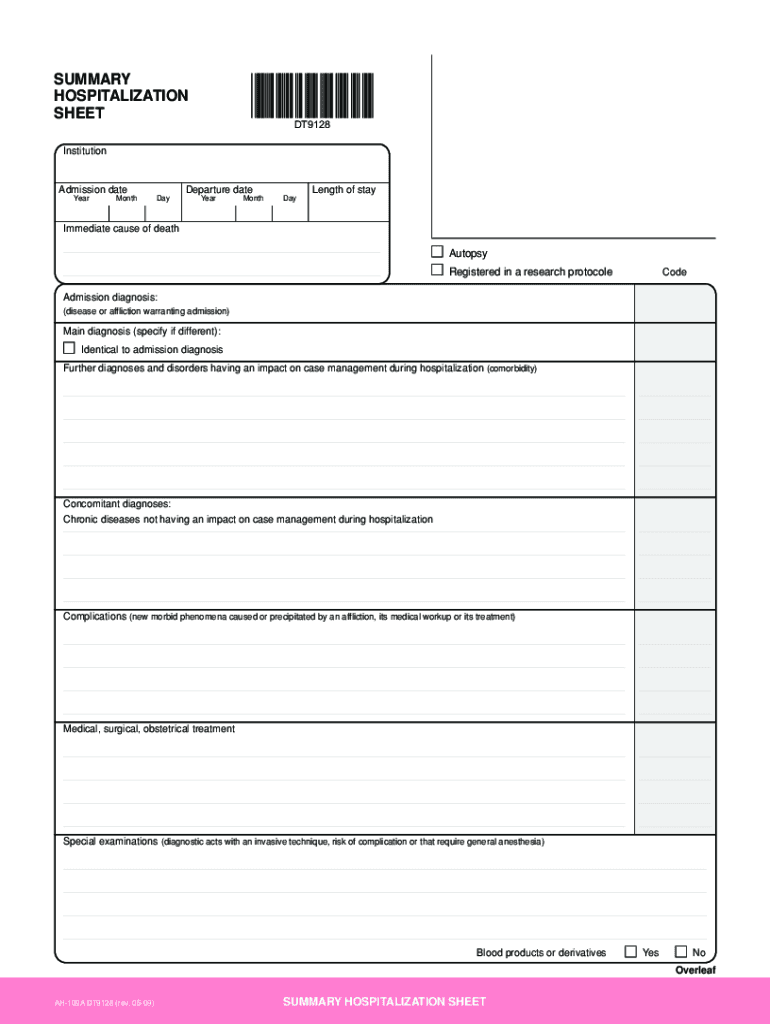







Definition & Meaning
The AH-109A PDF is a specialized form providing a comprehensive record of a patient's hospital stay. It includes essential details such as admission and discharge dates, diagnoses, treatments administered, complications faced, and follow-up recommendations. This document is pivotal for maintaining a clear and thorough understanding of a patient's medical care and management during their hospital stay. It serves not only as an internal resource for medical staff but also as an essential document for patients’ personal medical records.
How to Use the AH-109A PDF
Understanding how to effectively utilize the AH-109A PDF involves several steps:
- Review Patient Information: Begin by verifying the patient's personal and hospital admission information to ensure accuracy.
- Document Treatments and Diagnoses: Record any treatments administered and all diagnoses made during the patient's stay.
- Detail Complications: Note any complications that arose during treatment, providing context and descriptions to aid future medical assessments.
- Record Follow-Up Recommendations: Outline recommendations for follow-up care, including appointments, medication, or lifestyle changes to support recovery.
By following these procedures, healthcare providers can ensure the form is used effectively for ongoing patient care and historical medical analysis.
Steps to Complete the AH-109A PDF
Completing the AH-109A PDF involves detailed attention to each section:
- Patient Identification: Fill out the patient's full name, date of birth, and hospital identification number clearly to avoid any misidentification.
- Admission and Discharge Dates: Accurately document the dates of hospital admission and discharge to portray the timeline of care.
- Medical Diagnoses: List all primary and secondary diagnoses with corresponding ICD-10 codes for accurate documentation.
- Treatment Administered: Provide a comprehensive list of treatments given, such as medications, surgeries, or therapies.
- Chart Complications: Record any unexpected events or complications, along with their management strategies.
- Narrative Summary: Write a concise summary that connects treatments with outcomes, providing a holistic view of the patient's hospital experience.
Important Terms Related to AH-109A PDF
Understanding key terms associated with the AH-109A PDF is crucial for accurate form completion:
- ICD-10 Codes: International standard for diagnosing and classifying diseases.
- Admission Date: The official date the patient was admitted to the hospital.
- Discharge Planning: Process of preparing a patient to leave the hospital safely.
- Follow-Up Care: Recommendations for medical care after discharge, including specialist appointments and medications.
These terms help facilitate a shared understanding amongst medical staff and ensure clarity in documentation.
Who Typically Uses the AH-109A PDF
The AH-109A PDF is primarily utilized by:
- Healthcare Providers: Doctors, nurses, and administrative staff use it to document patient care details accurately.
- Patients: To share their hospital stay information with other medical professionals or insurance providers.
- Insurance Companies: To verify the validity of claims related to treatments and hospital stays.
- Medical Record Departments: As part of patient health records for future reference or legal purposes.


Legal Use of the AH-109A PDF
The AH-109A PDF must be used in compliance with healthcare regulations:
- HIPAA Compliance: Patient information recorded on the form must be handled according to HIPAA guidelines to maintain confidentiality.
- Data Accuracy: Medical data must be accurate, truthful, and reflective of the actual care provided during hospitalization.
- Document Retention: There are legal obligations to retain medical records for a certain number of years, varying by state.
Ensuring that the use of this document adheres to legal standards is crucial for protecting patient rights and providing high-quality care.
Key Elements of the AH-109A PDF
Key elements to include in the form are:
- Patient Demographics: Essential for proper identification and billing processes.
- Medical History: Offers context for current medical conditions and treatments.
- Detailed Diagnoses: To guide ongoing treatment and ensure continuity of care.
- Treatment Log: Captures all interventions provided during the stay.
Each element ensures comprehensive documentation of the patient's hospital experience.
State-Specific Rules for the AH-109A PDF
While the structure of the AH-109A PDF is consistent, there may be state-specific regulations that affect its completion and use:
- Record Retention Periods: Some states require longer retention of patient records than others.
- Data Privacy Laws: Variations in how patient data can be shared and stored.
- Reporting Requirements: Differential reporting rules for certain conditions or treatments.
Awareness of these variations ensures compliance with local healthcare regulations and supports legal protection for medical facilities.




