
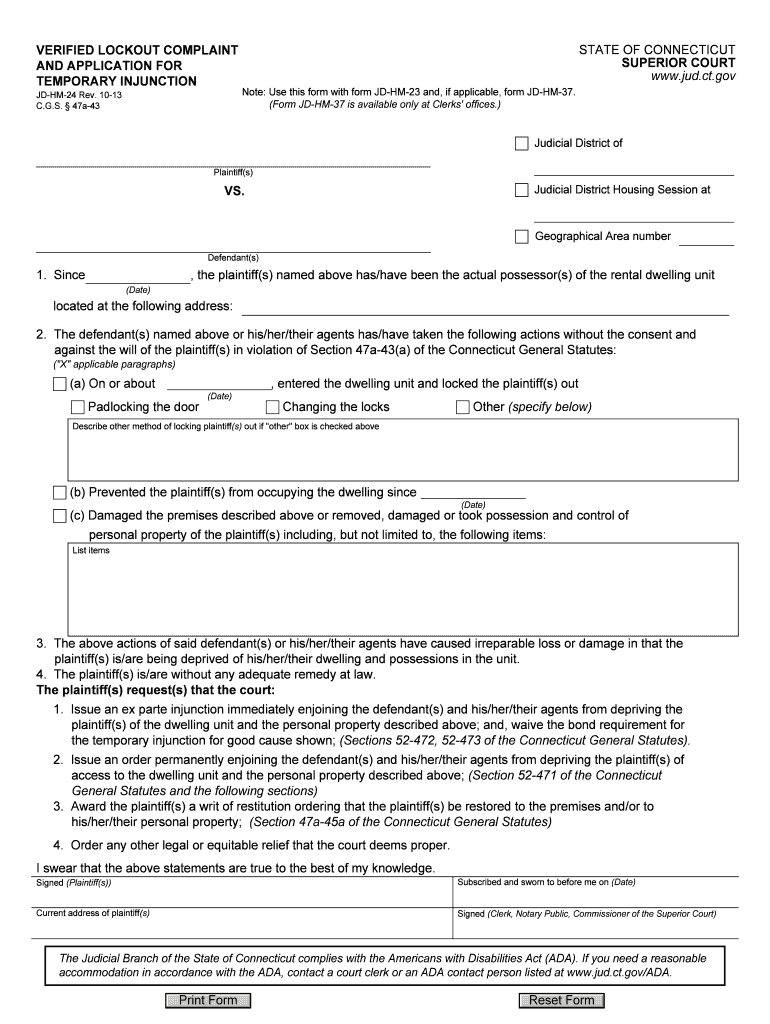







Definition and Meaning of the CT Lockout Form
The CT Lockout Form is a legal document used in the State of Connecticut to file a verified complaint and application for a temporary injunction. It primarily focuses on unlawful eviction actions taken by a landlord, such as changing locks or padlocking doors without tenant consent, effectively denying access to a tenant's dwelling and personal property. This form serves as the initial step for tenants to request immediate court intervention to prevent further deprivation and seek various forms of legal relief against the eviction actions.
How to Use the CT Lockout Form
To effectively use the CT Lockout Form, it is crucial to provide detailed and accurate information about the eviction incident. The steps typically involve:
- Gathering evidence of eviction actions such as photographs or witness statements.
- Filling out personal and contact information for both the plaintiff (tenant) and defendant (landlord).
- Detailing the specific actions that constitute an unlawful lockout.
- Signing the form to verify the truthfulness of the claims.
This process ensures that the complaint is legally binding and can be pursued in a Connecticut court for an injunction against the unlawful eviction.
Obtaining the CT Lockout Form
The CT Lockout Form can usually be obtained from several sources:
- Local Connecticut court websites that offer downloadable forms.
- Courthouse help centers where staff members can provide physical copies.
- Legal aid organizations that assist tenants with eviction issues.
Ensuring that the most current version of the form is used is essential, as legal requirements may evolve over time.
Steps to Complete the CT Lockout Form
Completing the CT Lockout Form requires attention to detail and an understanding of each section. The general steps involved include:
- Identifying Information: Fill out the names and addresses of both parties involved.
- Description of Events: Clearly outline the timeline and nature of the landlord's actions.
- Legal Standing: Explain why the actions taken qualify as an unlawful eviction.
- Relief Sought: Specify the type of legal relief or injunction you are seeking.
- Supporting Documents: Attach any relevant evidence supporting the claims.
Each step should be completed with accuracy to ensure the legal standing of the complaint.
Legal Use of the CT Lockout Form
The CT Lockout Form serves to legally challenge unlawful evictions in Connecticut. It allows tenants to:
- Seek a temporary injunction against continued eviction actions.
- Prevent loss or damage to personal property due to lockouts.
- Request legal intervention to restore access to their residence.
This form provides tenants a legitimate pathway to rectify illegal eviction actions by landlords, ensuring protection under Connecticut law.
Key Elements of the CT Lockout Form
Several elements make up the core of the CT Lockout Form:
- Plaintiff and Defendant Information: Includes the names, addresses, and contact details.
- Detailed Allegations: Specifics on the actions prompting the complaint.
- Request for Injunction: The legal relief being sought by the plaintiff.
- Verification Statement: A sworn declaration that the information is accurate.
These elements ensure the form comprehensively covers all legal aspects necessary for court evaluation.
Who Typically Uses the CT Lockout Form
The CT Lockout Form is predominantly used by:
- Tenants: Those facing unlawful eviction actions, seeking legal recourse.
- Legal Representatives: Attorneys or legal aid organizations helping tenants.
- Court Officials: Judges and clerks evaluating the merits of the complaint for possible injunctive relief.
Each of these parties plays a critical role in the resolution of eviction disputes through this form.


State-Specific Rules for the CT Lockout Form
In Connecticut, certain state-specific rules apply to the use of the CT Lockout Form:
- Time Sensitivity: Immediate filing is crucial for prompt court intervention.
- Verification of Claims: All allegations must be verified under oath.
- Eligibility Requirements: Only valid tenant-landlord disputes qualify for this process.
These regulations ensure that the process adheres to statewide legal standards for fair and efficient resolution.


