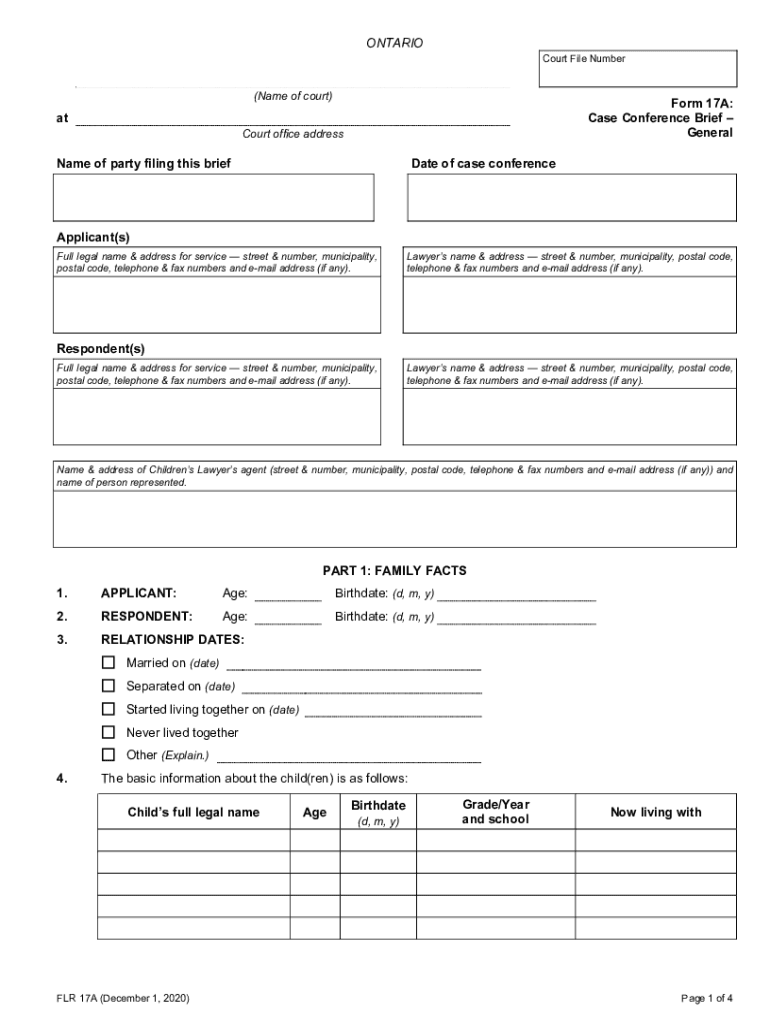







Definition and Purpose of Form 17A in Ontario Family Law
Form 17A, known as the Case Conference Brief, is a crucial document used in Ontario family law proceedings. It serves to outline essential details about the involved parties, including their legal names, addresses, and contact specifics. This document facilitates discussions in a case conference, aimed at resolving family disputes efficiently. More specifically, Form 17A collects vital information such as family history, financial data, and issues needing resolution, thereby guiding the proceedings.
Steps to Complete Form 17A: Case Conference Brief
-
Gather Necessary Information:
- Collect personal details of involved parties, including full names, addresses, and contact numbers.
- Prepare a list of facts regarding the family and any resolved or pending issues.
-
Financial Disclosure:
- Include comprehensive financial details related to support claims or assets.
- Gather supporting documents, such as income statements and tax returns.
-
Detail Legal and Procedural Issues:
- Document any issues that require expert evidence or additional orders.
- Clearly outline unresolved matters for discussion during the conference.
-
Organize and Review:
- Double-check all sections to ensure information accuracy and completeness.
- Seek legal advice if necessary to clarify complex sections or requirements.
Key Elements of Form 17A: Case Conference Brief
- Family Facts: Detailed history and current situation involving family members.
- Resolved and Unresolved Issues: Identified areas settled between parties and those needing intervention.
- Financial Information: Income, liabilities, and asset details crucial for support claims.
- Procedural Concerns: Any required legal procedures or orders pending in court.
Who Typically Uses Form 17A
Form 17A is primarily used by individuals involved in family law disputes in Ontario. This includes:
- Parties going through separation or divorce proceedings.
- Legal representatives advocating for clients in family law cases.
- Family law courts requiring detailed background and financial information to facilitate case management.
Importance of Form 17A in Legal Proceedings
Using Form 17A is essential as it helps streamline the legal process by:
- Ensuring all parties and the court have a comprehensive understanding of the case details.
- Facilitating negotiations and resolution of disputes before court hearings.
- Providing a structured approach to presenting evidence and claims.
Obtaining Form 17A: Case Conference Brief
- Where to Obtain: Form 17A can typically be obtained from Ontario family law court websites or physical court offices.
- Digital Access: Some jurisdictions may allow for filling out and submitting the form online through approved platforms.
Required Documents for Completing Form 17A
- Identification Documents: Valid ID to verify the identities of the involved parties.
- Financial Documents: Income statements, tax returns, and evidence of assets/liabilities.
- Relevant Legal Documents: Any previous court orders or agreements related to the case.
Legal Use of Form 17A in Ontario
Form 17A must be used in accordance with Ontario's family law rules. It:
- Should accurately reflect the current state of affairs between parties.
- Must be submitted within specific timelines directed by the court to be considered valid.
- Needs compliance with all legal requirements to avoid delays or penalties.
Practical Examples of Using Form 17A
- Scenario 1: A couple filing for divorce where Form 17A outlines support arrangements and division of assets.
- Scenario 2: Resolving custody and visitation rights disputes, requiring detailed family background and proposed parenting plans.
- Scenario 3: Adjustments to existing support orders necessitating detailed income disclosures for accurate reassessment.
State-Specific Considerations and Requirements
While Form 17A is used within Ontario, understanding local court rules and timelines is critical. Each jurisdiction may enforce specific protocols or have supplementary forms that need to accompany Form 17A submission. It's advisable to consult legal counsel to navigate these nuances effectively.