A Guide to Practicing Law in Multiple States - Clio 2026

Get Form
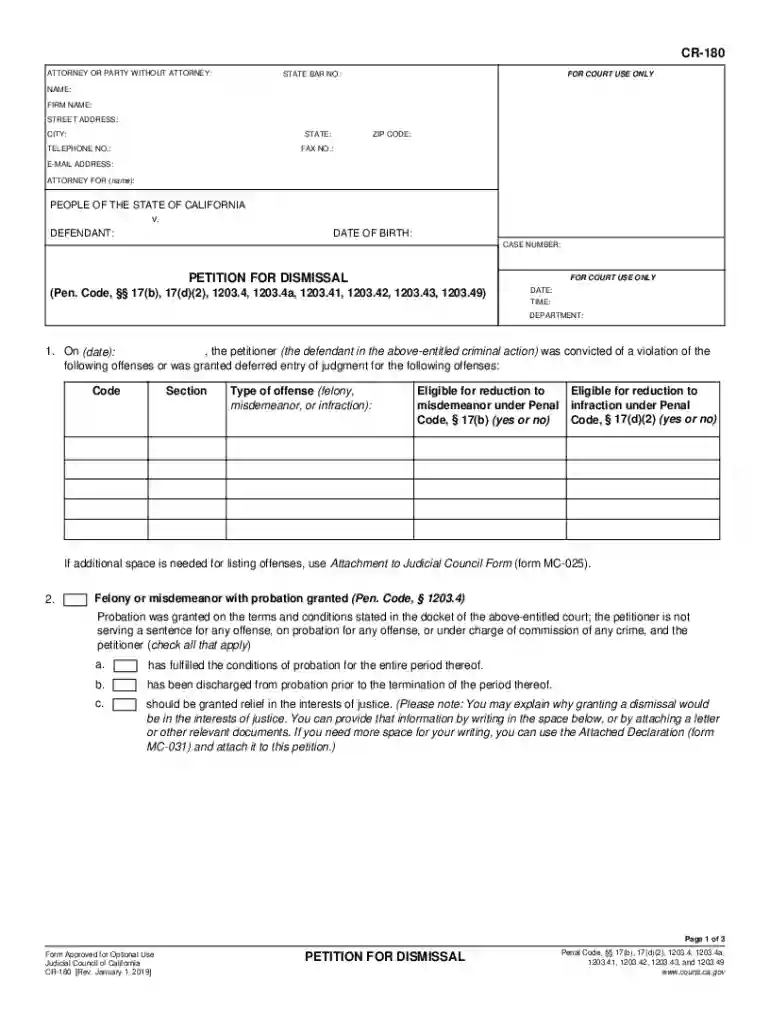
cr 180 instructions Preview on Page 1

Here's how it works

01. Edit your cr 180 instructions online
Type text, add images, blackout confidential details, add comments, highlights and more.

02. Sign it in a few clicks
Draw your signature, type it, upload its image, or use your mobile device as a signature pad.

03. Share your form with others
Send cr 180 pdf via email, link, or fax. You can also download it, export it or print it out.

Definition & Meaning

The "Guide to Practicing Law in Multiple States" is designed to support attorneys who seek to broaden their practice across different jurisdictions. This guide offers detailed information on the requirements and protocols necessary for a lawyer to legally practice in multiple states. It provides a clear understanding of what multi-jurisdictional practice entails, including how to navigate different state bar memberships and the implications for client services.

  • Purpose: The guide serves as an essential resource for attorneys who need to comply with various legal standards and ethical guidelines while serving clients across state lines.
  • Scope: Lawyers utilize this guide to ensure they meet each state's licensing and continuing legal education (CLE) requirements, avoiding unauthorized practice of law issues.

Steps to Complete the Guide

Research State Bar Requirements

Each state has unique requirements for lawyers wishing to practice within its borders. Attorneys must:

  1. Consult State Bar Associations: Examine the specific admission procedures for each state of interest.
  2. Review CLE Credit Requirements: Determine the necessary CLE credits needed to maintain good standing in each jurisdiction.
  3. Understand Reciprocity and Admission on Motion: Explore potential reciprocal agreements between states or the option for admission on motion without examination.

Assemble Necessary Documentation

Before proceeding with applications, gather all vital documents:

  • Bar Exam Results and Certificates for states where the attorney is already licensed.
  • Law School Diploma and Transcripts to verify legal education.
  • Professional Work Experience Documentation if applicable, to demonstrate practice history.

Important Terms Related to Multi-State Practice

Understanding specific terminology is crucial:

  • Reciprocity: Allows attorneys admitted in one jurisdiction to be admitted in another without taking an additional bar exam, under certain conditions.
  • Pro Hac Vice: Temporary permission for an attorney to participate in a case in a state where they are not licensed to practice law permanently.
  • Uniform Bar Examination (UBE): A standardized test that provides a transferable score used for bar admission in multiple UBE-adopting states.

Eligibility Criteria

To practice law in multiple states, attorneys must meet specific criteria:

  • Bar Admission in a Primary State: Must have active and current bar membership in at least one state.
  • Good Standing: Maintain an unblemished record, free of disciplinary actions.
  • Compliance with CLE Requirements: Regularly fulfill continuing education prerequisites in each state where licensure is sought.
decoration image ratings of Dochub

State-Specific Rules

Each state imposes distinct rules:

  • Maryland: Requires a character evaluation and state-specific training on local laws.
  • New York: Offers admission on motion for experienced attorneys licensed in other states.
  • California: Demands passing specific state bar exams and meeting residency requirements.

Legal Use of the Guide

Attorneys should utilize the guide to:

  • Ensure Compliance: Avoid penalties related to unauthorized practice by adhering strictly to state laws.
  • Enhance Career Opportunities: Expand professional reach and client base by practicing in multiple regions.
  • Assist Client Representation: Offer comprehensive legal services that meet diverse, multi-state client needs.

Examples of Using the Guide

Practical examples include:

  • Corporate Law Attorneys practicing in markets like New York and California to serve diverse business clients.
  • Family Law Practitioners needing access to clients with custody or divorce actions spanning state lines.
  • Defense Attorneys in federal cases involving cross-jurisdictional activities.

Penalties for Non-Compliance

Failure to comply with state requirements can result in:

  • Censure or Suspension: Immediate disciplinary action by state bar associations.
  • Financial Penalties: Fines imposed for unauthorized practice.
  • Client-Related Repercussions: Legal malpractice suits or client disagreements.

Software Compatibility

Using document management solutions such as DocHub can streamline application processes:

  • Integration with Cloud Services: Simplifies document gathering and storage across multiple states.
  • Collaborative Features: Enables easy sharing and verification of legal forms with state bar associations.
  • Security Protections: Ensures legal documents meet stringent confidentiality and integrity standards.

See more A Guide to Practicing Law in Multiple States - Clio versions

We've got more versions of the A Guide to Practicing Law in Multiple States - Clio form. Select the right A Guide to Practicing Law in Multiple States - Clio version from the list and start editing it straight away!
Versions Form popularity Fillable & printable
2019 4.3 Satisfied (38 Votes)
2017 4.8 Satisfied (44 Votes)
2016 4.4 Satisfied (771 Votes)
2015 4.1 Satisfied (27 Votes)
2014 4.4 Satisfied (564 Votes)
2010 4.3 Satisfied (32 Votes)
2009 4 Satisfied (23 Votes)
be ready to get more

Complete this form in 5 minutes or less

Get form

Got questions?

We have answers to the most popular questions from our customers. If you can't find an answer to your question, please contact us.
Contact us
South Dakota has a reputation for being the easiest test in the country, followed by Wisconsin, which allows any graduate of a Wisconsin law school to automatically be admitted to the bar. This policy is known as diploma privilege.
11 of the highest-paying lawyers Civil litigation attorney. Real estate attorney. Intellectual property attorney. Bankruptcy lawyer. Family lawyer. Tax attorney. Corporate attorney. Patent attorney.
He has an estimated net wealth of $2.3 billion, Munger ranks as the worlds richest lawyer. He graduated from Harvard Law School and has amassed a large fortune.
Research studies have proved that it would be corporate law, intellectual property law, and tax law as some of the specializations that offer the highest paying compared to others. Salaries can range from₹10 lakhs to₹25 lakhs per annum.
While Californias bar exam may be largely perceived as the hardest one in the nation, some other states that may pose similar difficulty and the reasons for this include: Arkansas: Arkansas also has a grueling two-day test. It requires you to know several state and local laws, in addition to federal ones.

Security and compliance

At DocHub, your data security is our priority. We follow HIPAA, SOC2, GDPR, and other standards, so you can work on your documents with confidence.

Learn more
ccpa2
pci-dss
gdpr-compliance
hipaa
soc-compliance

People also ask

docHubing $500,000+ per year requires business growth and client acquisition strategies. Build a Strong Client Base. Legal leads ensure a steady flow of cases and income. Specialize in High-Paying Legal Fields. Fields that yield higher fees include: Scale a Law Firm. Invest in Legal Marketing. Diversify Income Streams.
How Do I Become a Multi-State Lawyer? Check to see if the state offers reciprocity. Take the Uniform Bar Examination (UBE) Take the bar exam for multiple states. Stick to cases in federal courts. Consider your law firm business plan. Geographical freedom. Increase practice area.

form cr 180