
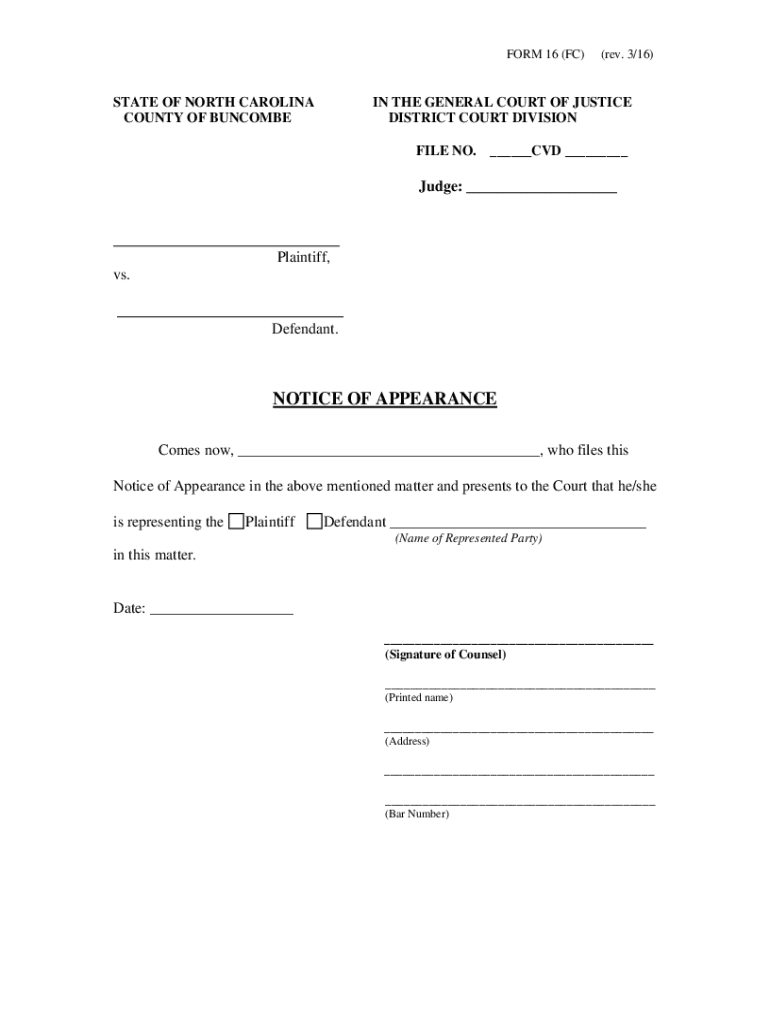







Definition and Purpose of Form 16 (FC)
Form 16 (FC), or the Federal Compliance Form 16, is a critical document widely utilized in regulatory and compliance settings across various industries in the United States. Its primary purpose is to ensure that individuals or organizations meet specific federal standards and guidelines, often in legal, tax, or business contexts. This form acts as a formal declaration and is mandatory for entities engaged in activities that necessitate federal oversight. Compliance with the requirements outlined in Form 16 (FC) is crucial to remain in good standing with governing bodies and to avoid potential legal repercussions.
Steps to Complete Form 16 (FC)
Completing Form 16 (FC) requires attention to detail and adherence to specific instructions:
-
Identify Required Sections: Begin by reviewing the form to understand which sections are applicable to your situation. Different requirements may apply based on the type of entity and jurisdiction.
-
Gather Necessary Information: Collect all relevant data, including personal identification numbers, business registration details, and any supporting documents required for submission.
-
Fill Out Personal and Entity Details: Enter all necessary personal or business information with precision. This typically includes names, addresses, and contact information.
-
Complete Compliance Sections: Fill in the sections related to compliance standards. Ensure accuracy and consistency with existing records to avoid discrepancies.
-
Review and Verify: Carefully review the form for errors or omissions. Double-check all entries against source documents to ensure correctness.
-
Sign and Date the Form: Sign and date the form where required. Confirm that all signatures adhere to the specified format, whether electronic or ink-based.
-
Submit the Form: Follow the submission guidelines for mail, online, or in-person delivery. Retain copies of the completed form and any confirmations received.
Who Typically Uses Form 16 (FC)
Form 16 (FC) is utilized by a diverse group of individuals and entities required to demonstrate federal compliance:
-
Businesses: Corporations, partnerships, and limited liability companies (LLCs) that operate under federal regulations may use this form to certify adherence to specific guidelines.
-
Non-profits: Organizations seeking tax-exempt status or engaging in activities under federal scrutiny often file this form to meet compliance obligations.
-
Legal Professionals: Attorneys may use this form when representing clients in federal compliance cases or registrations.
-
Individuals: Certain individuals, such as contractors or freelancers, may need to use Form 16 (FC) if their work involves federal oversight or contracts.
Key Elements of Form 16 (FC)
Understanding the core components of Form 16 (FC) is essential to ensure accurate completion:
-
Personal and Business Information: Essential details about the individual or organization filing the form.
-
Compliance Statements: Sections requiring confirmation of adherence to federal regulations relevant to the filer’s specific circumstances.
-
Attachments and Schedules: Supplemental information that supports the primary details or clarifications needed for specific compliance areas.
-
Signature Blocks: Areas designated for official signatures, confirming the accuracy of provided information and acceptance of legal responsibilities.
Form Submission Methods
Submitting Form 16 (FC) can be done through various methods, depending on convenience and regulatory guidelines:
-
Online Submission: Many federal agencies allow electronic filing through secure portals. This method is often recommended for its efficiency and immediate submission confirmation.
-
Mail: Some entities prefer mailing paper forms to the designated federal agency address. Ensure all documents are securely packaged to prevent loss.
-
In-Person Delivery: Direct submission at federal offices may be required in particular cases, primarily for sensitive or confidential filings.
Legal Use of Form 16 (FC)
The legal applicability of Form 16 (FC) extends across diverse scenarios:
-
Regulatory Compliance: Mandatory for demonstrating adherence to federal standards, especially in federally regulated industries.
-
Licensing and Permitting: Often a prerequisite for obtaining or renewing federal licenses and permits.
-
Audit and Verification: Used in audits to confirm compliance posture and support legal claims or defense in regulatory investigations.
Penalties for Non-Compliance
Failure to appropriately file Form 16 (FC) can lead to several penalties:
-
Fines and Penalties: Monetary penalties may be imposed for late submission or incorrect information that does not comply with federal standards.
-
Legal Action: Serious breaches may result in legal proceedings, including injunctions or restrictions on business operations.
-
Loss of Licenses/Permits: Non-compliance can result in the revocation or suspension of federal licenses or certifications.
State-Specific Rules for Form 16 (FC)
Regulations tied to Form 16 (FC) can vary significantly by state:
-
State Variations: Different states may impose additional requirements or interpret federal standards uniquely, affecting how Form 16 (FC) is completed or submitted.
-
Supplementary Documents: Some states require additional documentation accompanying the form to ensure alignment with state-level regulations.
Understanding and adhering to both federal and state-specific guidelines is crucial for fulfilling compliance obligations associated with Form 16 (FC).




