




01. Edit your north carolina estimated income tax online online
Type text, add images, blackout confidential details, add comments, highlights and more.

Type text, add images, blackout confidential details, add comments, highlights and more.

Draw your signature, type it, upload its image, or use your mobile device as a signature pad.

Send north carolina estimated income tax via email, link, or fax. You can also download it, export it or print it out.
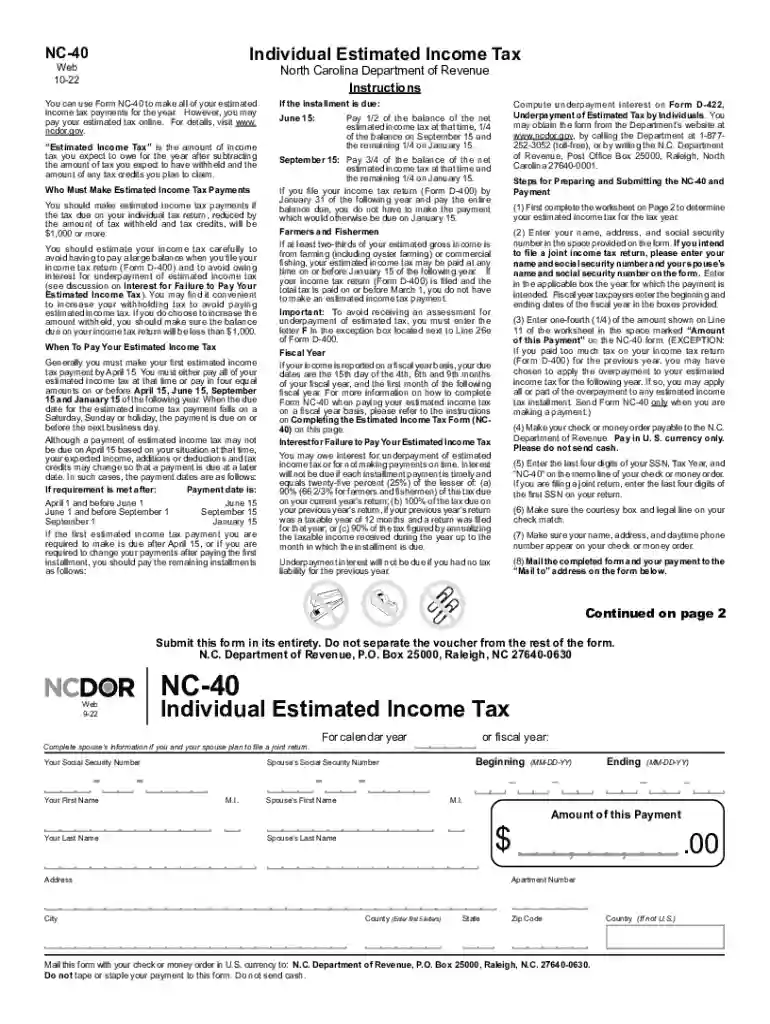
North Carolina Form NC-40 is a tax form used by residents to make estimated income tax payments. This form is essential for individuals who expect to owe taxes and want to avoid underpayment penalties. It serves as a method for taxpayers to prepay their income taxes, thereby reducing the burden of a large balance when they file their annual tax return.
To properly use Form NC-40, you should first determine your expected income tax liability for the year. This involves estimating your total income and allowable deductions. Once you have calculated the expected tax, subtract any credits and withholdings. The remaining balance is the amount you should pay through estimated tax payments using NC-40. Payments can be made quarterly, ensuring smaller, manageable amounts throughout the year.
Estimated tax payments using Form NC-40 are due quarterly. The typical deadlines are April 15, June 15, September 15, and January 15 of the following year. These deadlines are crucial to avoid penalties for underpayment.
Failing to make timely payments using Form NC-40 can result in penalties. The North Carolina Department of Revenue may impose fines for underpayment or late payment of estimated taxes. These penalties accrue from the due date of the payment until the date it is paid in full.
Individuals, including self-employed persons, retirees, and others with irregular income, often use NC-40. It is particularly relevant for those whose withholding does not cover at least 90% of their tax liability. Eligibility is broad, but understanding your specific financial situation can determine the necessity of estimated payments.


North Carolina has unique tax laws that impact the completion of Form NC-40. Taxpayers must comply with state-specific guidelines, which may differ from federal regulations. It’s essential to verify annual changes to tax codes that could influence the amount owed.
The form is typically used by individuals with income not subject to withholding. This includes freelancers, independent contractors, certain retirees, and business owners. It is also used by those who receive substantial income from rents, dividends, or capital gains. Understanding your income source is crucial for determining if NC-40 is applicable.

Consider Jane, a freelance graphic designer based in North Carolina. To avoid a hefty tax bill at the end of the year, she uses NC-40 to make quarterly payments based on her estimated income. Another example is Tom, a retiree with investment income. He calculates his estimated tax and uses NC-40 to ensure compliance with tax obligations.
Form NC-40 is available both digitally and on paper. The digital version offers convenience, allowing taxpayers to fill out and submit online, which can streamline the process and provide instant confirmation of receipt. Meanwhile, traditional paper filing remains an option for those who prefer a physical format.
We've got more versions of the north carolina estimated income tax online form. Select the right north carolina estimated income tax online version from the list and start editing it straight away!
At DocHub, your data security is our priority. We follow HIPAA, SOC2, GDPR, and other standards, so you can work on your documents with confidence.


