
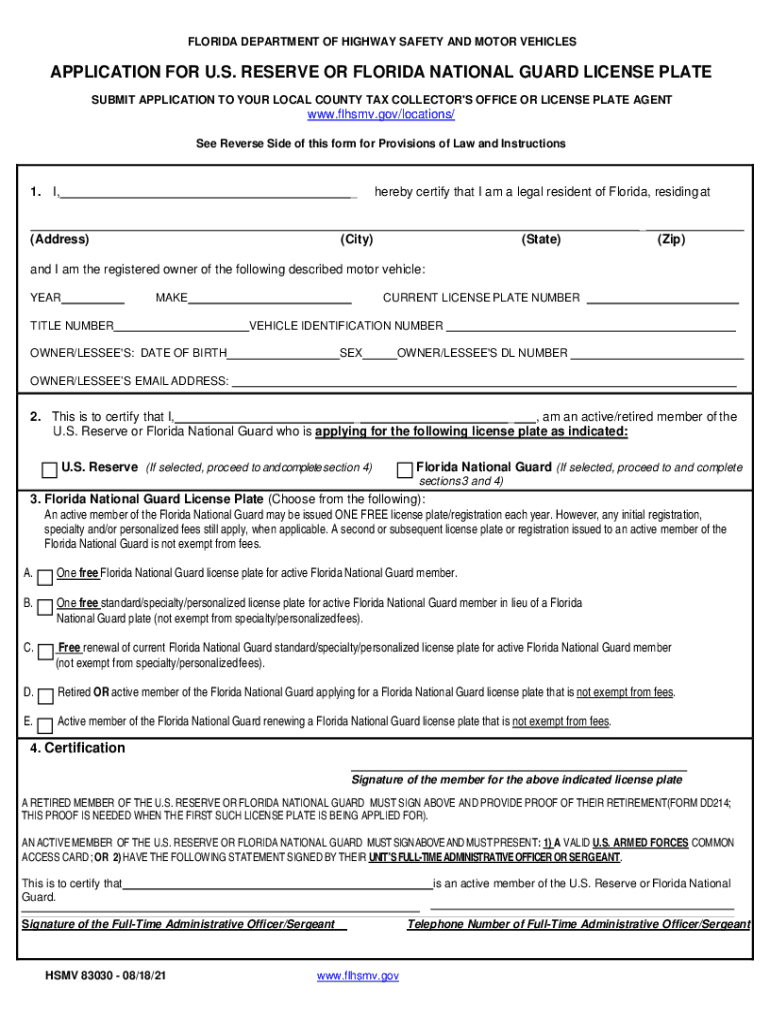







Definition and Overview of the Florida Department of Highway Safety and Motor Vehicles
The Florida Department of Highway Safety and Motor Vehicles (FLHSMV) is a state agency responsible for maintaining road safety and managing motor vehicle operations in Florida. FLHSMV oversees vehicle registrations, driver licenses, and traffic laws to ensure the safe and efficient movement of people and goods. As a crucial part of Florida’s transportation infrastructure, the department provides various services aimed at improving road safety and supporting motorists with necessary documentation.
FLHSMV also collaborates with local governments, law enforcement, and federal agencies to implement and enforce traffic regulations that protect road users. It continually updates its systems and policies to reflect changes in technology and road safety standards. This helps Florida remain proactive in addressing road safety challenges and efficiently managing the state’s vast network of highways and roadways.
How to Use the Florida Department of Highway Safety and Motor Vehicles Services
FLHSMV offers numerous services that can be accessed through various channels, including online platforms, mail, and in-person visits to local offices. The primary services include vehicle registration, driver licensing, and traffic violation processing. For vehicle registration, residents can visit a local tax collector’s office or use the department’s online portal to renew their vehicle tags and update registration information.
When it comes to driver licensing, FLHSMV provides testing, issuance, renewal, and replacement services. Prospective drivers must pass a series of tests covering written knowledge, vision, and driving skills. Replacements and renewals can be completed online, significantly reducing wait times. Individuals can also handle traffic citations through the FLHSMV website, where they can pay fines, attend traffic school, or contest tickets.
Steps to Obtain a Florida Department of Highway Safety and Motor Vehicles License Plate
Obtaining a license plate in Florida involves a series of steps that ensure legal compliance and vehicle identification. New vehicle owners must register their vehicles within ten days of purchase or moving to Florida to avoid penalties. Here is a breakdown of the process:
- Purchase Insurance: Secure a Florida insurance policy with coverage requirements as mandated by law.
- Gather Documentation: Prepare necessary documents such as identification, proof of insurance, vehicle title, and filled application forms.
- Visit Tax Collector’s Office: Bring the documents to a local tax collector’s office to apply for registration and obtain a license plate.
- Complete Forms and Pay Fees: Submit completed forms and pay applicable registration fees, which vary based on the vehicle type and weight.
- Receive License Plate: Upon successful registration, receive your license plate and ensure it is properly affixed to the vehicle.
Key Elements of a License Plate Application from FLHSMV
The application for a Florida license plate includes several critical components. Applicants must ensure that each section is completed accurately to prevent delays in processing:
- Owner Information: Personal details such as name, address, and contact information.
- Vehicle Details: Information about the vehicle, including make, model, year, VIN, and color.
- Insurance Information: Proof of a valid Florida insurance policy is necessary to meet state requirements.
- Fee Payment: Payment of registration fees based on vehicle type, weight, and other factors like specialty plate selection.
Accuracy in filling out these sections is vital as any discrepancies may result in the application being returned or rejected. Applicants should double-check all entries before submission.
Eligibility Criteria for U.S. Reserve and Florida National Guard License Plates
To be eligible for a U.S. Reserve or Florida National Guard specialty license plate, applicants must meet specific criteria. Proof of service as an active or retired member of the U.S. Reserve or Florida National Guard is required. This can be in the form of official military IDs, discharge papers (DD-214), or current duty orders.
Furthermore, there might be distinctions between no-fee and fee-based plates, depending on the veteran's status and the type of specialty plate selected. Applicants should consult with FLHSMV or local county tax offices to verify eligibility and find out which documents are necessary for their application.


State-Specific Rules for the Florida Department of Highway Safety and Motor Vehicles
Each state in the U.S. has unique requirements for motor vehicle registration and driver licensing. In Florida, specific rules govern the registration of vehicles, issuance of driver licenses, and penalties for traffic violations:
- Vehicle Registrations: Florida requires new residents to register vehicles within ten days of obtaining residency or employment.
- Driver License Renewal: Drivers must renew licenses every eight years, providing updated information and passing vision tests.
- Traffic Violations: Penalties for traffic violations vary and may include fines, points added to a driving record, or required traffic school attendance.
These rules are in place to ensure compliance with state legislation and promote road safety across Florida’s extensive network of roadways.
Importance of Understanding FLHSMV Guidelines
Understanding the guidelines issued by the Florida Department of Highway Safety and Motor Vehicles is crucial for all drivers and vehicle owners in the state. This ensures:
- Legal Compliance: Adhering to vehicle registration and driver licensing laws to avoid penalties.
- Road Safety: Promoting safe driving practices by following state regulations.
- Efficient Processing: Facilitating smooth interactions with FLHSMV through complete and accurate documentation.
By familiarizing themselves with these guidelines, Florida residents can contribute to safer roads and experience hassle-free service when dealing with motor vehicle matters.




