







Definition & Meaning
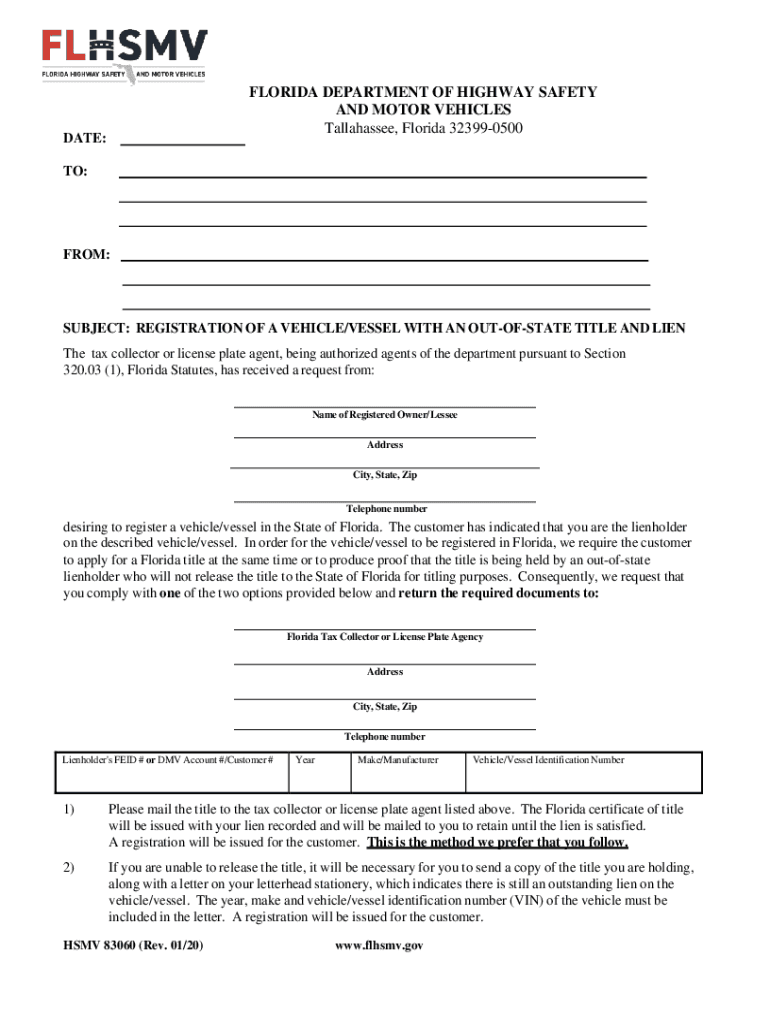
"FL vehicle out state" refers to the procedure and documentation required when registering a vehicle in Florida with an out-of-state title. This process is crucial for residents who have recently moved to Florida or purchased a vehicle from another state. Completing this process ensures that the vehicle is legally recognized and registered in Florida, complying with state-specific regulations and laws.
How to Use the FL Vehicle Out State Process
Using the FL vehicle out state process involves several key steps. First, individuals must obtain the out-of-state title of the vehicle. This document is needed to verify the vehicle's existing ownership and lien status. Next, the vehicle owner needs to prepare additional paperwork, including providing proof of identity and residency in Florida. Ensuring all documents are accurate and complete helps streamline the registration process.
Steps to Complete the FL Vehicle Out State Process
- Gather all necessary documentation, including the out-of-state title, proof of Florida residency, and identity verification.
- If the vehicle has an outstanding lien, request the lienholder to mail the original out-of-state title to the local tax collector.
- Visit the Florida Department of Highway Safety and Motor Vehicles (FLHSMV) or a local tax collector's office to submit the paperwork.
- Complete a VIN verification, required for vehicles brought into Florida from another state.
- Pay applicable registration and title fees to finalize the process.
Key Elements of the FL Vehicle Out State Process
- Out-of-State Title: Essential for transferring ownership and registration to Florida.
- Proof of Florida Residency: Accepted documents include a Florida driver’s license or proof of home ownership.
- VIN Verification: Conducted by an FLHSMV representative or law enforcement for authenticity.
- Lienholder Notification: Ensures the title release and lien status are communicated properly.
Required Documents
Several documents are required to successfully navigate the FL vehicle out state process. These include:
- The original out-of-state vehicle title
- A completed Application for Certificate of Title with/without Registration (Form HSMV 82040)
- Proof of Florida insurance
- Identification documents, such as a Florida driver’s license or ID card
- Vehicle Identification Number (VIN) and Odometer Verification (Form HSMV 82042)
State-Specific Rules for the FL Vehicle Out State
Florida has unique requirements for vehicle registration that differ from other states. For instance, all motor vehicles must pass a VIN inspection and be insured by a Florida-licensed insurer. The state imposes specific taxes and fees that vary depending on vehicle type and weight.
Examples of Using the FL Vehicle Out State
Consider a scenario where a Georgia resident relocates to Florida with their car. To comply with Florida regulations, the individual must follow the FL vehicle out state process. This includes obtaining a VIN verification, providing proof of residency, and ensuring their vehicle insurance meets Florida's standards. Through these steps, the individual successfully registers their vehicle in Florida.
Legal Use of the FL Vehicle Out State Process
The FL vehicle out state process is legally required for anyone seeking to register a vehicle in Florida that originates from another state. Failure to comply with these procedures can result in penalties, such as fines or delayed registration, affecting legal ownership and road-use privileges.
Penalties for Non-Compliance
Non-compliance with the FL vehicle out state process can result in significant consequences. Vehicle owners may face fines for late registration, legal hurdles in proving vehicle ownership, or difficulties in obtaining the necessary vehicle licensing and permits. It is imperative to adhere to Florida's deadlines and requirements to avoid such penalties.
By understanding and properly navigating the FL vehicle out state process, vehicle owners ensure smooth registration, legal compliance, and the ability to drive their vehicles confidently on Florida roads.




