
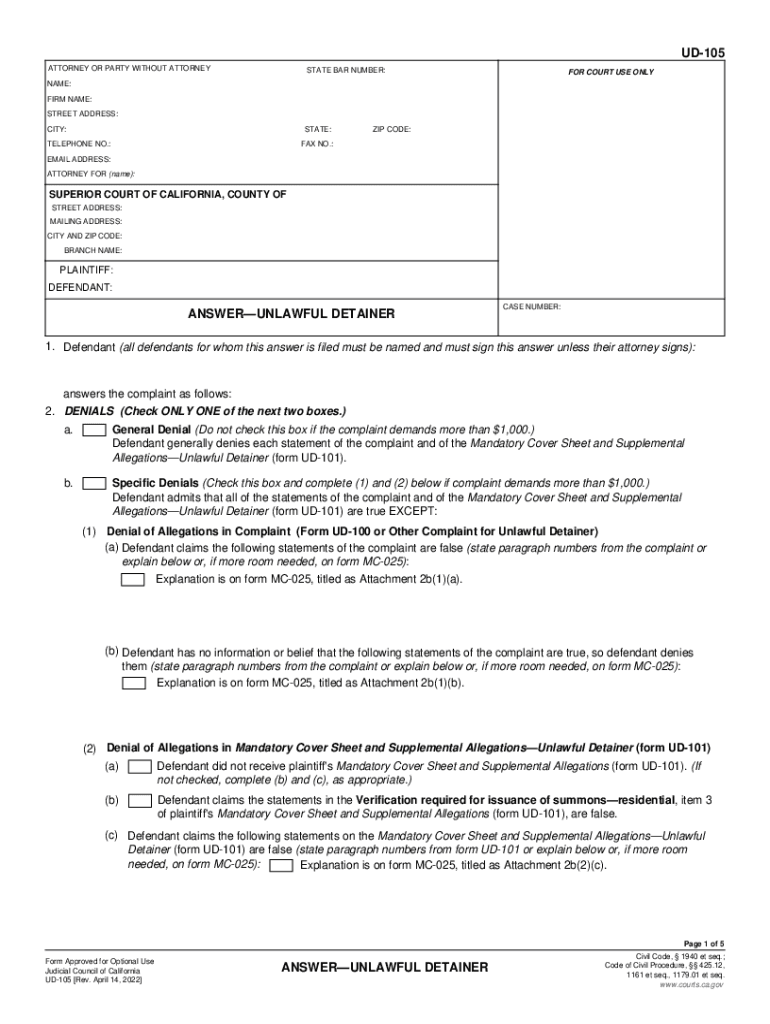







Definition and Meaning of UD-105
UD-105 is a legal form used in California, specifically designed for defendants in unlawful detainer cases, commonly associated with eviction proceedings. It allows defendants to formally respond to allegations in an eviction complaint. By filing this form, the defendant can outline their defenses, objections, and specific requests related to the eviction case. The form serves as a structured means for tenants to assert their rights and present their side of the story in a legal context.
- Purpose: Enables defendants to formally reply to eviction allegations.
- Usage Context: Primarily used in eviction cases within California.
- Inclusions: Sections for denials, defenses, objections, and requests for relief such as cost recovery or repairs.
Steps to Complete the UD-105
Completing the UD-105 form requires attention to detail and should be done methodically to ensure all necessary information is included.
- General Information: Begin by entering basic information such as the case number, court location, and names of the involved parties.
- Denial of Allegations: Specify any general or specific denials of the allegations presented in the eviction complaint.
- Assert Defenses: Use this section to state any defenses against the eviction, such as breach of warranty of habitability or retaliatory eviction.
- Make Requests: Include any requests for repairs, cost recovery, or other forms of relief.
- Verification: Complete the verification section, affirming the truthfulness of the document content.
- Tips: Ensure clarity in your statements and seek legal advice if needed to accurately represent your defenses.
Importing and Exporting the UD-105
Obtaining and submitting the UD-105 form can be done through several methods depending on personal preference and resources.
- Online Access: The form is downloadable from court websites or legal document platforms. Ensuring you download the correct version for California is crucial.
- Mail or In-Person: Physical copies can often be obtained from courthouse clerks or legal aid centers.
After completion, submission is typically required in person at the relevant court, though some locations may accept mail-in submissions. Always verify with your court for accepted submission methods.
Who Typically Uses the UD-105
The UD-105 form is primarily used by individuals facing eviction proceedings in California courts. It provides a legal method for tenants to respond and defend against claims made by landlords in eviction lawsuits.
- Primary Users: Tenants or their legal representatives.
- Typical Scenarios: Commonly involved in disputes regarding unpaid rent, property damage, or lease violations.


Key Elements of the UD-105
The form comprises several critical sections that must be accurately filled out to effectively communicate the defendant’s position in an eviction case.
- Denials: Space to deny all or specific allegations.
- Defenses: Opportunity to provide legal defenses such as improper notice or landlord negligence.
- Requests for Relief: Section to request reimbursement or necessary repairs.
Each element must be carefully considered and supported by corresponding documentation when applicable.
State-Specific Rules for Using UD-105
As the UD-105 is a California-specific document, its use and requirements are governed by California state law. Awareness of these legal nuances is essential for proper form completion.
- Court Procedures: Familiarize yourself with California's unlawful detainer procedures.
- Defensive Claims: Ensure all claims are aligned with state-specific tenant rights regulations.
Understanding these state-specific dynamics will better position tenants to protect their rights during the eviction process.
Legal Use of the UD-105
The UD-105 facilitates the legal response to an eviction notice, crucial in protecting the rights afforded to tenants under California law.
- Legal Framework: Encourages structured defense representation in legal proceedings.
- Tenant Advocacy: Provides a legal platform for tenants to argue their defense systematically.
The proper use of this form enhances the fair adjudication of tenant-landlord disputes.
Common Defenses Utilized in UD-105
In preparing the UD-105, several common defenses can be utilized by tenants to protect their rights.
- Warranty of Habitability Violations: Arguing poor living conditions as defense.
- Retaliatory Eviction Claims: Claiming eviction in response to lawful tenant actions like reporting code violations.
- Improper Notice: Highlighting procedural errors in landlord-issued notices.
Each defense must be clearly articulated and, where possible, substantiated with evidence or supporting documentation.




