
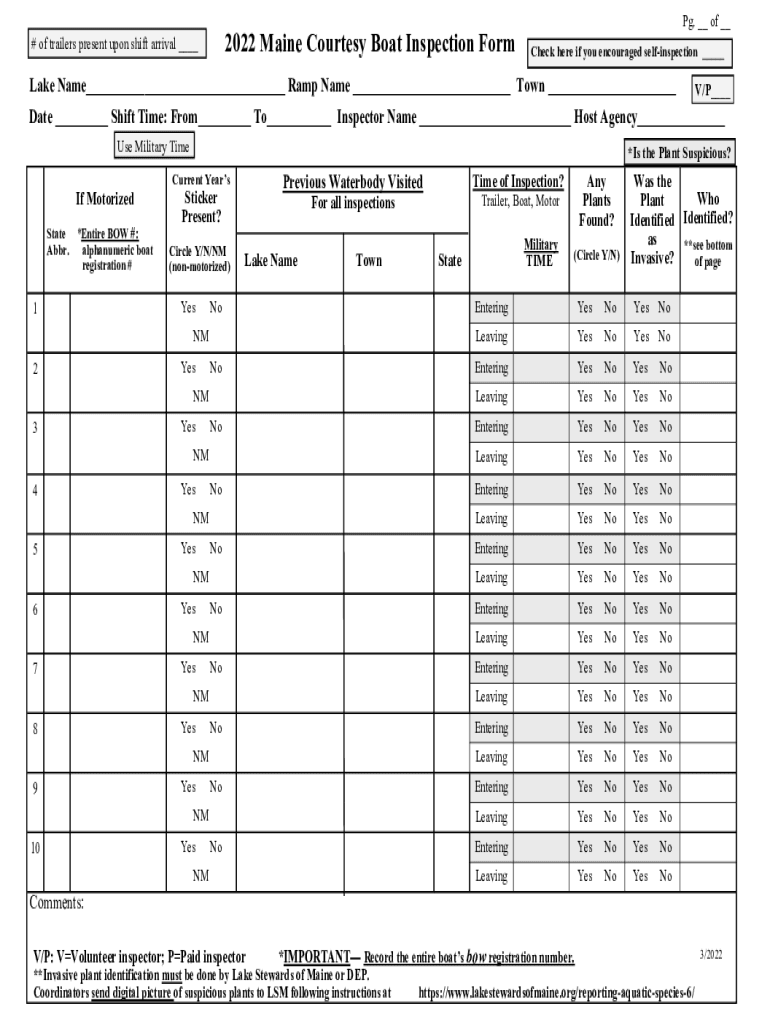







Definition & Purpose of Courtesy Boat Inspections
Courtesy boat inspections play a crucial role in protecting Maine's water bodies from invasive species. These inspections are designed to prevent the introduction and spread of non-native aquatic plants and organisms that can harm local ecosystems. The form from Maine.gov is specifically tailored to track and document the efforts to educate boaters and enforce cleaning protocols. These actions not only preserve water quality but also ensure the continued enjoyment of recreational activities on Maine's lakes and rivers. By completing the inspection form, inspectors help maintain ecological balance and support state fish and wildlife conservation programs.
How to Obtain the Courtesy Boat Inspection Form
To access the Courtesy Boat Inspection Form, interested parties can visit Maine.gov, where the form is available as a downloadable PDF. This document can be printed for manual completion or filled out digitally if using compatible software. Additionally, state agencies or designated environmental protection organizations may provide physical copies at boating checkpoints or informational kiosks located near popular water bodies. For automated systems or integrated applications like DocHub, users may import and manage forms directly from cloud storage, simplifying access and distribution.
Steps to Complete the Form
- Begin With Identification Information: Start by entering the date, inspector's name, and location of the inspection. This establishes the context and accountability for each entry.
- Document the Presence of Trailers: Note whether the boat has an accompanying trailer, as trailers can also be potential carriers of invasive species.
- Encourage Self-Inspection: Confirm that the boat owner understands the importance of self-inspection protocols. Documentation of their awareness or any instructions provided should be recorded.
- Record Inspection Details: Include observations about the hull and other parts of the boat, noting any plant life or foreign organisms found. Utilize the form’s specified sections to maintain organized records.
- Final Checks and Signature: After ensuring all relevant fields are completed, the inspector should sign and date the form to certify the inspection's completion.
Importance of Courtesy Boat Inspections
Conducting boat inspections is vital for environmental protection. Invasive species can cause severe damage to native ecosystems by outcompeting local flora and fauna, altering habitats, and potentially leading to costly damages and maintenance interventions. By following Maine's inspection protocols, boaters contribute to preserving the natural beauty and ecological integrity of the state's water resources. Educating boaters and enforcing preventive measures through these inspections are essential steps in fostering environmental stewardship and sustainable recreational practices.
Common Users of the Form
The Courtesy Boat Inspection Form is typically used by trained environmental inspectors or volunteers associated with conservation organizations. These individuals are positioned at boat launches or specific water body access points across Maine. In some cases, fisheries and wildlife officers may also employ the form as part of their broader regulatory and educational initiatives. The primary aim is to engage the boating public, providing information and resources on preventing the inadvertent spread of invasive aquatic species.


Key Elements of the Form
- Boater Information: Includes fields for the boat owner’s name, contact details, and boat registration number. This section establishes a record for follow-up or reporting purposes.
- Inspection Criteria: Dedicated sections to detail inspected areas, such as the boat’s hull, deck, and motor. This structured layout ensures comprehensive coverage of all potential contamination points.
- Species Identification: Checklists or tables for invasive plant species identification allow inspectors to catalog findings effectively, using standardized nomenclature and descriptions.
- Inspection Outcome: An area to summarize conclusions and any recommendations for further cleaning or decontamination procedures, fostering transparency and action-oriented outcomes.
State-Specific Rules for Inspections
Maine's laws mandate specific protocols for boat inspections, including requirements for public awareness campaigns and strategies for managing known invasive species in local waters. Regulatory guidelines dictate the frequency and locations for mandatory inspections, and they also outline the responsibilities of different agencies in enforcing these measures. Inspectors must comply with these rules, ensuring that all gathered information aligns with state objectives on aquatic biodiversity and protection.
Examples of Inspections in Practice
In a case at Mousam Lake, an inspection revealed the presence of milfoil on a boat propeller, prompting additional decontamination efforts. The incident highlighted the necessity for thorough inspection protocols that include both visible and hidden areas of watercraft. Similar case studies across several Maine lakes demonstrate the effectiveness of prevention strategies and underscore the need for consistent educational outreach to boaters.
Legal Implications and Compliance
Failure to comply with inspection requirements can result in fines or penalties under Maine’s environmental statutes. Boaters must acquaint themselves with responsibilities regarding invasive species control and adhere to inspection guidelines. Inspectors play an enforcement role, educating and ensuring adherence to legal requirements, thereby mitigating risks and potential legal repercussions stemming from non-compliance.




