
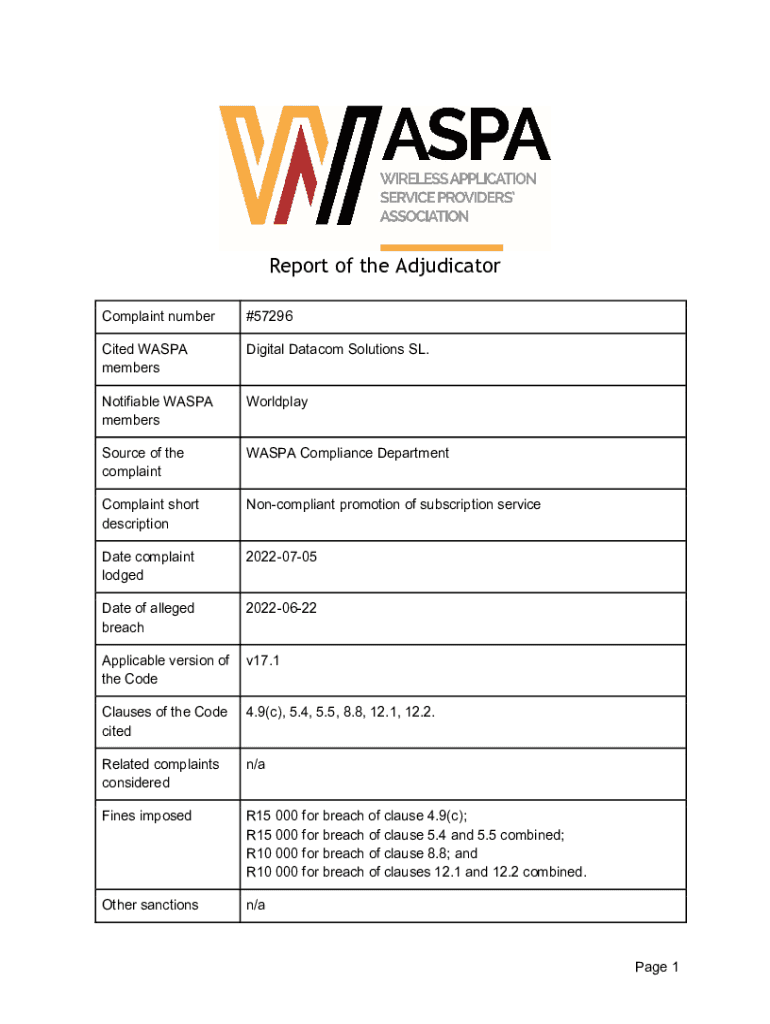







Definition and Meaning of the Complaint and Dispute Resolution PolicyAdjudicate Today
The Complaint and Dispute Resolution PolicyAdjudicate Today is a structured framework designed to address and resolve grievances efficiently. This policy is crucial in managing conflicts that arise between individuals or entities by providing structured approaches for resolution. Typically, such a policy is utilized by organizations to ensure that all parties involved in a dispute have their concerns heard and adjudicated fairly. It also establishes ground rules for how complaints should be lodged and the processes that will follow, ensuring transparency and fairness.
How to Use the Complaint and Dispute Resolution PolicyAdjudicate Today
- Filing a Complaint: The first step involves lodging a formal complaint through prescribed channels, often by submitting a written document detailing the issue.
- Acknowledgment of Receipt: Once a complaint is submitted, the organization acknowledges its receipt, providing a timeline for when the complainant can expect a response.
- Evaluation Process: The complaint undergoes evaluation, where the relevant details are reviewed to determine the next steps.
- Resolution Pathways: After evaluation, the policy outlines possible courses of action, including mediation, arbitration, or formal hearings, depending on the nature and severity of the issue.
- Final Decision: A decision is rendered following the agreed-upon process, with outcomes ranging from amicable resolution to formal adjudication.
Steps to Complete the Complaint and Dispute Resolution PolicyAdjudicate Today
- Gather Necessary Information: Collect all relevant details related to the dispute, including any communications, supporting documents, and evidence.
- Draft the Complaint Document: Clearly articulate the issue at hand, including a concise description of the grievance and the expected resolution.
- Submit the Complaint: Follow the organization's guidelines to submit the complaint, ensuring that it reaches the appropriate department or individual.
- Participate in the Resolution Process: Engage in hearings, mediation sessions, or any other procedures outlined within the policy.
- Receive the Outcome: After completion of the adjudication process, receive formal communication regarding the decision and any further actions required.
Who Typically Uses the Complaint and Dispute Resolution PolicyAdjudicate Today
- Corporations and Businesses: Often use this policy to manage disputes with clients, partners, or within the organization.
- Educational Institutions: Utilize policies to handle grievances from students or staff.
- Government Agencies: Implement policies to deal with public complaints and administrative disputes.
- Non-profit Organizations: Essential for resolving issues related to service delivery and stakeholder engagement.


Key Elements of the Complaint and Dispute Resolution PolicyAdjudicate Today
- Clear Communication Channels: A defined process for how complaints can be lodged and who will handle them.
- Timelines for Resolution: Establishing a timeframe within which complaints will be acknowledged, assessed, and resolved.
- Impartiality and Fairness: Ensuring that the adjudicating body does not show bias towards any party involved in the dispute.
- Documentation and Record Keeping: Maintaining comprehensive records of complaints and their resolutions for accountability.
Legal Use of the Complaint and Dispute Resolution PolicyAdjudicate Today
This policy operates within a legal framework to ensure compliance with applicable laws and regulations. It serves to:
- Mitigate Legal Risks: By resolving disputes internally, organizations can reduce the likelihood of litigation.
- Ensure Compliance: Policies are crafted to adhere to local, state, and federal laws.
- Protecting Rights: Ensures the legal rights of all parties involved are respected throughout the resolution process.
Software Compatibility
For organizations using DocHub or other document management tools, the policy can be seamlessly integrated with these platforms, allowing:
- Digital Submission: Complaints can be submitted and tracked electronically, enhancing efficiency.
- Document Editing and Annotation: Platforms like DocHub enable users to annotate and edit complaint documents, facilitating better communication throughout the resolution process.
- Integration with Other Management Tools: Syncing with software like QuickBooks or TurboTax can streamline financial aspects related to resolution processes.
Examples of Using the Complaint and Dispute Resolution PolicyAdjudicate Today
- A Customer Service Dispute: A customer lodges a complaint about a product defect. The company utilizes the policy to assess the complaint, offering a replacement or refund after mediation.
- Employee Grievance: An employee raises an issue regarding workplace conditions. Using the policy, HR conducts an investigation, holds mediation sessions, and implements necessary changes.
- Supplier Disagreement: A supplier disagreement about contract terms is resolved through arbitration as outlined in the policy, avoiding costly litigation.
Business Types that Benefit Most from Complaint and Dispute Resolution PolicyAdjudicate Today
- Retailers and Service Providers: Manage both customer and supplier disputes effectively.
- Professional Services: Accounting and law firms that frequently handle complaints can maintain professional relationships through structured resolutions.
- Healthcare Providers: Address patient grievances carefully to improve service quality and patient satisfaction.
- Manufacturers: Resolve issues with contractors and suppliers efficiently to maintain supply chain operations.




