




01. Edit your form online
Type text, add images, blackout confidential details, add comments, highlights and more.

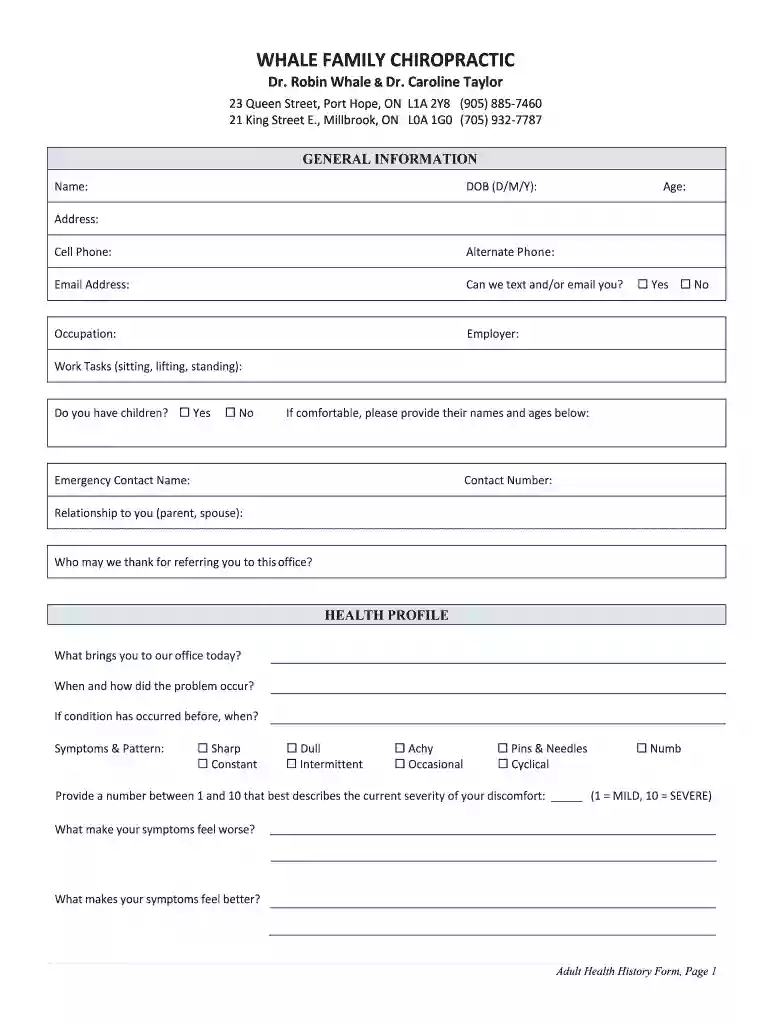
Type text, add images, blackout confidential details, add comments, highlights and more.

Draw your signature, type it, upload its image, or use your mobile device as a signature pad.

Send it via email, link, or fax. You can also download it, export it or print it out.
The Adult Health History Form is a comprehensive document used to collect detailed health information from adult patients. It plays a critical role in understanding the patient's current health status, past medical history, lifestyle choices, and family health background. This information is essential for healthcare providers to tailor their care approach, offering personalized treatment plans and improving overall patient care. The form is especially valuable in settings such as chiropractic clinics, where an understanding of the patient's history can inform treatment strategies for optimal health outcomes.
Patients and healthcare providers can access the Adult Health History Form through various methods to ensure they gather all necessary health information efficiently. This form can typically be obtained:
Completing the Adult Health History Form accurately is critical for a meaningful evaluation:
Personal Information: Begin by filling in basic personal details such as name, age, contact information, and emergency contact.
Medical History: Provide a comprehensive overview of past illnesses, surgeries, hospitalizations, and ongoing medical treatments.
Family Health History: Document any genetic conditions or medical issues present within the family, providing insights into potential health risks.
Lifestyle and Habits: Include information on exercise routines, diet, alcohol and tobacco use, and any other lifestyle factors affecting health.
Current Health Concerns: Describe any symptoms or health challenges currently faced to help assess treatment needs.
Several critical components make up the Adult Health History Form, each designed to collect specific pieces of information:
Demographic Information: Basic patient details including date of birth, sex, and marital status.
Current Medications: A list of all prescription and over-the-counter medications, supplements, and vitamins taken regularly by the patient.
Allergies: Information about known allergies to medications, food, or environmental factors.
Healthcare providers must adhere to legal and ethical guidelines when using the Adult Health History Form. The Health Insurance Portability and Accountability Act (HIPAA) mandates that patient information be kept confidential and only used for specific healthcare purposes. Patients have the right to access their information, request corrections, and know who has viewed their data.
Several types of healthcare providers utilize the Adult Health History Form to facilitate better decision-making and personalized care plans. These include:


Understanding certain terms is crucial for accurately completing and discussing the Adult Health History Form:
Both digital and paper formats of the Adult Health History Form offer unique advantages:
We've got more versions of the Adult Health History Form, form. Select the right Adult Health History Form, version from the list and start editing it straight away!
| Versions | Form popularity | Fillable & printable |
|---|---|---|
| 2019 | 4.7 Satisfied (56 Votes) |
At DocHub, your data security is our priority. We follow HIPAA, SOC2, GDPR, and other standards, so you can work on your documents with confidence.
Jul 12, 2010 ADULT HEALTH HISTORY. (Please complete in ink). Todays Date: MRN Name of person completing form/relationship to patient (please print):.Read more
PURPOSE: The information solicited from this form will assist in making a medical clearance decision for individuals eligible to participate in the.Read more
by T Guide This workshop module contains detailed instructions and all of the materials necessary to con- duct a training session on assessing learner needs in theRead more


