







Understanding the Utah Retirement Systems (URS) Form
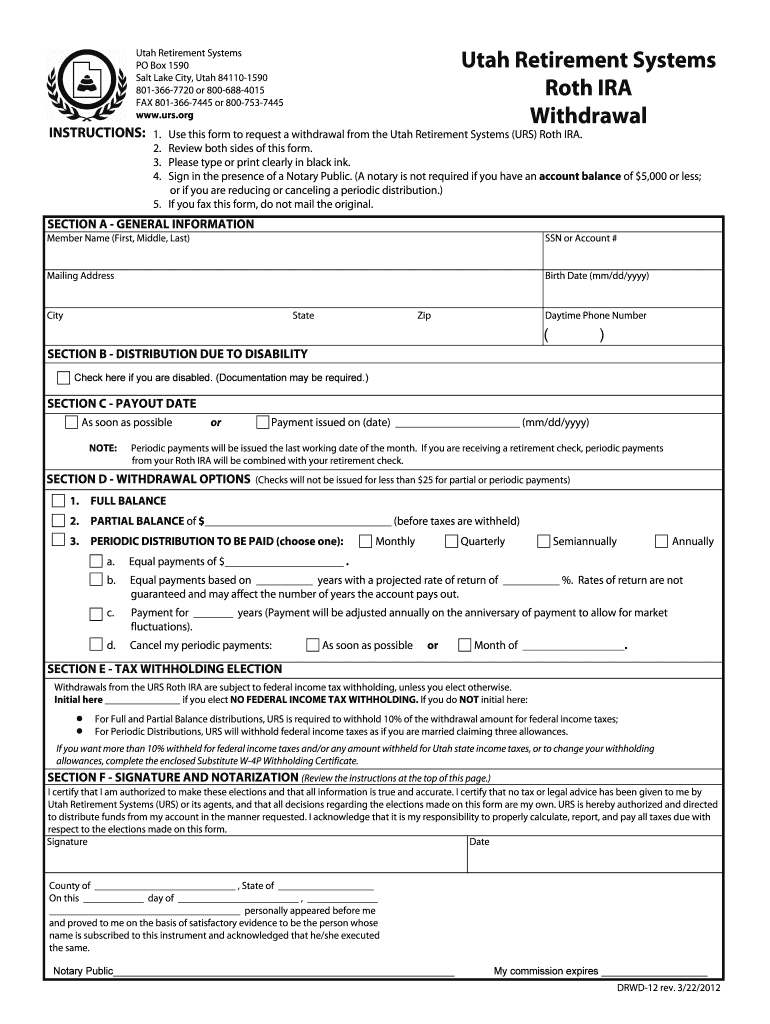
The Utah Retirement Systems (URS) form is a crucial document for individuals managing their retirement funds, specifically within the URS Roth IRA structure. It provides comprehensive instructions on how to request withdrawals, highlighting various options such as full balance, partial balance, or periodic payments. Understanding each option is vital for retirement planning, as it impacts both the taxation of the withdrawal and compliance with federal regulations.
Options for Withdrawal
- Full Balance: This option allows individuals to withdraw the entire amount from their account. It's typically chosen when individuals need a lump sum or are closing the account.
- Partial Balance: Suitable for those who need only a portion of their funds, allowing the remaining balance to continue growing tax-deferred.
- Periodic Payments: This setup permits regular withdrawals over a set period, providing a steady income stream during retirement.
Practical Example
Imagine someone decides to retire and needs funds for living expenses. They might opt for periodic payments to receive a regular monthly income, while retaining the rest in the account to gain potential investment returns.
Steps to Complete the URS Form
Completing the URS form involves specific steps to ensure accuracy and compliance with legal requirements. It’s designed to capture all the necessary information needed for processing the withdrawal request efficiently.
- Fill Out Personal Information: Begin with your basic details like name, address, and contact information.
- Select Withdrawal Option: Choose between full, partial, or periodic withdrawals based on your financial needs.
- Tax Withholding Elections: Decide and specify if you want taxes withheld from your withdrawal. Consulting a tax advisor can provide guidance tailored to your situation.
- Submit the Form: Mail or submit digitally through the URS portal for processing.
Example of Step-by-Step Process
John, a retiree, wants to withdraw from his URS Roth IRA. He starts by providing his personal details, navigates to the section about withdrawal types, selects periodic payments, and finally decides not to withhold taxes initially, as he plans to handle taxes during his annual filing.
Legal Use and Compliance
The legal framework surrounding URS withdrawals is established to protect both the retirement fund holder and the financial institution. Adhering to the regulations ensures compliance with the IRS and avoids penalties for improper distributions.
Key Compliance Aspects
- Qualified Distributions: Typically tax-free if certain conditions are met, such as holding the account for at least five years.
- Non-Qualified Distributions: Might incur taxes and penalties unless exceptions apply, like reaching age 59½ or incurring a disability.
- Penalty Exceptions: Early withdrawal penalties may be waived under specific circumstances, such as first-time home purchase or unreimbursed medical expenses.
State-Specific Guidelines for URS
State regulations may impact the handling of retirement funds. While URS is centered in Utah, understanding state-specific guidelines is crucial for account holders who might reside elsewhere or have state tax considerations.
Utah-Specific Features
- Tax Treaties: Utah offers certain tax benefits for retirees, and understanding these can maximize tax efficiency.
- Local Support Services: URS provides resources and guidance tailored for Utah residents, which might include workshops or one-on-one consultations to help manage their retirement effectively.
Gathering Required Documents for URS Withdrawal
Documentation is essential when submitting the URS form to ensure that your withdrawal is processed swiftly and without issues. Gathering the necessary paperwork ahead of time facilitates a smooth application experience.
Necessary Documents
- Identification Proof: Scan or photocopy of a government-issued ID, like a driver’s license.
- Previous Tax Returns: Useful for accuracy in tax withholding elections.
- Account Statements: Provide context for any previous transactions and current balances.
Form Submission: Online and Offline Methods
URS offers flexibility in how forms are submitted, catering to different preferences and technological access levels.
Submission Techniques
- Online Submission: Through the URS portal, where you can securely upload your filled-out form and related documents.
- Mail: Physically send the complete form to the URS address, ensuring all documents are included.
- In-person: Visit a URS office if you prefer detailed guidance and submission support.
Examples of Using the URS Form in Real-life Scenarios
Many individuals find themselves in varying life situations that require accessing their retirement funds. Understanding how to utilize the URS form in these contexts can provide clarity.
Real-Life Case Study
Consider Jane, who is approaching retirement age but chooses to work part-time. She opts for periodic payments from her URS Roth IRA to supplement her part-time income. Meanwhile, she maintains her principal investments for future growth, highlighting strategic use of the URS form for long-term financial stability.
IRS Guidelines and Importance of Tax Advisory
Navigating the IRS rules concerning Roth IRA withdrawals ensures compliance and optimization of retirement income.
Essential IRS Considerations
- Eligibility for Withdrawal: Must meet age and timing criteria to avoid penalties.
- Tax Advisory: Engaging a tax professional assists in understanding potential tax implications, ensuring strategic management of your funds.
By adhering to these comprehensive guidelines, individuals can effectively manage their URS-related affairs, ensuring that their retirement income is both secure and optimized for their financial goals.




