




01. Edit your form online
Type text, add images, blackout confidential details, add comments, highlights and more.

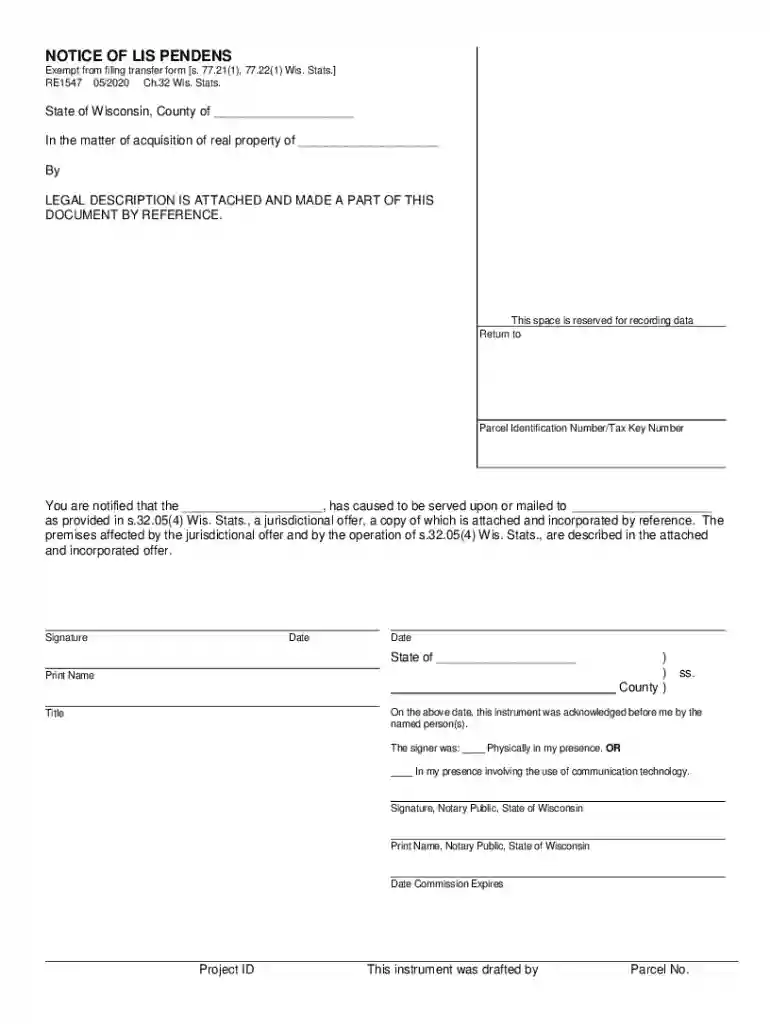
Type text, add images, blackout confidential details, add comments, highlights and more.

Draw your signature, type it, upload its image, or use your mobile device as a signature pad.

Send it via email, link, or fax. You can also download it, export it or print it out.
The term "lis pendens" translates from Latin as "suit pending." In the context of real estate and legal proceedings, a Notice of Lis Pendens is a formal document filed in order to notify interested parties that there is a pending legal action involving the property. It serves as a public record that indicates the existence of a lawsuit that might affect the title to or an interest in the real property described in the notice. This legal instrument is essential in providing transparency and fairness in property transactions as it informs potential buyers or investors of ongoing legal situations that might impact ownership or value.
When deciding to use a Notice of Lis Pendens, it is vital to consider the legal context and implications. This notice is typically filed by a plaintiff or their legal representative in a real property lawsuit. It must accurately describe the real property involved and detail the legal action that is pending. The filing essentially freezes the ability to transfer clean title until the pending litigation is resolved, protecting the claimant's interest. Proper filing must be executed within the jurisdiction where the property is located to ensure it has the desired legal impact.
Completing a Notice of Lis Pendens involves several critical steps:
Gather Information: Assemble all necessary details including the legal description of the property, case number, names of parties involved, and nature of the claim.
Draft the Notice: Clearly outline the legal action's details and how they relate to the property. Use precise legal descriptions and terms.
File with the Court: Submit the completed notice in the appropriate county court where the property is located. Pay attention to specific local filing requirements.
Record Notice with the County Recorder: The notice must be recorded to provide public notice. This step ensures that any potential buyers or lenders are aware of the pending litigation.
Serve Notice to Interested Parties: Notify all relevant parties, including property owners and any entities with recorded interest, about the filed notice.
Legally, a Notice of Lis Pendens serves to protect a claimant's interest in a property by preventing its sale or transfer during litigation. This notice acts as a safeguard against potential fraudulent or uninformed property transactions. If a lis pendens is filed maliciously or without genuine legal standing, there can be severe legal penalties including damages for slander of title. Therefore, it is crucial to ensure the legitimacy and propriety of the action before filing such a notice.
Several key elements must be included for a Notice of Lis Pendens to be valid:
Including these elements ensures the notice is properly placed and fulfills its legal role within the judicial proceedings.
Consider a scenario where a buyer disputes a property sale due to contractual issues with the seller. Filing a Notice of Lis Pendens would prevent the seller from transferring the property to another buyer until the lawsuit is resolved. In another example, if an individual challenges the inheritance claim on a piece of real estate, this notice would alert potential buyers of the ongoing legal dispute, thereby securing the claimant's stake in the property until a court ruling is reached.
While the fundamental purpose of a Lis Pendens is consistent across the United States, procedural rules and requirements vary by state. For instance, some states may require the plaintiff to prove the likelihood of winning the case before accepting the notice for filing, while others might specify detailed procedural steps for serving notice to involved parties. Understanding these differences is essential for legal compliance and to ensure the notice's enforceability.
Several terms are commonly associated with Lis Pendens that are important to understand:
Understanding these terms helps clarify the purpose and potential implications of filing or responding to a Notice of Lis Pendens, which can greatly affect property transactions and rights.
This notice is primarily used by individuals or entities such as homeowners, real estate investors, and financial institutions involved in legal disputes over property rights, ownership, or interests. Lawyers representing clients in real estate litigation also commonly utilize this instrument to preserve their clients' claims pending litigation outcomes.
We've got more versions of the 840.10 Lis pendens; who may file; effect when void; discharge ... form. Select the right 840.10 Lis pendens; who may file; effect when void; discharge ... version from the list and start editing it straight away!
At DocHub, your data security is our priority. We follow HIPAA, SOC2, GDPR, and other standards, so you can work on your documents with confidence.
by HA Janzen 1987 The doctrine of lis pendens refers to the jurisdictional control a court may exercise over property while an action involving that property isRead more
840.10840.10 Lis pendens; who may file; effect when void; discharge. 840.10 lis pendens until 20 days after the lis pendens has been filed or recorded.Read more


