







Definition and Meaning of Justice
In legal terms, "justice" refers to the principles of fairness and equity within the legal system. Justice is the foundation of the legal system, ensuring that laws are applied consistently and fairly to all individuals, thereby protecting their rights and upholding societal order. In the context of documents and forms, justice often relates to compliance with specific legal standards and protocols that govern various legal actions and transactions.
Nuances of Justice in Legal Forms
- Legal Consistency: Justice ensures that legal processes are executed uniformly across similar cases, maintaining a standard of fairness.
- Equity: Reflects the aim to treat all parties involved in a legal agreement or procedure equally, addressing any imbalances.
- Rights Protection: Formally recognizes and protects individual rights, ensuring legal documents and processes do not infringe upon them.
How to Use Justice in Document Workflow
Justice in document workflow often involves ensuring compliance with laws and regulations that govern document handling and execution, particularly with legal forms. These workflows must preserve the principles of justice by validating that all parties understand their rights and responsibilities.
Practical Scenarios
- Review Processes: Implement review stages in the document workflow to ensure compliance with legal standards.
- Verification Steps: Use verification steps for the authenticity and accuracy of documents and signatures to uphold integrity.
- Stakeholder Engagement: Engage all relevant stakeholders in the review and approval processes to ensure transparency and accountability.
Legal Use of the Justice Form
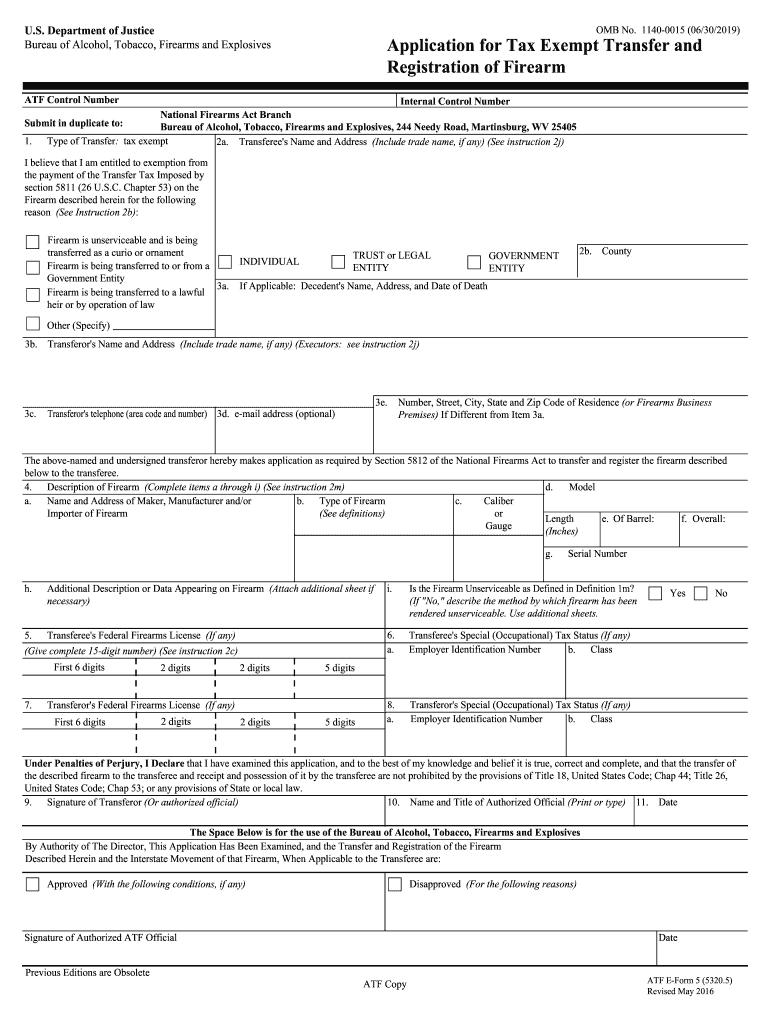
Specific legal forms, such as those by the Department of Justice, are designed to facilitate various legal transactions and ensure compliance with federal laws. The ATF E-Form 5, for example, is used for the transfer and registration of firearms without tax payment under the National Firearms Act.
Key Objectives of Legal Forms
- Compliance: Ensures that legal transactions comply with existing federal and state regulations.
- Documentation: Provides a formal record of legal transactions, actions, or approvals.
- Verification: Offers a mechanism to verify the legality and authenticity of the action being documented.
Key Elements of Justice Forms
Justice forms typically include specific elements that are essential for legal compliance and documentation. These elements ensure that all necessary information is captured and that the form meets legal requirements.
Essential Components
- Personal Information: Details of the individuals or entities involved, including identity proofs.
- Legal Certifications: Statements or declarations required to affirm compliance with legal standards.
- Signatures: Legally binding signatures of parties involved, ensuring acceptance and acknowledgments.
State-Specific Rules for Justice Forms
Different states may have specific regulations and requirements regarding the usage and submission of justice forms. It is crucial to be aware of these variations to ensure compliance.
Examples of State-Specific Differences
- Submission Guidelines: Some states might require additional documentation or have specific submission timelines.
- Regulatory Compliances: States may have unique laws affecting how forms apply, especially in areas like firearms transfer or tax exemptions.
- Format and Language: There may be state-specific language or format requirements for legal documents.
Steps to Complete a Justice Form
Completing justice forms requires adherence to detailed procedures and requirements. Here is a generalized step-by-step process that might be applicable:
- Gather Required Information: Collect all necessary personal and legal details to fill out the form accurately.
- Understand Legal Obligations: Review the legal implications and obligations associated with the form.
- Fill Out the Form Accurately: Carefully enter all required information, ensuring no section is left incomplete.
- Attach Supporting Documents: Include any necessary supporting documents that verify the information provided.
- Review and Verify: Double-check all entries for accuracy and completeness before submission.
- Submit the Form: Follow the submission guidelines, whether it's online, via mail, or in-person.
Required Documents for Justice Forms
Completing a justice form often requires attaching or referencing additional documents to verify the information provided. These documents might include identification forms, proof of eligibility, or legal certifications.
Common Documents Needed
- Identification Proofs: Copies of official identification, such as a driver’s license or passport.
- Legal Permissions: Any licenses or permissions that demonstrate legal compliance.
- Supporting Evidence: Additional documentation that supports the claims or statements made in the form.
Penalties for Non-Compliance
Failure to comply with the requirements or deadlines associated with justice forms can lead to significant penalties. These penalties may include fines, legal action, or the invalidation of the form and its effects.
Types of Penalties
- Monetary Fines: Financial penalties for late submissions or inaccuracies in the form.
- Legal Consequences: Potential for legal action if the form is critical to a legal process.
- Ineligibility: Loss of rights or benefits that the form would have provided if correctly submitted.
Form Submission Methods (Online, Mail, In-Person)
Justice forms can typically be submitted through various methods, allowing for flexibility depending on the individual's resources and preferences.
Available Methods
- Online Submissions: Utilizing platforms like DocHub for digital filing, offering efficiency and ease of access.
- Mail Delivery: Traditional mailing options for hard copies, often suited to those without digital access.
- In-Person Submission: Direct submission to a relevant office, which can be necessary for certain forms requiring official witnessing or stamping.




