







Definition and Purpose of the Notice of Intent to Discharge Storm Water
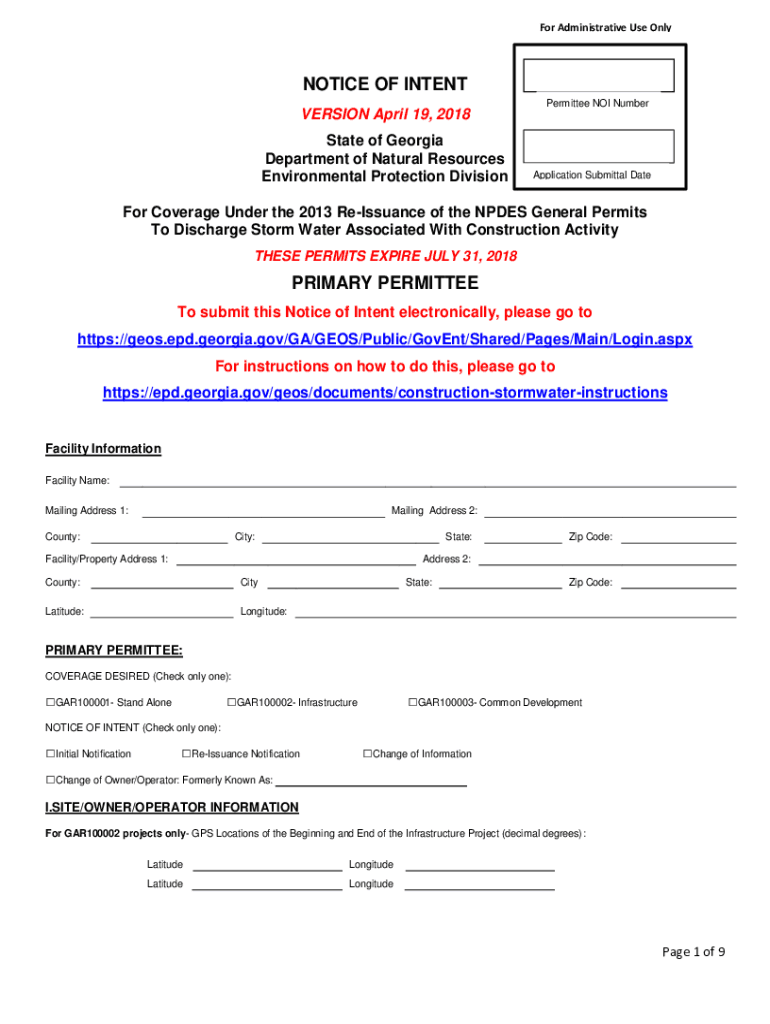
The Notice of Intent (NOI) to discharge storm water is a crucial document permitting entities to legally discharge storm water associated with construction activities. This form is a prerequisite for obtaining coverage under the National Pollutant Discharge Elimination System (NPDES) General Permits. Primarily used to ensure environmental compliance, this document requires applicants to provide critical details about their facility and construction activities, thereby helping manage storm water runoff effectively.
Key Elements of the Notice of Intent
- Facility Information: Applicants must specify the location and details of the facility, including its name and address. This data helps regulatory bodies identify the project site and monitor compliance.
- Construction Activity Description: A description of the construction activities must be included, detailing the nature of work and potential environmental impact.
- Certification and Signatures: The form must be signed by an authorized representative certifying the accuracy of the information provided.
How to Use the Notice of Intent for Storm Water Discharge
Using the NOI form effectively requires understanding its structure and the information it seeks. The form must be thoroughly completed to ensure accurate representation of the construction site's impact on storm water management. Each section of the form corresponds to specific regulatory requirements that guide how storm water discharge is managed.
Steps to Complete the Notice of Intent Form
- Gather Required Information: Collect details about the construction site, including maps and descriptions of site activities, to ensure accurate reporting.
- Calculate Fees: Determine applicable fees based on the project's size and scope.
- Fill Out the Form: Enter the necessary information on the form, ensuring each field is completed correctly.
How to Obtain the Notice of Intent Form
Obtaining the NOI form involves several straightforward steps. Since it's essential for starting any construction project affecting storm water, knowing where and how to get it is critical.
Sources for Acquiring the Form
- Online Government Portals: Many states provide access to the form through their environmental protection department websites.
- Local Regulatory Offices: These offices often have physical copies available for applicants.
Legal Considerations for the Notice of Intent
The NOI is not just a formality but a legal obligation under the Clean Water Act. Failure to submit it or providing false information can lead to significant legal repercussions, including fines and project delays.
Penalties for Non-Compliance
- Fines: Monetary penalties are imposed on entities that fail to comply with the submission requirements.
- Construction Halts: Regulatory agencies may stop ongoing construction activities until compliance is achieved.
Who Typically Uses the Notice of Intent Form?
The Notice of Intent is primarily used by construction companies and developers preparing to initiate projects that impact storm water systems.

Business Types Benefiting from the NOI
- Construction Firms: These companies must manage storm water discharge to comply with environmental regulations.
- Real Estate Developers: Ensuring compliance helps manage project timelines and avoid legal issues.
State-Specific Rules for Storm Water Discharge
While the NOI form serves a general purpose, each state may have additional requirements varying in specificity and detail.
Examples of State Variations
- Georgia: Emphasizes accurate fee calculation based on site specifics.
- California: Requires stringent reporting on environmental impact assessments.
Important Terms Related to Storm Water Discharge
Understanding the terminology within the NOI is essential for completing it correctly.
- NPDES: National Pollutant Discharge Elimination System, a federal program for regulating water quality.
- Runoff: Water from rain or melting snow that flows over the ground surface.
Versions and Alternatives to the Notice of Intent
There are versions of the NOI specific to different types of activities and permits. Familiarity with these is vital for selecting the correct form.
Examples of Alternatives
- Industrial NOI: For discharges associated with industrial activities.
- Multi-Sector General Permit (MSGP): Covers various industries under a single permit.
By understanding and adhering to these guidelines, applicants can navigate the NOI process effectively, ensuring compliance and successful project execution.




