







Definition & Meaning
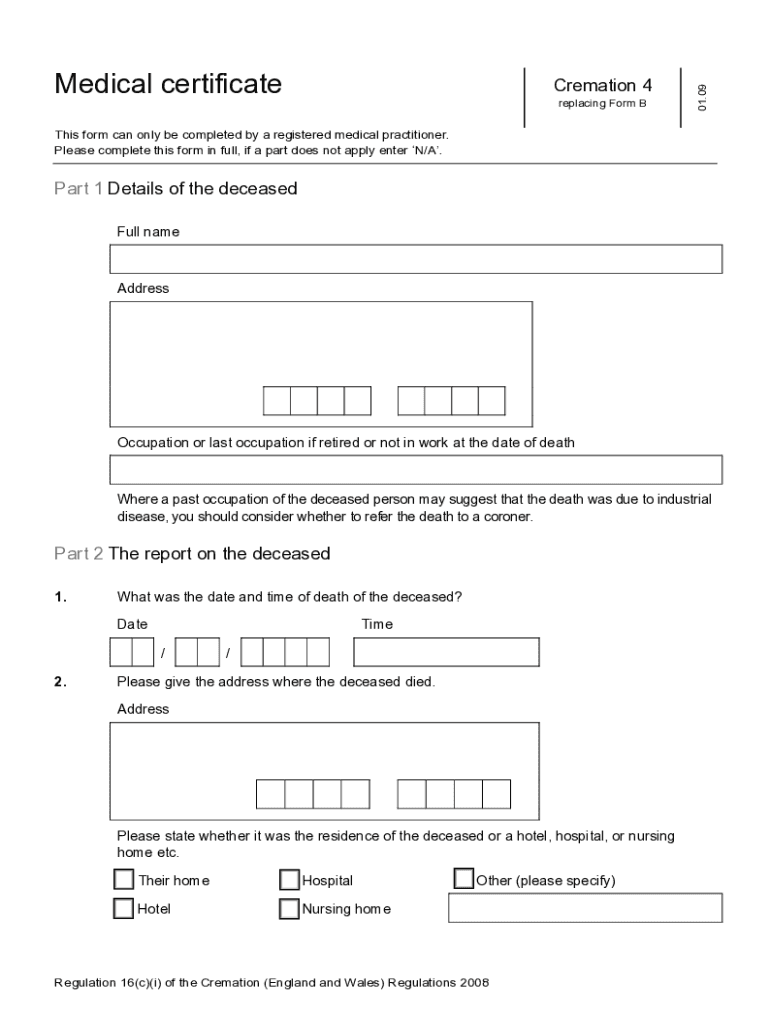
The "Authorisation of Cremation of" form serves as an official document required for the cremation process, ensuring that all legal and medical prerequisites are satisfied prior to proceeding. This form is integral in documenting the deceased’s personal information, medical history, and circumstances of death. It must be completed by a registered medical practitioner who confirms that all details adhere to legal standards for cremation. The form’s purpose ensures compliance with both ethical and legal requirements, acting as a safeguard against any discrepancies in the deceased's medical background or cause of death. It underscores the importance of following procedures to respect the deceased's wishes and public health safety.
Key Elements of the Authorisation of Cremation of
The "Authorisation of Cremation of" form comprises several critical components. These elements provide comprehensive data about the deceased and ensure all necessary approvals are documented:
- Deceased’s Personal Information: Includes full name, date of birth, and residential address.
- Medical History: Details any existing conditions, recent treatments, or relevant medical records that might affect the cremation.
- Circumstances of Death: Contains information about the time, place, and cause of death, with space for any observations related to it.
- Confirmation of Medical Practitioner’s Qualifications: Verification section for the licensed practitioner completing the form and their adherence to legal requirements.
Each component has its specific role in establishing a clear and complete documentation trail, ensuring the form is legally sound and meets all necessary protocols before the cremation can proceed.
Steps to Complete the Authorisation of Cremation of
Completing the "Authorisation of Cremation of" involves a thorough process that ensures all parts of the form are accurately filled out by authorized personnel. The following are key steps involved:
- Gather Necessary Information: Collect all relevant personal and medical details about the deceased.
- Consult with Medical Practitioner: Engage a qualified practitioner to perform a review and make entries regarding medical history and circumstances of death.
- Fill Out the Form: Carefully document each section with precise information to avoid any discrepancies.
- Review and Verify: Recheck all entries to ensure accuracy and completeness, particularly focusing on the practitioner's confirmation section.
- Submit for Approval: Send the completed form to the relevant authorities for validation and approval prior to the cremation process.
These steps assure all parties involved that the form is ready for final submission and authorization by officials.
Legal Use of the Authorisation of Cremation of
The "Authorisation of Cremation of" form is mandated by law to ensure that all legal protocols surrounding cremation are adhered to. Its usage guarantees that due diligence is observed in recording and verifying information about the deceased. The legal application of this form serves several purposes:
- Prevention of Fraud: Confirms the identity and medical history of the deceased, preventing illegal or inappropriate cremations.
- Public Health and Safety: Ensures no communicable diseases are involved in the death that could pose public health risks.
- Legal Compliance: Meets legal standards set forth by governmental health departments and other bodies governing end-of-life care.
Compliance with this form reinforces its crucial role in upholding legal responsibilities and addressing all ethical concerns related to cremation.
How to Obtain the Authorisation of Cremation of
To obtain the "Authorisation of Cremation of," you must follow a systematic procedure usually coordinated by the funeral home or crematorium:
- Contact a Licensed Facility: Engage with a certified funeral home or crematorium that is familiar with the requirements for this document.
- Consult Medical Practitioners: Arrange for consultations with authorized medical personnel to provide necessary information and validation.
- Obtain the Form from Relevant Authorities: Depending on state regulations, these forms could be sourced from health departments, mortuaries, or medical facilities.
- Complete Necessary Documentation: Ensure all supporting documents such as medical records and identification are ready for the form.
By following these steps, individuals or organizations can navigate the procurement process smoothly and efficiently.
State-Specific Rules for the Authorisation of Cremation of
While the "Authorisation of Cremation of" form serves a universal purpose, individual states in the U.S. may have varied regulations governing its use. These variations ensure that state-specific concerns or exceptions are adequately addressed:
- State Health Regulations: Each state may have unique health guidelines dictating special considerations for causes of death or specific population concerns.
- Varying Legal Requirements: Different states might require additional documentation or steps before cremation can proceed, including permissions from family members or legal representatives.
- Fee Structures: The cost associated with processing the form may vary, with some states imposing specific fees or taxes.
Understanding these nuances helps in preparing the form correctly under different state jurisdictions.
Important Terms Related to Authorisation of Cremation of
Grasping the terminology associated with the "Authorisation of Cremation of" form is essential for accurate completion and compliance:
- Deceased: The individual who is to be cremated.
- Medical Practitioner: A registered and licensed medical professional authorized to complete the form.
- Cremation Authority: The legal body or funeral service in charge of carrying out the cremation.
- Cremation Certificate: A formal document that confirms readiness for the cremation process after all checks and approvals.
- Next of Kin: Closest living relatives or designated representatives who may have a say in the cremation process.
These terms play a vital role in the correct interpretation and application of the form’s requirements.
Examples of Using the Authorisation of Cremation of
Practical examples provide clarity on how the "Authorisation of Cremation of" form is utilized in real-life scenarios:
- Scenario One: Following an unexpected death in a hospital, the hospital's management ensures that a licensed medical practitioner fills out the form before the body is released for cremation.
- Scenario Two: A family faced with the death of a loved one from an infectious disease works closely with both medical and cremation authorities to ensure the form reflects all necessary health precautions.
- Scenario Three: In cases where the deceased had pre-arranged their cremation plans, the funeral home guides the family members through the form's completion and submission process.
These practical applications underscore how the form is integral to maintaining procedural integrity and legal compliance within different contexts.




