





Definition and Overview of UCPR Form 105 V7
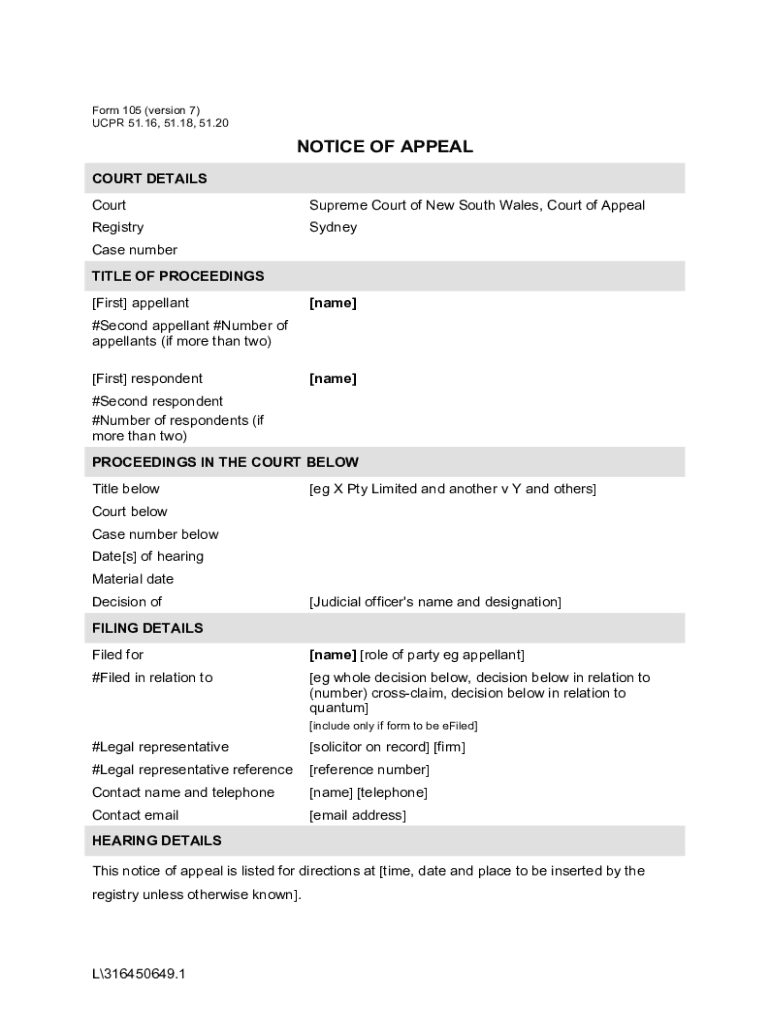
UCPR Form 105 V7 is a legal document used primarily in the context of civil procedures within the Supreme Court of New South Wales, Court of Appeal. This form is known as the Notice of Appeal, and it is crucial for initiating an appellate process. The key purpose of this form is to allow parties to a case to formally notify the court and other involved parties of their intent to appeal a decision made by a lower court. The form details specific information about the appeal, including the particulars of the case, the grounds for appeal, and the orders sought from the appellate court.
How to Use UCPR Form 105 V7
Using UCPR Form 105 V7 effectively involves a series of meticulous steps to ensure that the appeal process is correctly initiated. The form must be filled out with accurate and comprehensive information.
-
Filling Out the Form:
- Provide complete case details, including the case number and names of parties involved.
- Clearly outline the grounds for appeal and the legal basis for each reason.
- Specify the type of orders being sought from the appellate court.
-
Submission Details:
- Ensure the form is signed by the appellant or their legal representative.
- Submit the form within the stipulated time frame to avoid delays in the appeal process.
Steps to Complete UCPR Form 105 V7
Completing the UCPR Form 105 V7 requires attention to detail and adherence to legal standards:
-
Compile Necessary Information:
- Gather all relevant documents related to the court decision.
- Identify the specific judgments or parts of the lower court’s decision you are appealing against.
-
Drafting the Appeal:
- Begin by writing a clear statement of the appeal's purpose.
- Detail all grounds for appeal, referencing applicable laws and precedents.
-
Review and Verification:
- Double-check all information for accuracy and completeness.
- Have legal counsel review the form to ensure all legal criteria are met.
Key Elements of UCPR Form 105 V7
Understanding the vital components of UCPR Form 105 V7 is essential for a successful appeal:
- Case Information: Includes all relevant case identifiers, such as docket number, and names of parties.
- Grounds for Appeal: Detailed claims about errors made in the initial trial that warrant a review.
- Orders Sought: Specific remedies or actions desired from the appellate court.
- Respondent Instructions: Steps for respondents to address or counter the notice of appeal.
State-Specific Rules for UCPR Form 105 V7
The application and interpretation of UCPR Form 105 V7 may have nuances under the jurisdiction of New South Wales:
- Filing Deadlines: Adhere strictly to deadlines for filing, which are set by state regulations.
- Documentation Requirements: Ensure all documents meet the standards of evidence required by New South Wales courts.
Legal Use of the UCPR Form 105 V7
The UCPR Form 105 V7 has specific legal implications and uses within the court system:
- Initiating Appeals: Formally starts the appellate review process, ensuring all involved parties are notified.
- Legal Standing: Confirms the appellant’s right to appeal, validating the legal grounds outlined in the document.
Who Typically Uses UCPR Form 105 V7
This form is predominantly utilized by:
- Legal Representatives: Lawyers acting on behalf of clients involved in civil cases.
- Parties to a Case: Individuals or entities seeking to overturn or modify a lower court’s ruling.
Important Terms Related to UCPR Form 105 V7
Familiarize yourself with critical legal terms and concepts associated with this form:
- Appellant: The party appealing the court’s decision.
- Respondent: The opposing party in the appellate court.
- Grounds for Appeal: Legal reasons for seeking a review of the lower court’s decision.
Digital vs. Paper Version of UCPR Form 105 V7
Consider the logistical differences between using digital and paper versions of the form:
- Digital Submissions: Often faster and can be easily integrated with online court systems.
- Paper Submissions: May be required in specific legal contexts or by request.
Understanding these distinctions can streamline the process and ensure compliance with court requirements.