
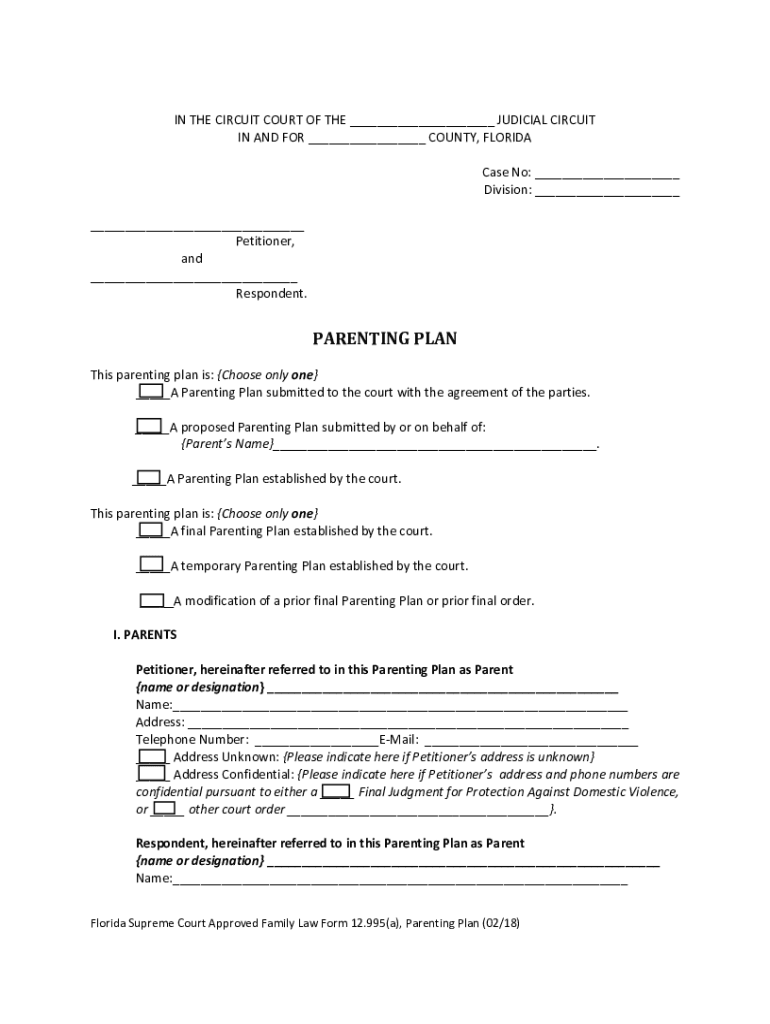







Definition and Purpose of the Parenting Plan (02/18)
The Parenting Plan (02/18) is a legally mandated document in Florida used in family law cases involving time-sharing with minor children. It sets forth the responsibilities and expectations for both parents in the upbringing of their children post-separation or divorce. This plan outlines specific provisions related to parental duties, time-sharing schedules, communication methods, and dispute resolution strategies. The primary purpose of the Parenting Plan is to ensure that the best interests of the child are prioritized while providing a structured framework for parenting within the legal landscape of Florida.
Key Elements of the Parenting Plan (02/18)
A comprehensive Parenting Plan (02/18) includes several essential elements designed to promote the welfare of the child and ensure clarity in parental responsibilities:
- Parental Responsibilities: Specifies how major parental decisions will be made, whether jointly or separately, including decisions regarding education, healthcare, and religious upbringing.
- Time-Sharing Schedules: Outlines the specific schedule of custody, including weekends, holidays, and vacations, and provides details on exchange logistics to minimize conflict.
- Communication Methods: Establishes guidelines for how parents and children will communicate with each other, ensuring regular contact that supports the child's emotional and psychological needs.
- Dispute Resolution: Includes mechanisms for resolving disputes between parents amicably, which may involve mediation or other alternative dispute resolution methods.
Legal Use of the Parenting Plan (02/18)
In Florida, the Parenting Plan (02/18) is utilized within the legal system as a tool to resolve and formalize agreements between parents regarding the care of their children. Approved by the court, this plan serves as a binding legal agreement, detailing the obligations and rights of each parent. It is a critical document in proceedings for divorce, custody disputes, or modifications to existing parenting arrangements. The court ensures that the proposed Parenting Plan aligns with the child's best interests before granting approval.
Steps to Complete the Parenting Plan (02/18)
- Gather Required Information: Before completing the form, collect pertinent information on each parent's contact details, work schedules, and any existing custody arrangements.
- Detail Parental Responsibilities: Clearly articulate the approach for making significant decisions about the child’s life, specifying any joint or individual responsibilities.
- Develop a Time-Sharing Schedule: Collaborate to create a time-sharing schedule that accommodates both parents' availability while prioritizing the child's needs.
- Outline Communication Protocols: Agree on how communication will occur between parents, including methods, frequency, and any specific boundaries.
- Include Dispute Resolution Methods: Define procedures for resolving disputes, such as mediation or collaborative law.
- Review and Sign: Ensure both parents review the document thoroughly. Signatures from both parties and sometimes a witness or notary are required.
- Submit for Court Approval: File the completed plan with the court for review and approval, ensuring it becomes a legally enforceable document.
Why Use the Parenting Plan (02/18)
Utilizing the Parenting Plan (02/18) is vital for several reasons:
- Child-Centric Focus: It ensures that the child's needs are prioritized, providing a stable and predictable environment.
- Clarity and Structure: Offers clear guidelines and expectations for both parents, reducing potential conflicts and misunderstandings.
- Legal Requirement: Filing a court-approved Parenting Plan is often mandatory in cases involving child custody, as it forms the basis for any future legal actions or modifications.
- Flexibility and Customization: Allows parents to tailor the plan to fit their specific situations and schedules, ensuring practicality and relevance.
Important Terms Related to the Parenting Plan (02/18)
Understanding certain terms is critical when dealing with the Parenting Plan (02/18):
- Primary Residence: The designated main living location of the child.
- Joint Custody: An arrangement granting both parents equal rights and responsibilities in making decisions about the child's upbringing.
- Sole Custody: One parent holds the rights and responsibilities for major decisions regarding the child's welfare.
- Modification: A legal procedure to alter the Parenting Plan due to significant changes in circumstances.
State-Specific Rules for the Parenting Plan (02/18)
Florida's specific legal framework governs the creation and implementation of the Parenting Plan (02/18). Some noteworthy aspects include:
- Court Approval: Every Parenting Plan must be sanctioned by the court to ensure alignment with the child's best interests.
- Mandatory Considerations: Florida law mandates that certain factors be considered, including the child’s age, mental and physical health, and each parent's capacity to foster a nurturing relationship.
- Electronic Filing and Service: The form can be filed electronically if required by the court, ensuring compliance with the latest procedural rules.
Examples of Using the Parenting Plan (02/18)
- Scenario One: A divorced couple uses the Parenting Plan to delineate responsibilities for their child with special needs, clearly outlining the scheduling and decision-making necessary to provide for the child’s specific requirements.
- Scenario Two: Parents who reside in different cities create a flexible plan that accounts for long-distance travel, ensuring equitable time-sharing while reducing stress on the child.
Digital vs. Paper Version of the Parenting Plan (02/18)
The Parenting Plan (02/18) can be completed in either digital or paper form, offering flexibility to suit different preferences and technological capabilities:
- Digital Version: Allows for ease of modification, storage, and filing. Facilitated by platforms like DocHub, it supports secure, seamless collaboration and sharing between parents and legal professionals.
- Paper Version: Traditional method that may be better suited for those not comfortable with digital tools or in areas with limited internet access. However, it requires physical storage and manual sharing for discussions or court submissions.




