
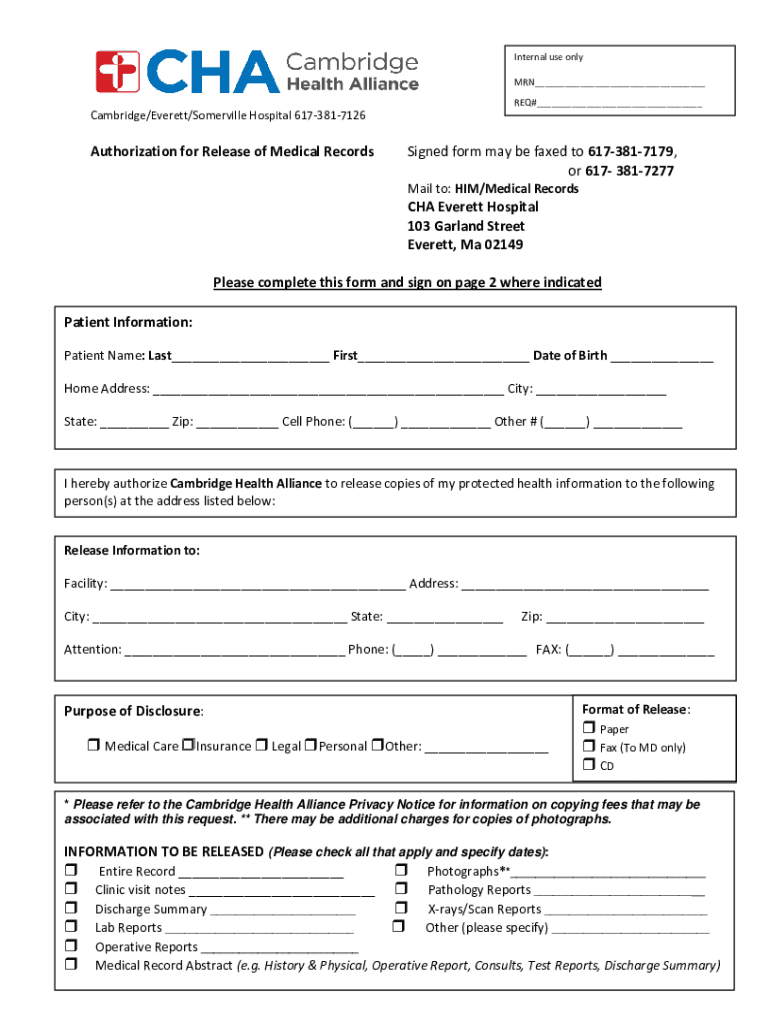







Definition and Purpose of the Authorization Form
The "Signed form may be faxed to HIM/Medical" form is an authorization document used for the release of medical records from Cambridge Health Alliance. This form allows a patient to provide consent for their healthcare provider to disclose sensitive health information to a specified recipient. It includes sections for clearly identifying the patient, specifying the recipient of the medical records, and outlining the purpose of the disclosure. Ensuring that all relevant parties accurately complete this form is critical for compliance with privacy regulations, such as HIPAA.
How to Use the Authorization Form
To use this form effectively, patients must first fill in their personal information, including their name, date of birth, and contact details. Then, they must list the specific medical records or information that they permit to be shared. The recipient's details, including their name and contact information, should be provided to ensure that the records reach the correct individual or organization. It is vital to specify the purpose of the disclosure; common reasons include continuing medical treatment, insurance claims, or legal processes. Patients must review the form carefully before signing, as their signature legally authorizes the release of personal medical data.
Steps to Complete the Authorization Form
-
Gather Necessary Information: Collect all personal identification details and determine which medical records you wish to release.
-
Fill Out Personal Details: Enter your full name, date of birth, and contact information.
-
Specify the Recipient: Detail the name and address of the person or entity authorized to receive your medical records.
-
Clarify the Purpose: Clearly state the purpose of the information release, such as for treatment continuity or legal reasons.
-
Designate Sensitive Information: Indicate whether sensitive health information, such as mental health or HIV status, is to be included in the release.
-
Review and Sign: Double-check all entered information for accuracy and completeness before signing and dating the form. Your signature is crucial for the form's validity.
-
Send to Cambridge Health Alliance: Fax the completed and signed form to or, as applicable.
Key Elements of the Authorization Form
-
Patient Information: Essential for verifying the identity of the individual authorizing the release.
-
Recipient Details: Ensures that records are sent to the correct party.
-
Purpose of Disclosure: Clarifies why these records are being shared and helps in maintaining transparency.
-
Sensitive Information Options: Allows the patient to include or exclude specific categories of information.
-
Expiration and Revocation Terms: Specifies when the authorization expires and how it can be revoked.
Legal Use and Compliance
The form operates under legal frameworks such as the Health Insurance Portability and Accountability Act (HIPAA). It ensures that the release of medical records complies with standards protecting patient privacy. The signed form represents a legally binding document that allows medical providers to share patient information without breaching confidentiality laws.
Who Typically Uses the Authorization Form
This form is primarily utilized by patients of the Cambridge Health Alliance who need to share their medical records with other healthcare providers, legal representatives, or insurance companies. It is also used by caregivers or legal guardians who have the legal authority to manage health decisions on behalf of the patient.


State-Specific Rules and Considerations
While this form serves a universal purpose, nuances may exist based on state-specific healthcare laws or institutional policies. For example, some states may have additional requirements for sharing records related to mental health or substance abuse treatments. Always ensure that all state regulations are met to maintain compliance.
Examples and Real-World Scenarios
-
Medical Referrals: A patient moves to a new healthcare provider and needs to transfer their medical history for continuing treatment.
-
Legal Proceedings: A patient involved in a lawsuit requires their medical records as evidence.
-
Insurance Claims: Proof of medical conditions through records is needed for claims processing.
Such scenarios demonstrate the importance of the authorization form in facilitating necessary communications while upholding patient rights and privacy.




