




01. Edit your form online
Type text, add images, blackout confidential details, add comments, highlights and more.

Type text, add images, blackout confidential details, add comments, highlights and more.

Draw your signature, type it, upload its image, or use your mobile device as a signature pad.

Send it via email, link, or fax. You can also download it, export it or print it out.
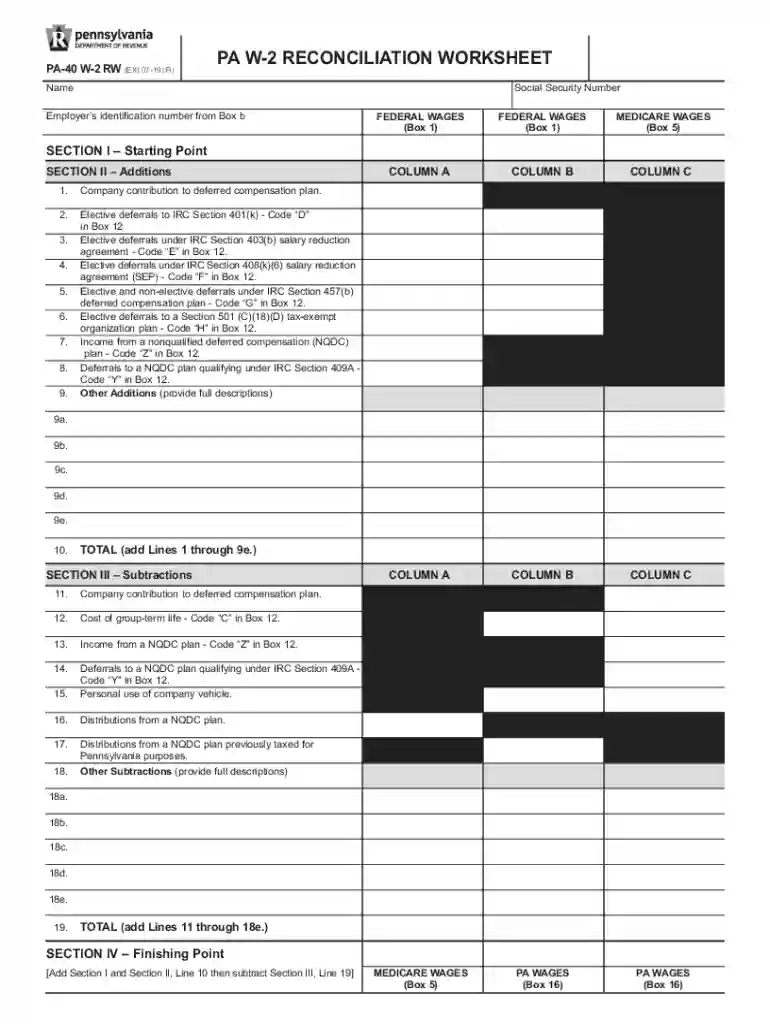
The Pennsylvania W Print, also referred to as the PA W-2 Reconciliation Worksheet, is a crucial tool for taxpayers in the state of Pennsylvania. This document aids in reconciling federal wages reported on Form W-2 with Pennsylvania personal income tax requirements. It ensures accurate reporting of gross compensation income, particularly when discrepancies exist between federal and state wage amounts. This form plays a significant role in aligning Pennsylvania's income tax records with federal submissions, ensuring compliance with state-specific tax regulations.
Utilizing the PA W Print involves detailed attention to specific sections outlined in the worksheet. Taxpayers must start by collecting their Form W-2s, which report federal wages. The worksheet includes sections for adding and subtracting types of compensation, such as deferred compensation plans and retirement contributions. By following these sections, taxpayers can identify discrepancies between the federal wage amount and the Pennsylvania wage amount, making necessary adjustments to ensure that the state's taxation reflects their actual earnings.
To accurately complete the PA W Print, follow these essential steps:
Understanding the following terms will assist in effectively using the PA W Print:
The PA W Print is governed by Pennsylvania's unique tax laws which differ from federal regulations in certain respects:
The form is structured to facilitate an in-depth comparison and adjustment of wage figures:
Consider a scenario where an employer provides non-taxable benefits under federal law but includes them in state compensation. Taxpayers need to adjust these figures on the PA W Print to avoid state tax discrepancies. Another example involves deferred income, where contributions to specific retirement plans may impact state wages differently, requiring precise reconciliation on this worksheet.
While the PA W Print traditionally involves manual completion, modern tax software like TurboTax and QuickBooks may offer modules to help fill the form digitally. These compatibility options allow:
Taxpayers should be mindful of critical deadlines to ensure compliance:
The PA W Print is an essential component of the Pennsylvania tax filing process, enabling accuracy in state wage reporting and reflecting adherence to state tax laws. Understanding its structure and requirements contributes significantly to successful completion and submission.
We've got more versions of the pa w print form. Select the right pa w print version from the list and start editing it straight away!
At DocHub, your data security is our priority. We follow HIPAA, SOC2, GDPR, and other standards, so you can work on your documents with confidence.
Saturday, July 23, 2022. Want an activity you can do with your four-legged friend? Come to the library and create a fun piece of Paw Print Art!Read more
Feb 25, 2026 Paw prints is a cosmetic flair unlocked from the Fauna Faire seasonal adventure within Minecraft Dungeons.


