
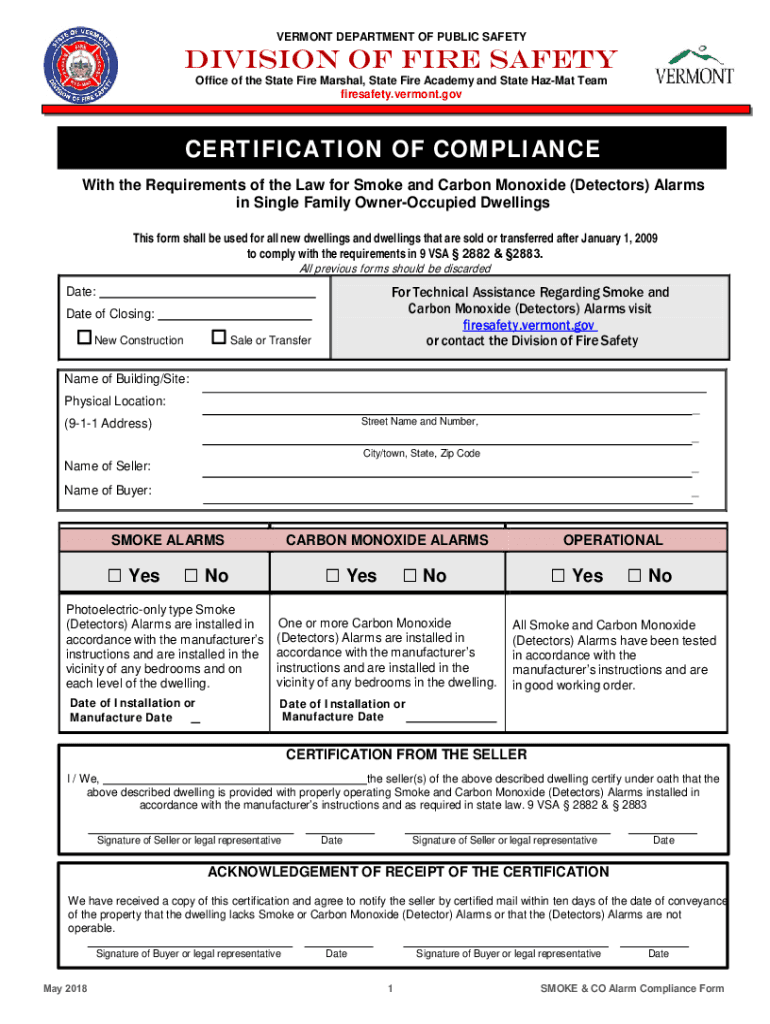







Definition and Purpose of the Vermont Division of Fire Safety Form
This form serves as a certification document from the Vermont Department of Public Safety, specifically the Division of Fire Safety. It confirms compliance with state laws mandating the installation and operation of smoke and carbon monoxide detectors in single-family owner-occupied dwellings. The law applies to homes sold or transferred after January 1, 2009, ensuring that essential safety measures are in place to protect residents from fire and smoke hazards.
How to Use the Vermont Division of Fire Safety Form
To effectively utilize this form, homeowners and real estate professionals need to comprehend its requirements fully. It involves verifying that all necessary smoke and carbon monoxide detectors are correctly installed and functional. The form requires signatures from both the seller and buyer, indicating that the property meets Vermont's safety regulations. These steps help ensure legal compliance and provide assurance to both parties involved in the property transaction.
Steps to Complete the Vermont Division of Fire Safety Form
- Inspection of Detectors: Ensure all smoke and carbon monoxide detectors are installed and operational.
- Document Details: Fill in property details, including the address and point of contact for both seller and buyer.
- Signatures: Obtain signatures from the seller and buyer to confirm compliance with safety requirements.
- Retention of Form: Both parties should retain copies of the signed form for their records.
Following these steps systematically helps facilitate a smooth verification process for property sales or transfers.
Who Typically Uses the Vermont Division of Fire Safety Form
The primary users of this form are homeowners, real estate agents, and legal representatives involved in property transactions. It is also essential for compliance officers and safety inspectors who ensure adherence to state safety regulations. Each user plays a critical role in upholding safety standards for residential properties being sold or transferred.


Legal Use of the Vermont Division of Fire Safety Form
The form is legally used to verify compliance with Vermont's safety regulations concerning smoke and carbon monoxide detectors. It is a mandatory requirement for the sale or transfer of eligible residential properties, offering legal protection to the parties involved by documenting compliance with established safety laws.
Key Elements of the Vermont Division of Fire Safety Form
- Property Information: Includes the address and specifics of the dwelling.
- Safety Compliance: Details compliance with smoke and carbon monoxide detector requirements.
- Signatures: Provides spaces for seller and buyer signatures to validate compliance.
- Dates: Specifies the transaction or inspection date to ensure timeliness and relevance.
State-Specific Rules for the Vermont Division of Fire Safety Form
Vermont mandates strict compliance laws for smoke and carbon monoxide detectors in residential settings. These rules require that detectors are operational and correctly installed in strategic areas of the home. Non-compliance can hinder property transactions and expose homeowners to legal risks. Understanding Vermont-specific laws and adhering to them is crucial for successful real estate dealings.
Examples of Using the Vermont Division of Fire Safety Form
- Home Sale Transactions: A family selling their home must complete this form to affirm that all safety detectors are present and functional as per state law.
- Real Estate Agency Use: Agencies often assist clients by ensuring that forms are completed accurately, facilitating smooth property transfers.
- Legal Compliance: Law firms may use this form as part of due diligence to assure their clients that all legal standards are upheld in property sales.
Penalties for Non-Compliance
Failure to complete this form or non-compliance with detector requirements can result in delayed or voided sales, legal penalties, and potential liability issues for sellers. Understanding the consequences of non-compliance emphasizes the importance of adhering to Vermont's fire safety regulations.
Required Documents for the Vermont Division of Fire Safety Form
- Proof of Detector Installation: Supporting evidence or inspection reports confirming the presence and functionality of detectors.
- Property Sales Agreement: May need to accompany the form to verify transaction details.
- Identification: For both sellers and buyers, personal identification may be required to validate the transaction and form completion.
Form Submission Methods (Online, Mail, In-Person)
The form can be submitted through various channels depending on preference and convenience:
- Online: Some jurisdictions allow digital submissions through designated local or state platforms.
- Mail: Physical forms can be mailed to relevant authorities.
- In-Person: Completing and submitting the form in person often ensures immediate confirmation and receipt.
Choosing the most suitable method facilitates prompt processing and minimizes potential delays.
Digital vs. Paper Version
Digital forms provide the advantage of easy dissemination and storage, enabling quick access and sharing. The paper version is a traditional method offering a tangible document copy, often preferred for records and official usage. Both versions serve the same compliance purposes, but user preference and situation determine the optimal format.
Business Types that Benefit Most from Office of the State Fire Marshal, Vermont Division of Fire Safety
- Real Estate Agencies: Ensure smooth property transactions by preparing clients for necessary compliance.
- Legal Firms: Offer advice on compliance and manage documentation for clients in real estate transactions.
- Home Inspection Services: Provide verification that homes comply with safety regulations, increasing buyer confidence and facilitating sales.
These professional entities often engage with the office to maintain regulatory compliance and support client transactions seamlessly.
Each section provides comprehensive insights into the Vermont Division of Fire Safety form, ensuring clarity and practicality for users involved in property transactions.




