







Definition & Meaning
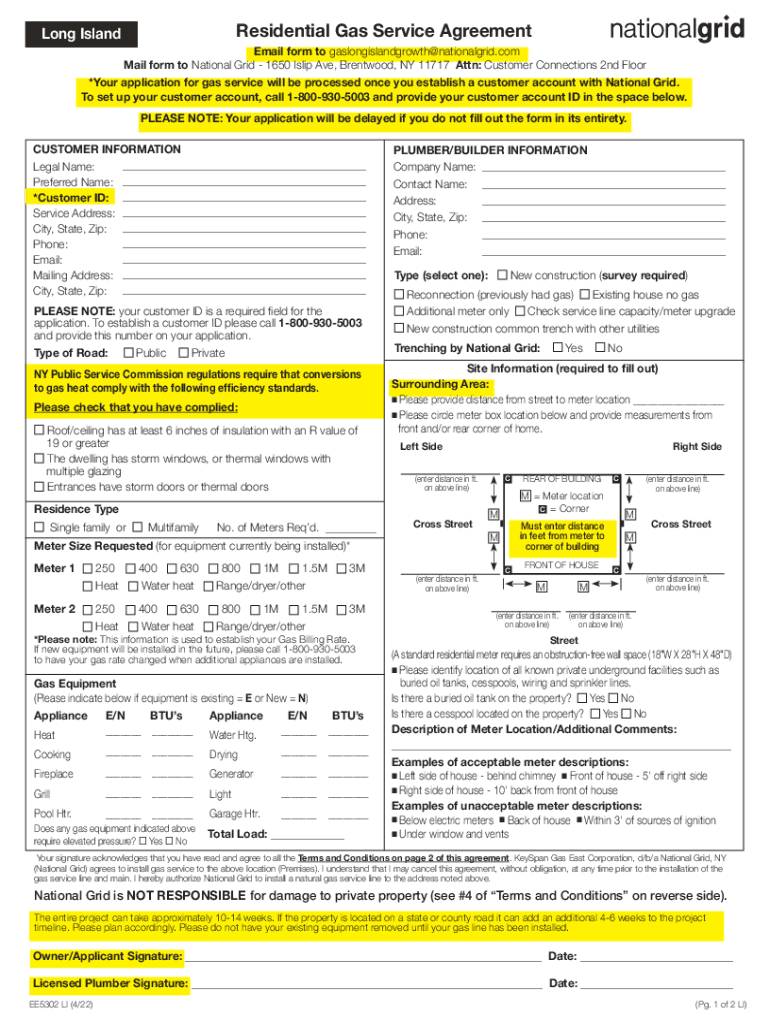
The Gas Service Relocation Agreement - National Grid is a formal document required for requesting the relocation of gas service lines within properties managed by National Grid. This agreement outlines the responsibilities and conditions associated with relocating existing gas services, ensuring that both the provider and customer adhere to the necessary procedures and safety standards. Typically, such relocations occur due to construction or modifications to property structures, requiring alterations in service connections.
- Purpose: To detail the terms under which National Grid will relocate gas services, preserving safety and operational efficiency.
- Scope: Covers technical aspects, responsibilities, costs, and timelines involved in the relocation process.
Key Elements of the Gas Service Relocation Agreement
The Gas Service Relocation Agreement comprises several crucial components that parties must understand and review before signing:
- Customer Information: Essential details including the customer’s name, contact information, and account ID.
- Property Details: Specifics of the location where the gas service is to be relocated.
- Technical Specifications: Information regarding the new pipe location and required infrastructure changes.
- Permitting Requirements: Necessary permits and approvals from local authorities.
- Cost and Payment Terms: Any fees charged for the relocation, payment methods, and schedules.
Each element ensures transparency and compliance throughout the service relocation process.
Steps to Complete the Gas Service Relocation Agreement - National Grid
Completing the Gas Service Relocation Agreement involves a series of clearly outlined steps to ensure accuracy and compliance:
- Gather Required Information: Collect all necessary details, including customer and property information.
- Consult with Professionals: Coordinate with licensed plumbers or contractors to assess the feasibility of relocation.
- Pre-Fill Application: Use the gathered data to complete the application, noting technical and logistical details.
- Submit Necessary Permits: Obtain and include relevant municipal permits required for the relocation process.
- Review and Sign: Carefully review all terms and conditions, then sign the agreement.
- Submit to National Grid: Send the completed and signed agreement to National Grid either online or via mail.
- Await Approval: National Grid will review the application. Any additional information requests should be fulfilled promptly.
Important Terms Related to the Gas Service Relocation Agreement
Familiarity with key terminologies used within the Gas Service Relocation Agreement aids in understanding the document’s context and legal implications:
- Relocation Zone: The specific area within a property where gas service lines are proposed to be repositioned.
- Permit Compliance: Adherence to local government and environmental regulations affecting gas service alterations.
- Infrastructure: Refers to the physical components necessitated by the relocation, such as piping and metering equipment.
- Service Interruption: Potential temporary disconnection during the relocation process.
Understanding these terms aids in comprehending the full scope and implications of the agreement.
Legal Use of the Gas Service Relocation Agreement
Using the Gas Service Relocation Agreement within the boundaries of legal and organizational guidelines is critical:
- Compliance: Customers must ensure adherence to all National Grid and local jurisdiction requirements.
- Environmental Considerations: Must be taken into account to avoid legal complications relating to contamination or safety.
- Rights and Responsibilities: Clearly delineated within the agreement to inform both parties of their duties and rights.
- Contractual Obligations: Legal obligations stemming from the agreement must be followed to avoid breaches and penalties.
State-Specific Rules for the Gas Service Relocation Agreement
State regulations can influence the application and approval process for gas service relocation:
- Local Permits: State and municipal regulations often dictate the types of permits required.
- Regional Standards: Some states may have unique standards for gas pipeline safety and setup that affect relocation options.
- Zoning Laws: These laws can impact the feasibility and legality of specific relocations.
These differences necessitate careful examination and adherence to state-specific guidelines.
Examples of Using the Gas Service Relocation Agreement
Real-life examples highlight the application of the Gas Service Relocation Agreement in varying circumstances:
- Residential Expansions: Homeowners renovating their properties, necessitating a change in gas line location.
- Commercial Developments: Businesses requiring relocations due to structural changes or expansions.
- Safety Compliance: Moving lines to meet updated safety codes or avoid obstruction-related risks.
These scenarios underscore the agreement's importance in maintaining service continuity and safety standards.
Required Documents
Document collection is a critical stage of the application process, ensuring all necessary paperwork is properly prepared and submitted:
- Identification: Photo identification and proof of property ownership.
- Detailed Site Plans: Layouts showing current and proposed gas service line positions.
- Permits: Construction and environmental permits applicable to the relocation.
- Previous Agreements: Any existing contracts with National Grid related to gas service.
Collecting these documents upfront facilitates a smooth application process.
Application Process & Approval Time
The application process for the Gas Service Relocation Agreement involves multiple stages with specific timelines:
- Initial Submission: Completion and submission of the agreement along with necessary documents.
- Review Phase: National Grid evaluates the application’s details and documentation, which may take several weeks.
- Feedback and Revisions: Applicants may need to provide additional information or correct errors.
- Final Decision: National Grid provides approval or requires further action, with timelines varying by complexity and location.
Understanding these steps ensures applicants can navigate the process efficiently.




