





Definition and Purpose of TC-49 Insurance Premium Tax Return
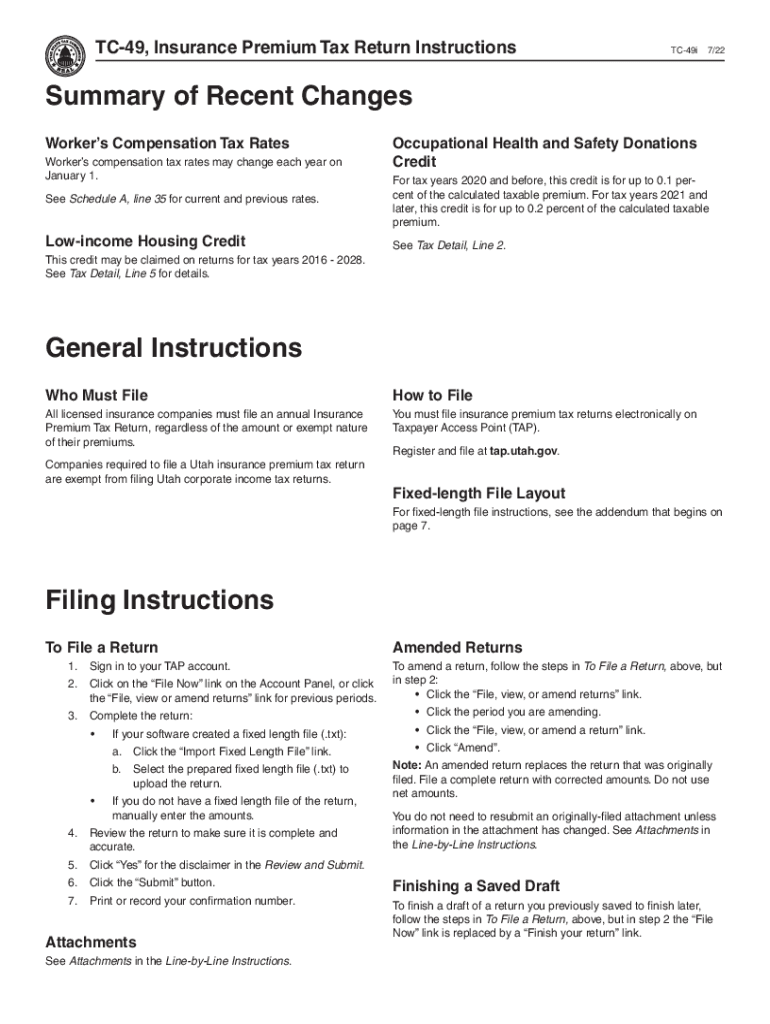
The TC-49 form, known as the Insurance Premium Tax Return, is a specific tax document used in Utah by licensed insurance companies. It outlines the necessary instructions for reporting insurance premium taxes owed to the state. This form is crucial for ensuring compliance with state tax regulations and involves various elements such as tax rates, credits, and filing procedures. Insurance entities must accurately complete the TC-49 to avoid penalties and ensure proper calculation of owed taxes.
Steps to Complete the TC-49 Form
-
Gather Necessary Information: Collect all relevant data required for the TC-49, including previous year tax returns, premium amounts, eligible tax credits, and any supporting documentation needed for return submission.
-
Understand Tax Rates and Credits: Review the specific tax rates applicable to insurance premiums and any potential credits the company may qualify for, such as those for low-income housing or worker’s compensation donations.
-
Filing through TAP: Log in to the Utah Taxpayer Access Point (TAP) for electronic submission. Ensure accurate entry of information in the fixed-length file layout as prescribed by the guidelines.
-
Attach Required Documents: Compile necessary attachments, including any declarations, adjustments or amendments to previous returns, and attach them electronically through the TAP system.
-
Submit Before Deadline: Ensure that the form is submitted before the due dates specified to avoid late fees or penalties.
Important Terms Related to the TC-49 Form
- Premium Tax Rate: The percentage applied to the total money received from insurance premiums to calculate the tax owed.
- Taxpayer Access Point (TAP): The official online platform for filing taxes and other submissions to the Utah State Tax Commission.
- Tax Credits: Discounts available to eligible entities that reduce the overall tax liability.
- Fixed-Length File Layout: A specific file format requirement for electronic submission ensuring consistent data entry across submissions.
Filing Deadlines and Important Dates
Insurance companies must adhere to specific deadlines for filing the TC-49 form. Deadlines vary annually, but returns are usually due by March 31st following the tax year. Late submissions may result in penalties. Companies should regularly check updates from the Utah State Tax Commission to confirm annual due dates.
Penalties for Non-Compliance with TC-49
Failure to file the TC-49 accurately or on time can result in significant penalties, including financial fines or additional interests calculated based on the outstanding tax amount. Non-compliance may also lead to further scrutiny and audits by state tax authorities.
Key Elements of the TC-49 Form
- Taxpayer Identification: Information identifying the insurance company, including state license numbers and contact details.
- Premium Amounts: Detailed reporting of all insurance premiums received within the tax year.
- Amendment Section: Area designated for correcting previous filings or submitting adjustments to prior returns.
- Declaration and Signature: Required sign-off by an authorized company representative to validate the accuracy of the information provided.
IRS Guidelines for Insurance Premium Tax
Though the TC-49 is a state-level form, companies must also be aware of general IRS guidelines surrounding insurance tax. This includes understanding federal requirements for reporting and ensuring that state submissions align with federal tax commitments.
Business Entity Types Using the TC-49 Form
Primarily used by licensed insurance entities, the TC-49 is applicable to various business structures within the industry:
- Corporations: Large businesses processing significant volumes of premiums.
- Limited Liability Companies (LLCs): Smaller insurance firms operating under LLC structures.
- Partnerships: Joint business ventures in the insurance industry.
Each entity must ensure accurate representation in the form based on its business structure and operational specifics.
Form Submission Methods
The preferred method of submission for the TC-49 is electronically via TAP. This streamlined process allows for efficient handling and quicker processing times compared to traditional paper submissions. However, arrangements for paper submissions might still be made under specific circumstances if required by the tax office.


