




01. Edit your waiver liability agreement online
Type text, add images, blackout confidential details, add comments, highlights and more.

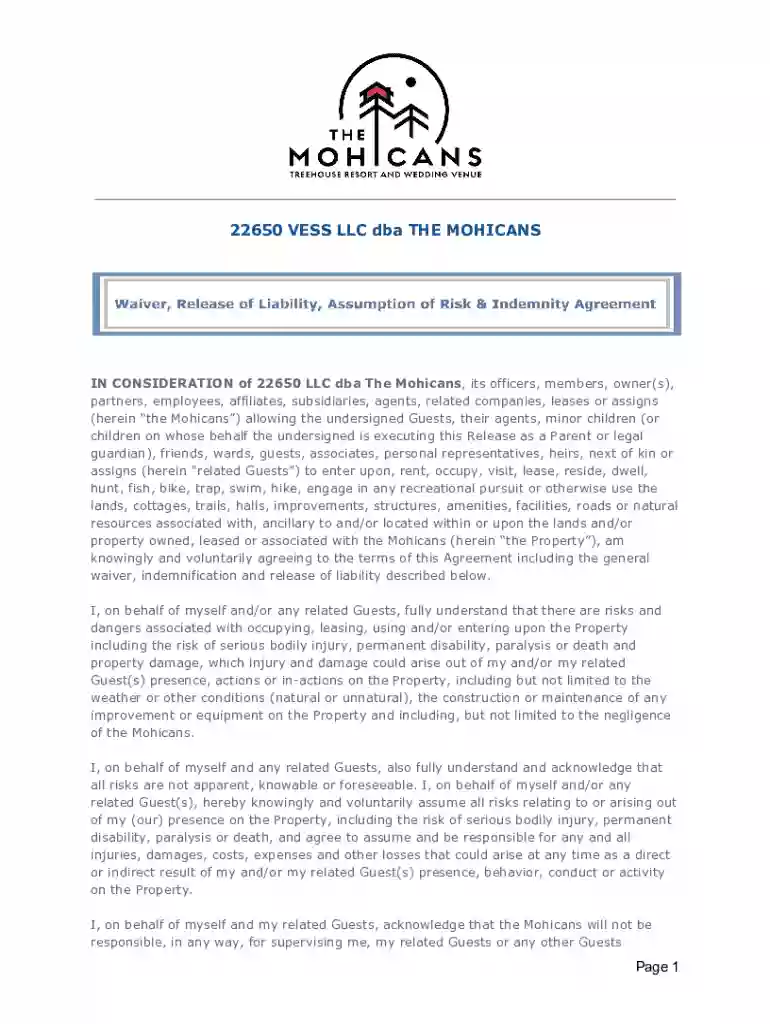
Type text, add images, blackout confidential details, add comments, highlights and more.

Draw your signature, type it, upload its image, or use your mobile device as a signature pad.

Send it via email, link, or fax. You can also download it, export it or print it out.
A "Waiver Release of Liability" is a legal document that an individual signs to acknowledge the risks associated with a certain activity or service, and to absolve the entity offering that activity or service from liability for any resulting harm. It essentially serves as a formal agreement where one party agrees to forgo their right to hold another party responsible for potential losses or damages. This type of document is commonly used in contexts such as recreational sports, outdoor adventures, or even certain professional services where inherent risks are present.
To effectively utilize a waiver release of liability, it should be presented to participants or clients before they engage in the activity. Individuals should be given ample time to read and understand the document before signing. It is advisable to explain the terms, especially if the text includes complex legal jargon. Users should be aware that signing this document does not completely absolve service providers from all responsibility. It is crucial to maintain safety regulations and adhere to standards, as gross negligence cannot typically be waived.
A variety of organizations use waivers, including:


The legal enforceability of a liability waiver can depend on various factors such as clarity of language, presentation of the form, and state-specific laws. Generally, these waivers do not cover acts of gross negligence or intentional misconduct. They must be clearly written in an understandable manner, and any ambiguities typically work against the party that drafted the waiver. Legal consultation is often advised to ensure compliance with all relevant laws and regulations.
The enforceability of waivers can vary significantly by state. For example:
Local legal counsel can provide guidance on customizing waivers to meet state-specific standards.
With advances in digital document processing, waivers can now be handled either on paper or digitally:
Both formats should ensure the signer's identity is verified to prevent fraud and ensure authenticity.
Businesses that are particularly risk-prone or that involve direct customer interaction with potentially hazardous activities benefit most from using waivers. Examples include:
Implementing a waiver helps these businesses manage risk and maintain safety while protecting themselves from potential legal claims.
We've got more versions of the waiver liability agreement form. Select the right waiver liability agreement version from the list and start editing it straight away!
| Versions | Form popularity | Fillable & printable |
|---|---|---|
| 2025 | 4 Satisfied (34 Votes) | |
| 2025 | 4.8 Satisfied (31 Votes) | |
| 2025 | 4.3 Satisfied (34 Votes) | |
| 2025 | 4.2 Satisfied (34 Votes) | |
| 2025 | 4.6 Satisfied (55 Votes) | |
| 2025 | 4.5 Satisfied (44 Votes) | |
| 2025 | 4.2 Satisfied (37 Votes) | |
| 2025 | 4.7 Satisfied (34 Votes) | |
| 2024 | 4.3 Satisfied (21 Votes) | |
| 2024 | 4.6 Satisfied (51 Votes) | |
| 2024 | 4.5 Satisfied (23 Votes) | |
| 2024 | 4.8 Satisfied (29 Votes) | |
| 2024 | 4.1 Satisfied (28 Votes) | |
| 2024 | 4.9 Satisfied (51 Votes) | |
| 2024 | 4.4 Satisfied (31 Votes) |
At DocHub, your data security is our priority. We follow HIPAA, SOC2, GDPR, and other standards, so you can work on your documents with confidence.
By this Waiver, I assume any risk, and take full responsibility and waive any claims of personal injury, death or damage to personal property associated withRead more
A release of liability and waiver of the right to sue if any loss results from participation in the activity. An express assumption of risk where theRead more


